Liquid sulfur fertilizer: thiosulfate, rates, stages and price

Soufre en poudre jaune, matière première des engrais soufrés négociée par E-Station
Engrais soufre liquide : soufre jaune, matière première du thiosulfate d'ammonium, négocié par E-Station

Agronomy · Sulfur

Liquid sulfur fertilizer: ammonium thiosulfate, rates, stages and prices

Ammonium thiosulfate contains 12% nitrogen and 65% SO3 and mixes with nitrogen solution: 30 to 40 l/ha on rapeseed, 15 to 20 l/ha on wheat. What it supplies, what it costs and where it comes from.

Request a quotation →

You fertilise with nitrogen solution and want to apply sulfur in the same pass, without getting the fertilizer spreader out again for 40 kg of SO3. Liquid sulfur fertilizer meets this need, with rules on rate, stage and mixing that this article details.

Liquid sulfur fertilizer has taken hold on farms that have switched from ammonium nitrate to nitrogen solution. Two products dominate: sulfur-enriched nitrogen solution, which contains 17% SO3 according to WikiAgri, and ammonium thiosulfate, which concentrates 12% ammoniacal nitrogen and 65% SO3 with a density of 1.33 according to the data sheet from Agryco.

In both cases, the sulfur they contain is made from solid sulfur or sulfuric acid, which links the price of the drum to the market described on our page on sulfur trading. The view defended here fits in one sentence: liquid sulfur earns its place through sprayer logistics, provided the oxidation time of thiosulfate is respected.

What is a liquid sulfur fertilizer?

A liquid sulfur fertilizer is a solution containing sulfur in sulfate or thiosulfate form, most often combined with nitrogen. Sulfur-enriched nitrogen solution is a standard nitrogen solution enriched with ammonium sulfate; it is applied on its own, with the same nozzles and the same tank as N39.

Ammonium thiosulfate, with the formula (NH4)2S2O3, comes as a concentrated additive that is added to the nitrogen solution when filling the tank. Cereapro states that it is delivered in bulk or in 1,000-litre IBC tanks weighing 1.3 tonnes, and that under the regulations it remains an additive to nitrogen solution rather than a standalone fertilizer.

Ammonium thiosulfate: how does it work in the soil?

Thiosulfate differs from sulfate by one extra step. The website Fertilisation-edu points out that plants absorb only the sulfate ion SO4, and that thiosulfate S2O3, like elemental sulfur, must first be oxidised by soil micro-organisms. This oxidation takes a few days to a few weeks depending on temperature and moisture, which makes thiosulfate a little slower than ammonium sulfate. This oxidation delay remains the main limitation of a liquid sulfur fertilizer built on this molecule.

In return, Cereapro credits it with an inhibiting effect on urease, which slows the conversion of the urea in the nitrogen solution and limits nitrogen losses through volatilisation. Thiosulfate therefore works on two levels: it feeds the crop with sulfur and it protects the nitrogen it is mixed with.

Liquid sulfur fertilizer on rapeseed: rate and application stage

Rapeseed sets the highest requirement. Terres Inovia recommends 75 kg of SO3 per hectare when growth resumes, at stage C2, for a crop that absorbs around 200 kg of SO3 over its cycle, as noted by Réussir Grandes Cultures.

With a thiosulfate at 65% SO3 and a density of 1.33, the data sheet from Agryco indicates that about 70.5 litres are needed to supply 60 units of SO3, and suggests 30 to 40 litres per hectare on rapeseed at the end of winter, mixed with nitrogen solution. Liquid sulfur fertilizer alone therefore does not cover the 75 kg of SO3, and the balance comes from the sulfur already in the sulfur-enriched nitrogen solution or from a solid application. We detail the full reasoning in our article on sulfur on rapeseed.

Sulfate or thiosulfate on rapeseed: what the trials show

Historical trials give sulfate the edge. Réussir Grandes Cultures reports that the sulfate form, directly available to the plant, has always delivered a higher yield gain than forms requiring oxidation, with an average gain of 3.4 q/ha in 1990s trials and up to 12 q/ha.

For rapeseed, whose uptake peak is concentrated in a few weeks of stem elongation, liquid thiosulfate is therefore best applied early, as soon as growth resumes, so that oxidation is complete when the plant needs it. Rapeseed already showing mottled leaves calls for the catch-up treatment described in our article on sulfur deficiency in rapeseed.

Liquid sulfur fertilizer on cereals: wheat and barley

On wheat and barley, requirements are lower and the form matters less. Arvalis recommends an application between the end of tillering and the very start of stem elongation and considers that effectiveness is not affected by the form, whether sulfate, micronised elemental sulfur or thiosulfate, for cereals that absorb 50 to 70 kg of SO3 per hectare.

The data sheet from Agryco suggests 15 to 20 litres of thiosulfate per hectare on cereals, at the end of winter with nitrogen solution, or around twenty units of SO3 added to those in the sulfur-enriched solution. On a high-risk plot, Arvalis raises the total rate to 50 kg of SO3, which liquid alone struggles to cover without a large volume of spray mixture.

Form of sulfur fertilizer SO3 content Benchmark
Liquid ammonium thiosulfate 65% by weight, 12% N, density 1.33 Agryco
Sulfur-enriched nitrogen solution 17 % WikiAgri
Solid ammonium sulfate 60 % WikiAgri
Solid sulfonitrate 37 % WikiAgri

Foliar liquid sulfur fertilizer: what the leaf absorbs

Liquid sulfur fertilizer invites spraying onto the foliage, and caution is needed here. Fertilisation-edu points out that the leaf absorbs only a limited amount of sulfur and that foliar application remains a complement to soil application.

The Arvalis crop disorder sheet limits spraying to correcting a confirmed deficiency, at 20 to 40 kg of SO3 per hectare, as soon as symptoms appear and before the 2-node stage. Thiosulfate mixed with nitrogen solution is in fact applied to the soil, with streamer jets or slot nozzles, rather than as a fine spray on the foliage. Our article on foliar sulfur application details the conditions for a successful pass.

Liquid sulfur prices: what drives them

The price of a liquid sulfur fertilizer breaks down into two parts, nitrogen and sulfur, and both rose in 2026. According to Terre-net, nitrogen solution was quoted at 445 euros per tonne ex-port on 4 September 2026.

La Dépêche Le Petit Meunier reports a rise of 35 euros per tonne in August, driven by the public subsidy of 50 to 70 euros per tonne valid until 30 September 2026 and by gas prices that rose from 59.07 to 69.81 euros per MWh between 31 July and 31 August.

The same source notes that the cost of sulfur more than tripled in a year.

This is confirmed by Argus Media with Middle East FOB sulfur rising from 173 dollars per tonne on 30 January 2025 to 531.50 dollars on 29 January 2026, before the closure of the Strait of Hormuz that triggered the 2026 global sulfur crisis. Thiosulfate, made from sulfur and ammonia, combines both pressures, which makes its price more volatile than that of a simple solid fertilizer. For manufacturers formulating these solutions in France, Belgium or Canada, access to solid sulfur from outside the Gulf has become the variable that will decide the price per litre in spring 2027.

What E-Station does

E-Station supplies solid sulfur, as granules, pastilles or crushed lumps, to sulfuric acid producers and to manufacturers of ammonium sulfate, thiosulfate and sulfur-enriched nitrogen solutions. These manufacturers formulate the liquid sulfur fertilizer that distributors then deliver in tanks or IBCs. Each lot comes with a certificate of analysis, origins are outside the Gulf, and sea logistics are organised through to unloading, in bulk or big bags, on FOB, CFR, CIF or DAP terms.

The sulfur trading hub presents the available grades; the pages sulfur in France and sulfur delivery in France describe the arrival ports, and the page sulfur in Canada is aimed at North American formulators.

Frequently asked questions

What is ammonium thiosulfate?

Ammonium thiosulfate, with the formula (NH4)2S2O3, is a liquid fertilizer containing 12% ammoniacal nitrogen and 65% SO3 with a density of 1.33. It is added to nitrogen solution when filling the tank and must be oxidised into sulfate by soil micro-organisms before the plant can absorb it.

How much liquid sulfur should be applied to rapeseed?

Terres Inovia recommends 75 kg of SO3 per hectare at stage C2. With a thiosulfate at 65% SO3, 60 units correspond to about 70.5 litres; common practice is 30 to 40 litres per hectare mixed with nitrogen solution, topped up with sulfur from the sulfur-enriched solution or a solid application.

Is liquid sulfur as effective as ammonium sulfate?

On cereals, Arvalis considers that effectiveness does not depend on the form, whether sulfate, thiosulfate or micronised elemental sulfur. On rapeseed, the trials reported by Réussir show a higher yield gain for the sulfate form, which is directly available, which argues for applying thiosulfate early when growth resumes.

What is the price of liquid sulfur in 2026?

The price of a liquid sulfur fertilizer follows that of nitrogen solution, quoted at 445 euros per tonne ex-port on 4 September 2026 according to Terre-net, and that of sulfur, whose cost more than tripled in a year according to La Dépêche. Thiosulfate, made from sulfur and ammonia, combines both increases.

Can sulfur be applied as a foliar spray?

The leaf absorbs only a limited amount of sulfur, which makes foliar application a complement to soil application. Arvalis reserves it for correcting a visible deficiency, at 20 to 40 kg of SO3 per hectare before the 2-node stage on cereals.

You formulate ammonium thiosulfate, sulfur-enriched nitrogen solutions or sulfuric acid and are looking for certified solid sulfur from outside the Gulf, delivered to the port of your choice. Request a quotation stating the purity and supply rate you need, so that your liquid sulfur fertilizer production rests on a stable source of sulfur.
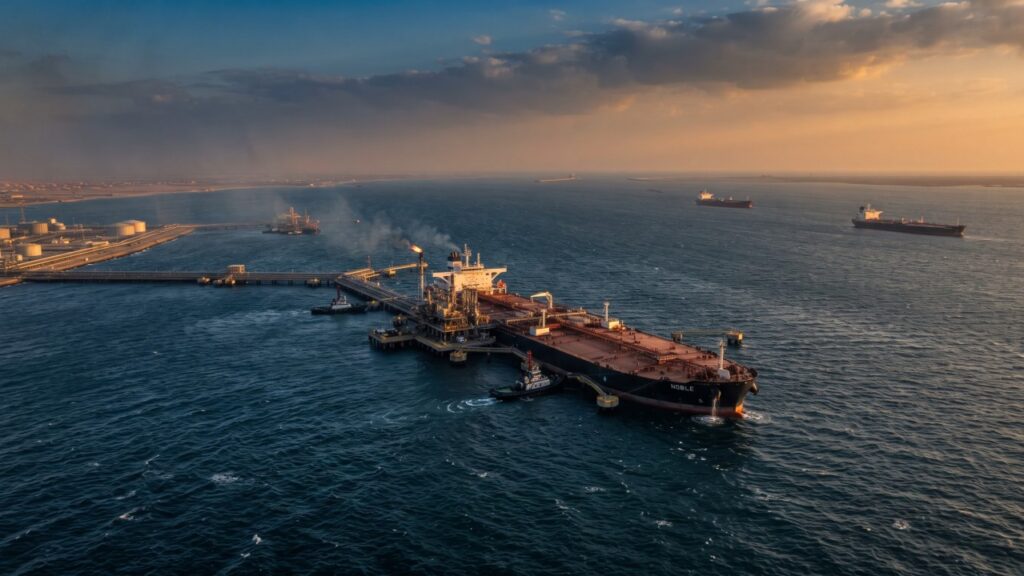
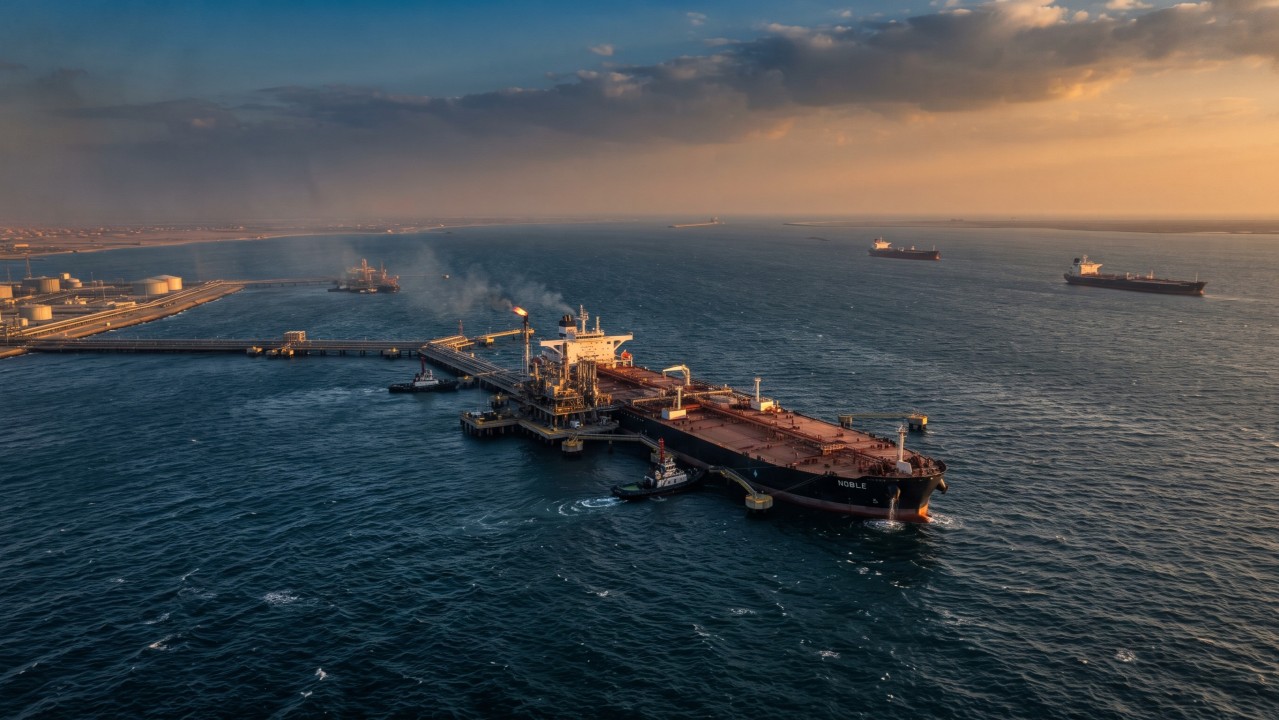
Agricultural sulfur in Morocco: prices, origins and uses of yellow sulfur

Soufre élémentaire jaune destiné aux fabricants d'engrais et d'acide sulfurique, E-Station
Soufre agricole Maroc : soufre jaune importé pour les engrais et les sols du Royaume, négocié hors Golfe par E-Station

Africa · Sulfur

Agricultural sulfur Morocco: prices, origins and uses of yellow sulfur

Morocco imported 8.3 million tonnes of sulfur in 2024, an unprecedented level. Here is what this flow changes for the price of sulfur in Morocco, for OCP and for the farmer correcting an alkaline soil.

Request a quotation →

You are an input distributor in Meknes or Agadir, or a buyer at a plant making sulfuric acid or fertilizers, and the yellow sulfur you used to buy without a second thought has changed price and origin in eighteen months. Here is what is at stake behind the bag and behind the vessel, from the world price to the agricultural sulfur delivered to the distributor in Morocco.

Morocco holds a place of its own on the sulfur market. According to Barlamane, the Kingdom imported 8.3 million tonnes of sulfur in 2024, a level never reached before, against a ceiling of 7.2 million tonnes in previous years.

Almost all of this sulfur goes to the burners at Jorf Lasfar and Safi, where the OCP group turns it into sulfuric acid, then into phosphoric acid and fertilizers. The share going directly to Moroccan fields remains marginal in volume, but it depends on the same import chain, described on our page on sulfur trading. This article follows agricultural sulfur in Morocco from the quay to the soil, by way of the price.

Agricultural sulfur in Morocco: a country that has become a record importer

Moroccan phosphate becomes fertilizer after being attacked with sulfuric acid, itself obtained by burning sulfur. Barlamane notes that a unit of 550,000 tonnes per year was commissioned in December 2024 and that a burner of 417,000 tonnes per year was inaugurated in the second quarter of 2024, which explains the jump in imports. Médias24 puts OCP’s annual demand at 7 million tonnes of sulfur.

Agricultural sulfur in Morocco: where does the yellow sulfur landed come from?

In 2024, Kazakhstan supplied about 4.1 million tonnes, nearly half of arrivals, the United Arab Emirates 2.5 million tonnes and Saudi Arabia 915,000 tonnes, up 58%, according to Barlamane. Morocco thus depended on the Gulf for more than 40% of its sulfur on the eve of 2026.

Origin of sulfur imported into Morocco in 2024 Volume Benchmark
Kazakhstan 4.1 million tonnes, about 50% Barlamane
United Arab Emirates 2.5 million tonnes, 31% Barlamane
Saudi Arabia 915,000 tonnes, up 58% Barlamane

Sulfur price in Morocco: from 165 to more than 500 dollars a tonne

The price of agricultural sulfur in Morocco follows OCP’s contracts and FOB Middle East quotations. Médias24 puts sulfur at around 165 dollars a tonne in early 2025 and around 520 dollars in December 2025, before the closure of the Strait of Hormuz. According to the same publication, the share of sulfur in OCP’s raw material purchases rose from 37% to nearly 59% in a year. Our page on sulfur prices in Morocco tracks these movements.

Hormuz and the last cargo of 10 April 2026

Since the strait closed on 28 February 2026, cargoes from the Gulf have stopped and agricultural sulfur for Morocco has changed route. Barlamane dates the last sulfur cargo received by OCP at Jorf Lasfar to 10 April 2026, aboard the vessel Kallone, and puts the fall in world sulfur exports at 45% compared with the end of February.

In April, Médias24 reported sulfur up 35% on its pre-war level and an OCP redirecting its production towards TSP, a fertilizer that needs no ammonia: TSP accounted for about 30% of volumes in 2025 and the group is aiming for more than 50% in 2026. We set out this chain of events in our article on the 2026 global sulfur crisis and on the role of sulfuric acid in phosphate fertilizers.

Moroccan pyrite, a possible source from 2027

Faced with this dependence, Morocco is looking to its own subsoil. Médias24 describes Managem’s strategy: 300,000 tonnes of sulfuric acid from pyrite at the Guemassa complex from 2027, then up to 1 million tonnes from the Tizert copper smelter between 2028 and 2030. Set against 7 million tonnes of sulfur a year, these volumes ease the constraint without removing it, and imported sulfur keeps the leading role.

Agricultural sulfur in Morocco: what is yellow sulfur used for in the fields?

For the farmer, agricultural sulfur in Morocco has two quite distinct functions. The first concerns pH. The journal Agriculture du Maghreb points out that Moroccan soils are predominantly alkaline, whereas the optimum range for nutrient uptake lies between pH 6 and 7. Elemental sulfur, oxidised by soil bacteria, releases sulfuric acid that lowers the pH. The same source gives the quantities needed to go from pH 7.5 to 6.5: 350 kg per hectare in sandy soil, 750 kg in sandy loam and 1,100 kg in clay soil.

These rates apply to a heavy correction; for citrus, Yara Morocco puts the desirable pH between 5.5 and 7.0 and reports reduced availability of phosphorus and trace elements above 7.5.

The second function is nutritional. Agriculture du Maghreb puts sulfur requirements at between 10 and 20 kg of S per hectare for cereals and sugar beet, 20 to 50 kg for legumes and 60 to 80 kg or more for brassicas and onions. On the irrigated perimeters of the Gharb or the Tadla, beet and onions therefore consume sulfur that arrives through fertilizer. This requirement is met with sulfur fertilizer or with elemental sulfur. We describe the forms available in our article on elemental sulfur in agriculture.

Sulfur fertilizer and agricultural sulfur in Morocco: which forms are available?

The Moroccan distributor can choose between ammonium sulfate, potassium sulfate (popular in market gardening), single superphosphate and elemental sulfur as granules or powder.

The TSP produced by OCP is first and foremost a phosphate fertilizer, and sulfur nutrition comes through the sulfate forms or through elemental sulfur. All these forms, down to the 25 kg bag sold at the souk, trace back to the solid sulfur landed in Morocco or to the sulfuric acid made from it. The price paid by the farmer therefore follows the sulfur quotation, with a time lag, as we explain in our article on fertilizer prices in Morocco in dirhams.

Sulfur Morocco: securing supply from outside the Gulf

The 2026 crisis has brought secondary routes back into play. Barlamane reports that Morocco received 27,700 tonnes of Kazakh sulfur via the Georgian port of Batumi between January and early June 2026, against 28,600 tonnes over the whole of 2025, through the Trans-Caspian corridor.

These volumes remain modest, but they show that Kazakh, Polish or Canadian sulfur becomes competitive again when the Gulf closes. The regularity of agricultural sulfur supply in Morocco during the season now depends on these secondary routes. For a mid-sized Moroccan importer, the availability of a certified batch, with a documented origin and an Incoterm that covers unloading, now weighs as much as the price.

What E-Station does

E-Station supplies solid sulfur, as granules, pastilles or crushed lump, to sulfuric acid producers, fertilizer manufacturers and agricultural distributors in Morocco. The origins lie outside the Gulf, each batch comes with a certificate of analysis, and sea logistics are organised through to unloading at Jorf Lasfar, Casablanca, Safi or Agadir, in bulk or in big bags, on FOB, CFR, CIF or DAP terms.

Our page on sulfur in Morocco details the grades of agricultural sulfur available for Morocco, and our page on sulfur prices in Morocco explains how the delivered price is built. The sulfur trading hub brings together the other destinations, from sulfur in Tunisia to sulfur in Senegal.

Frequently asked questions

How much sulfur does Morocco import each year?

Morocco imported 8.3 million tonnes of sulfur in 2024, a record, against a ceiling of 7.2 million tonnes in previous years. OCP’s annual demand is estimated at 7 million tonnes, bound for the burners at Jorf Lasfar and Safi that produce the sulfuric acid for phosphate fertilizers.

What is the price of sulfur in Morocco in 2026?

Sulfur was worth about 165 dollars a tonne in early 2025 and 520 dollars in December 2025 according to Médias24, before the closure of the Strait of Hormuz cut off cargoes from the Gulf. The price delivered to Morocco then depends on freight, origin and the Incoterm chosen.

Why use agricultural sulfur on Moroccan soils?

Moroccan soils are mostly alkaline, whereas nutrients are best taken up between pH 6 and 7. Agricultural sulfur in elemental form, oxidised in the soil, lowers the pH: it takes 350 kg per hectare in sandy soil and up to 1,100 kg in clay soil to go from 7.5 to 6.5, according to Agriculture du Maghreb.

Where does the yellow sulfur imported into Morocco come from?

In 2024, Kazakhstan supplied about half of the volumes, the United Arab Emirates 31% and Saudi Arabia 915,000 tonnes. Since the closure of Hormuz in February 2026, flows from the Gulf have stopped and alternative routes, such as the Trans-Caspian corridor via Batumi, have regained importance.

Which sulfur fertilizers are available in Morocco?

Ammonium sulfate, potassium sulfate, single superphosphate and elemental sulfur as granules or powder cover crop requirements, which range from 10 to 20 kg of sulfur per hectare for cereals to more than 60 kg for brassicas and onions. All agricultural sulfur in Morocco thus derives from imported solid sulfur or from the sulfuric acid made from it.

You import sulfur into Morocco to produce sulfuric acid, fertilizers or agricultural sulfur, and you are looking for an origin outside the Gulf, certified and delivered to the port of your choice. The agricultural sulfur you will then resell depends on the reliability of this first link. Request a quotation naming Jorf Lasfar, Safi or Casablanca as the port of discharge, to obtain a delivered price rather than an ex-works price.

Sulfur deficiency in wheat: recognising and correcting it in time

Soufre jaune solide en granulés et concassé, négoce de soufre E-Station
Carence en soufre blé : soufre jaune pour fabriquer les engrais soufrés des céréales, négocié par E-Station

Agronomy · Sulfur

Sulfur deficiency in wheat: recognising and correcting it in time

On wheat, sulfur deficiency yellows the young leaves, costs 0.2 to 1 t/ha with no visible symptom and can be corrected up to the 2-node stage. The Arvalis benchmarks, with sources.

Request a quotation →

You walk through your wheat in early April and yellow strips cross the field, although nitrogen was applied on time. The usual reflex blames nitrogen hunger or a spreading fault. After a wet winter on free-draining soil, the cause often lies elsewhere, and it can be read on the young leaves.

Sulfur deficiency in wheat was long an accident confined to chalk or sandy soils. With wet winters it is becoming a question for whole plains: in February 2026, Arvalis noted that the whole of Brittany had exceeded 250 mm of rain since 1 October 2025, the threshold from which the institute considers the risk of deficiency established.

Leached sulfate must be replaced by a sulfur fertilizer, whose raw material is the solid sulfur described on our page on sulfur trading. This article helps you make the diagnosis in the field, then decide on the rate and the form. On sulfur deficiency in wheat, the benchmarks published by Arvalis remain the most solid field reference.

Recognising sulfur deficiency in wheat in the field

The Arvalis crop disorder sheet describes pale green young leaves, streaked with yellow along the veins, with growth reduced by 10 to 30% and shortened internodes. Symptoms appear between the end of tillering and the start of stem extension, in patches or strips that follow soil texture: green areas on deep loams, yellow areas on free-draining knolls.

Telling nitrogen deficiency from sulfur deficiency

When sulfur deficiency in wheat is suspected, confusion with nitrogen deficiency is costly, because it leads to adding nitrogen to a plant unable to convert it. Arvalis gives a simple criterion in the same sheet: nitrogen is mobile in the plant, so nitrogen hunger yellows the old leaves first. Sulfur moves little, and its deficiency yellows the young leaves at the top of the plant while the base stays green. In the field, it is enough to compare the first leaf produced by a tiller with the last.

Sulfur deficiency in wheat: up to 1 tonne of yield lost

The Arvalis sheet specifies that the deficiency does not always show and that losses of up to 1 t/ha go unnoticed. An early deficit reduces the number of ears per square metre and their fertility, hence losses of 0.2 to more than 1 t/ha in ordinary cases and up to 2 t/ha in severe cases. The 2025 Arvalis note goes as far as 2 to 3 t/ha when the deficiency is serious and early. Sulfur deficiency in wheat is therefore reasoned well before the plant is seen to suffer.

Why sulfur deficiency in wheat is spreading across the plains

A wheat crop at 8 t/ha mobilises around 60 kg of SO3 per hectare according to WikiAgri, which draws on the work of Arvalis, and the institute places the total uptake of cereals between 50 and 70 kg of SO3. Only the fraction mineralised into sulfate can be taken up, and this anion leaves with the drainage water. Arvalis uses four criteria to assess the risk of sulfur deficiency in wheat on a plot: soil type, with sands, shallow clay-limestone soils and chalk at the top of the soils at risk, the history of organic fertilization, rainfall between October and March, and the sulfur applied in the previous season.

Rain is the criterion that changes fastest from one year to the next. In its note of February 2026, Arvalis sets two thresholds from 1 October to 1 March: 250 mm for an established risk, 400 mm for a high risk. A previous oilseed rape crop that received more than 60 kg of SO3 reduces the risk, and organic history counts only with at least one application every three years for ten years.

Nitrogen and sulfur on wheat: two nutrients to reason together

Wheat builds its proteins with sulfur-containing amino acids, cysteine and methionine. Without sulfur, the nitrogen taken up accumulates in non-protein form and yield levels off whatever the nitrogen rate. The Arvalis sheet also states that high nitrogen rates aggravate sulfur deficiency in wheat and recommends coupling the sulfur application with a nitrogen application, with an optimum N to SO3 ratio between 2 and 3 at the ear-at-1-cm stage. We develop this pairing in our article onnitrogen-sulfur fertilizer.

Does sulfur improve bread-making quality?

The answer from Arvalis has been stable since the 1980s. Its review on the quality of soft wheat compiles 37 trials in Poitou-Charentes in 1986, 16 trials in the Centre region in 1988 and six national trials in 2001: sulfur has little or no effect on protein content, which it even dilutes slightly when it increases yield. Only the P/L ratio falls, giving more extensible doughs. Sulfur on wheat is therefore justified by yield and by preventing deficiency.

Foliar sulfur on wheat: corrective treatment and its limits

Once the yellow strips of sulfur deficiency in wheat are visible, the window for correction closes quickly. Arvalis states that correction remains possible up to the 2-node stage and that beyond it the effect becomes partial. The crop disorder sheet puts the corrective rate at 20 to 40 kg of SO3 per hectare, as a foliar spray or as micronised sulfur, from the first symptoms. At the 2-node stage, 70% of requirements have already been taken up according to the 2025 Arvalis note, which explains why a late correction never restores the full potential.

Foliar application has a physical limit. Fertilisation-edu points out that the leaf takes up only a limited quantity of sulfur and that foliar application complements a soil application without replacing it, as we explain in our article onfoliar sulfur application. Preventively, the Arvalis sheet gives 30 to 50 kg of SO3 per hectare between the start of tillering and the ear-at-1-cm stage, avoiding an autumn application exposed to leaching. Detailed rates are in our article sulfur on wheat: when and how much to apply.

The origin of the sulfate in your fertilizer

Ammonium sulfate, ammonium sulfate nitrate or sulfur-containing nitrogen solution: all draw their sulfur from solid sulfur or sulfuric acid. Arvalis considers agronomic effectiveness equivalent between sulfate, micronised elemental sulfur and thiosulfate, which leaves the choice to price and logistics.

That price has changed scale: according to Argus Media, Middle East FOB sulfur went from 173 dollars a tonne on 30 January 2025 to 531.50 dollars on 29 January 2026, before the closure of the Strait of Hormuz triggered the 2026 global sulfur crisis. For a fertilizer manufacturer in the Somme or Wallonia, securing sulfur from outside the Gulf determines the delivery of the units of SO3 your wheat expects in March.

What E-Station does

We supply solid sulfur, as granules, pastilles or crushed, to sulfur fertilizer manufacturers, sulfuric acid producers and agricultural distributors, with a certificate of analysis per batch, origins outside the Gulf and sea logistics organised through to discharge, in bulk or in big bags, on FOB, CFR, CIF or DAP terms.

These grades feed the sulfur fertilizers that prevent sulfur deficiency in wheat in the cereal regions of northern Europe. The page on sulfur trading hub presents the available grades, the page sulfur in France details the ports of arrival for the French cereal regions and the page on sulfur in Belgium is aimed at manufacturers in Antwerp and Wallonia. Canadian ammonium sulfate producers will find the same information on sulfur in Canada.

Frequently asked questions

How do you recognise sulfur deficiency in wheat?

Sulfur deficiency in wheat yellows the young leaves at the top of the plant, with yellow streaks along the veins, while the old leaves stay green. It appears between the end of tillering and the start of stem extension, in patches or strips that follow areas of free-draining soil. Nitrogen deficiency, conversely, yellows the old leaves first.

How much does sulfur deficiency cost in cereals?

Arvalis puts losses at between 0.2 and 1 t/ha in common cases, sometimes with no visible symptom at all, and up to 2 to 3 t/ha when the deficiency is early and severe, through a reduced number of ears. The earlier the deficiency occurs, the higher the loss.

When should foliar sulfur be applied to wheat?

Foliar correction is applied as soon as symptoms appear, at 20 to 40 kg of SO3 per hectare, and remains effective up to the 2-node stage. Beyond that, 70% of the sulfur has already been taken up and correction becomes partial. The leaf takes up a limited quantity, which makes foliar application a complement to the soil application.

Why reason nitrogen and sulfur together on wheat?

Wheat makes its proteins with sulfur-containing amino acids, and without sulfur the nitrogen taken up stays in non-protein form. Arvalis recommends an N to SO3 ratio between 2 and 3 at the ear-at-1-cm stage and reports that high nitrogen rates aggravate a sulfur deficiency.

Which plots are most exposed to sulfur deficiency?

Shallow, free-draining soils, sands, chalk and shallow clay-limestone soils, without regular organic inputs, after a winter with more than 250 mm of rain between October and March. Above 400 mm, Arvalis classes the risk of sulfur deficiency in wheat as high and advises 20 to 50 kg of SO3 per hectare.

You manufacture or distribute ammonium sulfate, ammonium sulfate nitrate or sulfur-containing nitrogen solution for the cereal regions and you are looking for certified solid sulfur of non-Gulf origin, delivered to the port of your choice. These fertilizers are the agronomic answer to the sulfur deficiency in wheat that your customers see at the end of every winter. Request a quotation stating the particle size expected and the monthly rate, and you will have a costed basis for comparison with your current sources.

Potassium sulfate fertilizer: use, rate and prices in 2026

Soufre en poudre jaune, matière première des engrais soufrés négociée par E-Station
Sulfate de potassium engrais : soufre jaune, source de l'acide sulfurique du procédé Mannheim, par E-Station

Agronomy · Sulfur

Potassium sulfate fertilizer: use, rate and prices in 2026

50% K2O, 45% SO3, less than 3% chlorine, and 0.56 tonnes of sulfuric acid consumed per tonne produced. Here are the uses, rates and 2026 quotations, with sources.

Request a quotation →

Your adviser recommends potassium sulfate on tomatoes, vines or potatoes, and the bag costs considerably more than standard muriate of potash. The price of potassium sulfate fertilizer has a simple industrial explanation, and it lies in sulfur far more than in potash.

Potassium sulfate fertilizer, known in the trade as SOP from its English name, holds a special place among potash products. World capacity was around 10 million tonnes per year in 2020, 60% of it in China and 20% in Western Europe, for consumption of about 7 million tonnes, according to L’Élémentarium.

In the world potash market, dominated by chloride, SOP remains a niche product, reserved for crops that cannot tolerate chlorine and sold at a premium. Its production goes through a furnace that uses sulfuric acid, and therefore through the chain described on our page on sulfur trading. This article explains where to use it, at what rate, and why its price followed that of sulfur in 2026.

Potassium sulfate fertilizer: what exactly is it for?

SOP supplies two nutrients at once. The website Fertilisation-edu gives the reference composition of the granulated product: 50% potassium oxide, 43% SO3 and less than 3% chlorine. The vegetable brochure from K+S shows 51% K2O and 45% water-soluble SO3 for its Kalisop Plus grade. An application of 200 kg of product per hectare therefore supplies about a hundred units of potash and nearly 90 units of SO3, without the need for a second sulfur fertilizer.

The magnesium variant, known by the trade name Patentkali, drops to 30% K2O but rises to 45% SO3 and 10% MgO, again according to Fertilisation-edu. It is of interest on the acid, sandy soils of the Massif Central, Brittany or the South-West, where magnesium is lacking as often as sulfur.

Potassium sulfate or chloride fertilizer: when sulfate is the right choice

Potassium chloride contains 60% K2O and costs half as much per unit of potash. It would suit every situation if chlorine were not a problem for certain species. Fertilisation-edu reserves sulfate for sulfur-demanding plants such as rapeseed, for tobacco, which burns poorly in the presence of chlorine, and for beans, peas, flax, quality vines and flowers.

The brochure from K+S lists beans, chicory, gherkins, lettuce, onions and courgettes among the vegetables very sensitive to chlorine, while celery, asparagus and beetroot tolerate it without damage. The very low salinity of sulfate also allows application right up to planting, which chloride rules out.

Potassium sulfate fertilizer: what rates on which crops

The rate is calculated first in units of potash, with sulfur as a bonus. The recommendations from K+S for vegetables range from 60 kg of K2O per hectare on beans and 80 kg on onions to 210 kg on tomatoes and 300 kg on courgettes. The difference between these crops exceeds a factor of five, which makes any single potassium sulfate rate for a market gardener meaningless.

Potassium sulfate fertilizer on tomatoes: 210 units of potash

Tomatoes combine both reasons for using SOP. They are the biggest potash consumers in mainstream vegetable growing, at 210 kg of K2O per hectare, and fertigation multiplies saline inputs throughout the cycle. The website Bio-Enligne puts exports at 5.01 kg of potassium per tonne of fruit and recommends a K2O to N ratio of at least 2.5 during fruit swelling. On processing tomatoes in Morocco's Gharb, as in the greenhouses of the Souss or Tunisia's Cap Bon, where irrigation water already supplies chloride, sulfate avoids adding salt to an environment that already contains too much.

Potassium sulfate fertilizer in organic farming: what Annex II says

Certified producers have a written answer. The Annex II of the European regulation on fertilizers approved for organic farming, as summarised by the Brittany Chamber of Agriculture, authorises "potassium sulfate possibly containing magnesium salt", provided it is obtained from crude potash salt by a physical extraction process.

The same annex also permits elemental sulfur. Since 16 July 2022, both products must comply with the contaminant limits set by European regulation 2019/1009. SOP from the Mannheim process, which is chemical by nature, therefore falls outside the organic framework, and we detail this point in our article on elemental sulfur in organic farming.

Potassium sulfate fertilizer: what 2026 quotations are worth

SOP costs considerably more than chloride. According to the tracking by Procurement Resource, potassium sulfate was quoted between 600 and 605 dollars per tonne FOB China in June and July 2026, around 700 to 734 dollars CIF Germany and 724 to 787 dollars CIF United States.

Over the same period, the World Bank recorded potassium chloride at 380.60 dollars per tonne in March 2026, according to Agence Ecofin. The sulfate premium over chloride thus exceeds 200 dollars per tonne, and Procurement Resource explicitly attributes the firmness of quotations to the costs of sulfur, sulfuric acid and energy, as well as to disruption linked to the closure of the Strait of Hormuz.

Potash fertilizer Contents 2026 quotation Source
Potassium sulfate (SOP) 50% K2O, 43 to 45% SO3, less than 3% Cl $600 to $605/t FOB China, June-July 2026 Procurement Resource
Potassium magnesium sulfate (Patentkali) 30% K2O, 45% SO3, 10% MgO not publicly quoted Fertilisation-edu
Potassium chloride (MOP) 60% K2O, no sulfur $380.60/t in March 2026 World Bank via Ecofin

Potassium sulfate fertilizer in Morocco and Tunisia: the effect of the port of arrival

Neither Morocco nor Tunisia produces potassium sulfate, and no public price scale sets its retail price in either country, unlike the subsidised nitrogen and phosphate fertilizers we cover in our articles on fertilizer prices in Morocco in dirhams and fertilizer prices in Tunisia.

The price paid by a market gardener in Chtouka-Aït Baha or an orchard grower in Kairouan is therefore built in three parts: the FOB China or Northern Europe quotation, freight to Casablanca, Agadir, Radès or Sfax, then the distributor's margin and bagging in 25 or 50 kg bags. When the FOB quotation moves by 100 dollars, the whole chain moves with it, a few weeks later.

Potassium sulfate fertilizer is first and foremost a sulfur product

The chemistry of the product explains its price better than the geology of potash. More than half of world capacity relies on the Mannheim process, in which potassium chloride and sulfuric acid react at 800 °C. L’Élémentarium gives the exact mass balance: 0.84 tonnes of KCl and 0.56 tonnes of sulfuric acid produce one tonne of K2SO4 and 1.2 tonnes of saleable hydrochloric acid. Every tonne of SOP made this way has therefore consumed sulfuric acid, obtained by burning solid sulfur.

This industrial detail became the main cost factor in 2026. The 2026 global sulfur crisis pushed the Middle East FOB price from 173 dollars a tonne at the end of January 2025 to 531.50 dollars at the end of January 2026, according to Argus Media, in a market that already exceeded 71 million tonnes in 2024, with 60% of demand coming from fertilizers according to World Fertilizer.

Chinese SOP producers, who account for 60% of capacity, buy their sulfur on this market. We track these quotations in our article on the price of sulfur per tonne, and the same logic applies to ammonium sulfate, another fertilizer whose sulfur comes from the same source.

What E-Station does

E-Station supplies solid sulfur to sulfuric acid producers and sulfur fertilizer manufacturers, including potassium sulfate fertilizer producers, as granules, pastilles or crushed lumps, in bulk or big bags, with a certificate of analysis per lot and origins outside the Gulf. Our sulfur trading hub presents the available grades, the page sulfur in Morocco describes delivery conditions at Jorf Lasfar, Safi or Casablanca, and the page sulfur in Tunisia covers Gabès, Sfax and Radès. European buyers will find the same information on sulfur in France, with transport organised through to unloading on FOB, CFR, CIF or DAP terms.

Frequently asked questions

Potassium sulfate fertilizer: what is it for?

It supplies potash and sulfur simultaneously, with 50% K2O and 43 to 45% SO3 according to Fertilisation-edu and K+S. Its very low chlorine content, below 3%, makes it suitable for chlorine-sensitive crops such as tobacco, quality vines, beans, lettuce and onions.

What is the price of potassium sulfate in 2026?

Procurement Resource recorded 600 to 605 dollars per tonne FOB China in June and July 2026, about 700 to 734 dollars CIF Germany and 724 to 787 dollars CIF United States. Potassium chloride was trading at around 380 dollars at the same time, giving a sulfate premium of more than 200 dollars per tonne.

Is potassium sulfate authorised in organic farming?

Annex II of the European regulation authorises potassium sulfate possibly containing magnesium salt, provided it is obtained from crude potash salt by a physical extraction process. Product from the Mannheim process, which reacts potassium chloride with sulfuric acid, does not meet this condition.

How much potassium sulfate should be applied to tomatoes?

K+S recommendations put the tomato requirement at around 210 kg of K2O per hectare. With a product containing 50% K2O, that represents about 420 kg of potassium sulfate per hectare, split through fertigation, which also supplies nearly 190 units of SO3.

Why does potassium sulfate cost more than chloride?

More than half of world production uses the Mannheim process, which consumes 0.84 tonnes of potassium chloride and 0.56 tonnes of sulfuric acid per tonne of product according to L’Élémentarium. Sulfate therefore pays for both potash and sulfur, whose price tripled between January 2025 and January 2026.

You operate a Mannheim furnace, a sulfuric acid unit or a potassium sulfate fertilizer line, and the "sulfur" line in your cost price has become the most volatile of all. Request a quotation from E-Station: it takes a few minutes, and we will come back to you with the available grades, non-Gulf origins and the nearest port of loading for your plant.

Sulfur for maize: needs, deficiency at 5 leaves and application rate

Soufre élémentaire jaune destiné aux fabricants d'engrais et d'acide sulfurique, E-Station
Soufre maïs : soufre solide jaune, matière première des engrais soufrés utilisés sur maïs, fourni par E-Station

Agronomy · Sulfur

Sulfur for maize: needs, deficiency at 5 leaves and application rate

Maize takes up 65 kg of SO3 per hectare and yellows from the top when the sand is cold. Here is when sulfur deficiency threatens, how to recognise it and the 25 to 50 kg rate used by Arvalis.

Request a quotation →

Mid-May in the Landes: your five-leaf maize is pale green, the newest leaves are striped with yellow, and the neighbour on silt has no problem. The soil is still cold and the nitrogen went on at sowing. This picture points to sulfur, and sulfur for maize is decided plot by plot.

Maize is seen as a crop with low sulfur demand, and yet the fact sheet from Yara France puts its total uptake at 65 kg of SO3 per hectare, alongside 240 kg of nitrogen and 270 kg of potash. This sulfur comes from soil mineralisation, from manures and slurries and, more and more often, from a fertilizer whose raw material is the solid sulfur presented on our page on sulfur trading. This article argues a simple idea: sulfur for maize should be treated as a localised risk, with a control strip, and corrected with a modest rate applied at the right time.

Sulfur for maize: what does the crop really need?

Maize takes up most of its nutrients before tasselling. Yara France specifies that more than 50% of the nitrogen, phosphorus and magnesium and more than 80% of the potassium are taken up before this stage, and sulfur follows the same calendar as nitrogen, whose uptake it governs. Of the 65 kg of SO3 taken up, most returns to the soil with the stalks, and removal in the grain remains modest. The soil of a plot with adequate organic matter therefore supplies most of it, provided it mineralises when the plant needs it.

Sulfur for maize: why deficiency occurs in a cold spring

The problem with maize lies in its calendar. The plant starts in April-May, when the soil is still cool and mineralisation of organic sulfur is slow, while the sulfate built up in autumn has been washed away by winter rain. Yara adds two aggravating factors: heavy rainfall and no-till continuous maize, which deplete the surface layer of available sulfur.

Bayer Crop Science Canada observes that deficiencies often disappear by themselves when the soil warms up and dries out, which explains why growers often hesitate to act. The same document nevertheless puts a figure on what is at stake: at 21 days after emergence, each day of sulfur deficiency can cost 1 to 2 bushels per acre.

Sulfur deficiency in maize: recognising the symptoms at 4-5 leaves

The Arvalis crop-disorder sheet places the onset of symptoms from the 4-5 leaf stage. The plant takes on a yellowish look, especially on the most recent leaves, with yellow discolouration between the veins that starts at the base of the leaf and can spread to older leaves, while the mature foliage sometimes stays green.

Yara describes an upright plant with delayed growth, whose young leaves look uniformly pale from a distance and, close up, show yellow-green discolouration edged with fine brown lines. Arvalis rates the damage at 3 out of 5 for a frequency of 1 out of 5, linked to sandy soils: the problem is rare, and costly where it strikes.

Telling sulfur apart from nitrogen, magnesium and manganese

The key, as on wheat or oilseed rape, lies in the age of the affected leaves. Bayer Canada points out that sulfur moves poorly within the plant, so the young leaves turn yellow and striped first, whereas nitrogen deficiency first yellows the lower leaves along the midrib.

Arvalis rules out two other confusions: magnesium deficiency gives interveinal discolouration with reddening and white spots on older leaves, and manganese deficiency comes with a drooping habit. When doubt persists beyond the V5 stage, Bayer Canada advises tissue analysis, which Arvalis charges at between 15 and 20 euros excluding tax per sample.

Sulfur for maize: the plots to watch

Both institutes point to the same soils: sandy, shallow and low in organic matter, where sulfate is leached and mineralisation is weak. Yara adds acidic soils, poorly aerated or waterlogged soils and regions far from industrial emissions. In the Landes, Yara reports yield gains after sulfur application on sands low in organic matter. On the deep silts of the Paris Basin or the clays of the South-West, the risk remains low and application is rarely profitable.

Sulfur application on maize: how much and in what form?

The sulfur rate for maize remains modest compared with that for oilseed rape. Arvalis uses 25 to 50 kg of SO3 per hectare, preventively before sowing in at-risk areas or curatively as soon as symptoms appear, and Yara considers an application of 30 to 50 kg of SO3 per hectare sufficient where there is a risk of deficiency. This range covers half to three quarters of total uptake, which is enough because the soil takes over as soon as it warms up.

Sulfur for maize at sowing, with the nitrogen

The most effective time is the main nitrogen application, at sowing or at the 4-6 leaf stage, with a directly available sulfate form. Arvalis lists ammonium sulfate, magnesium sulfate, calcium sulfate, potassium sulfate and micronised sulfur. Ammonium sulfate, which we cover in the article ammonium sulfate fertilizer, supplies 50 kg of SO3 with 83 kg of product and 17 kg of nitrogen, which fits easily into a maize fertilization plan.

Sulfur-containing ammonium nitrates such as 24+18 play the same role on at-risk plots, and elemental sulfur, which is slower, is kept for maintaining the soil stock on the preceding crop, as we explain in the article on elemental sulfur in agriculture.

Foliar catch-up between 4 and 8 leaves

Once the yellow stripes are there, the foliar route is the fastest. Yara recommends for its thiosulfate Thiotrac 300 a rate of 5 litres per hectare in 200 litres of water at the 4-8 leaf stage, repeatable every 10 to 15 days if necessary. Spraying relieves the plant while the soil warms up; a soil application is still needed on plots where the deficiency returns every year. We detail the technique in the article on foliar sulfur application.

What the North American trials say

Canada and the Midwest have seen sulfur deficiency in maize increase as atmospheric deposition has fallen. Ontario Grain Farmer reports that wet sulfur deposition in Ontario fell from 8 to 13 pounds of sulfur per acre per year in 1990 to 2 to 4.5 pounds in 2014. In the University of Guelph trials run in 2018 and 2019 at five maize sites, two responded significantly to sulfur and only one produced a profit, with a gain of 16.5 bushels per acre, whereas 21 OMAFRA trials on starter fertilizer in 2012-2013 had measured no benefit.

The lesson matches that of Arvalis, and it holds for sulfur on maize on both sides of the Atlantic: the response exists, it is strong where it exists, and it is checked with a sulfur-free control strip in the plot. Cereal growers will find the same decision-grid logic in our article on sulfur for wheat.

Where the sulfur in your starter fertilizer comes from

The ammonium sulfate, sulfur-containing ammonium nitrate or thiosulfate applied to maize contain sulfur derived from sulfuric acid, and therefore from solid sulfur co-produced by refining and gas processing. The 2026 global sulfur crisis showed that this link can fail: when the Gulf stops exporting, fertilizer manufacturers in France and Canada have to find other origins, and the price of the 50 units of SO3 for maize depends directly on it.

What E-Station does

E-Station supplies solid sulfur to sulfuric acid producers, fertilizer manufacturers and the distributors who serve the maize-growing regions, where sulfur for maize is decided in a few weeks of spring. The sulfur is offered as granules, pastilles or crushed lump, in bulk or in big bags, with a certificate of analysis per batch and origins outside the Gulf. Our sulfur trading hub presents the grades available; the page on sulfur in France describes deliveries to the Atlantic ports serving the South-West, and the pages on sulfur in Canada and sulfur delivery to Canada cover the sea logistics through to unloading, on FOB, CFR, CIF or DAP terms.

Frequently asked questions

What is the sulfur requirement of maize?

Yara France puts total uptake by maize at 65 kg of SO3 per hectare, most of it absorbed before tasselling. The greater part returns to the soil with the stalks, and the soil of a plot with good organic matter covers this need as soon as it warms up.

How do you recognise sulfur deficiency in maize?

From the 4-5 leaf stage, the young leaves turn pale and become striped with yellow between the veins, while the lower leaves often stay green. Nitrogen deficiency, by contrast, yellows the lower leaves. A tissue analysis removes the doubt beyond the V5 stage.

What rate of sulfur should be applied to maize?

Arvalis uses 25 to 50 kg of SO3 per hectare, preventively before sowing on at-risk sandy soils or curatively at the first symptoms. Yara considers an application of 30 to 50 kg of SO3 per hectare in sulfate form sufficient, with the main nitrogen application.

Which maize plots are at risk of sulfur deficiency?

Sandy, shallow, acidic or low-organic-matter soils, especially after a wet winter and during a cold spring. No-till continuous maize and plots receiving no manure or slurry are also more exposed, according to Arvalis and Yara.

Can sulfur deficiency in maize be corrected with a foliar spray?

Yes, between 4 and 8 leaves. Yara recommends 5 litres per hectare of thiosulfate Thiotrac 300 in 200 litres of water, repeatable every 10 to 15 days. Foliar application relieves the plant while the soil warms up, and a soil application remains necessary on plots where the deficiency returns every year.

You manufacture or distribute the sulfur fertilizers used on maize and are looking for a certified supply of solid sulfur, from outside the Gulf, delivered to the port of your choice. Request a quotation giving the tonnage and the delivery window you want, to secure the sulfur before the spring peak.

Fertilizer prices in Morocco in dirhams: urea, ammonium nitrate, DAP and TSP in 2026

Soufre jaune solide en granulés et concassé, négoce de soufre E-Station
Prix engrais Maroc dh : soufre jaune, matière première des engrais phosphatés marocains, négocié par E-Station

Energy markets · Sulfur

Fertilizer prices in Morocco in dirhams: urea, ammonium nitrate, DAP and TSP in 2026

Subsidised ammonium nitrate at 240 dirhams per quintal, urea 46 at 330, ammonium sulphate at 150, and a free market that has jumped 60% since Hormuz. Prices in dirhams and what moves them.

Request a quotation →

You buy your fertilizers in the Gharb, the Saïss or the Tadla, and since spring 2026 your dealer has shown two prices for the same bag: the subsidised quota price and the free-market price. Understanding the gap between the two means understanding how fertilizer prices in Morocco are set in dirhams.

Morocco holds about 70% of the world’s phosphate reserves according to Forbes Afrique, yet Moroccan farmers pay for their nitrogen fertilizers at world prices, adjusted by the State subsidy. The OCP group posted revenue of 113.9 billion dirhams in 2025, up 17.5%, with TSP volumes up 48%, according to InfoMagazine Maroc.

Every tonne of these phosphate fertilizers consumed sulfuric acid, and therefore imported solid sulfur, the sulfur presented on our page on sulfur trading. This article brings together the fertilizer price benchmarks in dirhams published by accessible sources in Morocco, then explains what will move them before the 2026-2027 season.

Fertilizer prices in Morocco in dirhams, 2026: subsidised market and free market

The fertilizer price you pay in Morocco depends first on the channel. For nitrogen fertilizers, the Ministry of Agriculture makes a quota available to cereal growers each season at an administered price. For phosphate fertilizers, OCP supplies the national market at prices the government undertakes to maintain from one season to the next. Beyond these quotas, dealers buy at the international price and pass it on in dirhams.

Prices of subsidised nitrogen fertilizers in Morocco: 240, 330 and 150 dirhams

Administered prices have been stable since the 2023-2024 season. According to AgriMaroc, which details the March 2025 distribution in the Béni Mellal-Khénifra region, 33.5% ammonium nitrate is sold at 240 dirhams per quintal with a 41% subsidy, 46% urea at 330 dirhams per quintal with a 35% subsidy, and 21% ammonium sulphate at 150 dirhams per quintal, subsidised at 53%.

Agriculture du Maghreb confirms that these three prices were renewed unchanged for the 2024-2025 season, with 200,000 tonnes of nitrogen fertilizers made available. Médias24 points out that the quota is capped at 3 quintals per hectare and that the 2023-2024 programme covered 3 million quintals at a public cost of 700 million dirhams.

OCP fertilizer prices in Morocco: DAP, TSP and NPK maintained

For the 2025-2026 season, the government announced that 650,000 tonnes of phosphate fertilizers would be placed on the market at the same price as the previous season, as reported by Aujourd’hui le Maroc. These tonnages cover DAP 18-46, 45% TSP, base NPK formulas such as 14-28-14 and single superphosphates.

The exact price per quintal of each formula is set by OCP’s distribution network and varies by region and packaging; we do not reproduce it here for lack of a consolidated public source. The key point for buyers is that this price, unlike that of nitrogen, does not follow the world DAP price, quoted at 932.50 euros a tonne ex port in early September 2026 according to Terre-net.

Fertilizers Subsidised price (dh/quintal) Subsidy rate Source
Ammonium nitrate 33.5% 240 41 % AgriMaroc
Urea 46% 330 35 % AgriMaroc
Ammonium sulphate 21% 150 53 % AgriMaroc
Ammonium nitrate, free market, spring 2026 about 750 (against 450 before Hormuz) none Finances News Hebdo

Prices of urea 46 and ammonium nitrate in Morocco in dirhams: the Hormuz effect

The free market broke away from administered prices from 26 February 2026, the date of the closure of the Strait of Hormuz, as recalled by Médias24. Finances News Hebdo puts the rise in ammonium nitrate in Morocco at about 60%, from 450 to 750 dirhams per quintal, and explains the mechanism: gas represents 70 to 80% of the production cost of nitrogen fertilizers, and the Dutch TTF gas price rose from 31.96 euros at the end of February to 51.40 euros in mid-March, a 60% increase passed on to European ammonium nitrate, quoted at 527 euros a tonne.

In early May, Médias24 noted that imported fertilizers had jumped by 40 to 60% since February, nitrogen by 50% and potash by 57%.

For a cereal grower applying the 3 quintals of ammonium nitrate allowed per hectare, the gap between the quota at 240 dirhams and the free market at 750 dirhams represents more than 1,500 dirhams per hectare. The quota therefore becomes the first variable in production cost, ahead of the rate itself.

OCP and fertilizer prices in Morocco: why the group is pushing TSP

The Hormuz shock hit OCP through two imported raw materials, ammonia and sulfur, both largely produced in the Gulf. Médias24 reports that in April 2026 sulfur cost 35% more than before the war and that the group had stocks to cover its operational needs until the end of June.

The industrial response is to favour TSP, a phosphate fertilizer made without ammonia, from phosphate rock and phosphoric acid. TSP accounted for 30% of OCP’s volumes in 2025, with more than one million tonnes sold in India, and the group is targeting 50% in 2026 according to the same source. We explain the difference between TSP and single superphosphate in the article single and triple superphosphate.

TSP fertilizer price in Morocco: ammonia and sulfur requirements

TSP is made without ammonia but with a lot of sulfuric acid, because the phosphoric acid it contains is obtained by attacking the rock with this acid. Every tonne of TSP sold to Moroccan farmers or exported to India has therefore consumed solid sulfur imported through Jorf Lasfar or Safi.

The shift to TSP reduces dependence on Gulf ammonia, but it increases dependence on sulfur, whose prices we track on the page sulfur prices in Morocco. For distributors preparing their season, the delivered price of TSP in Morocco will therefore follow the availability of sulfur from outside the Gulf more than that of gas.

The share of sulfur in fertilizer prices in Morocco

The common thread in all these prices is a yellow solid that farmers never see. The 21% ammonium sulphate sold at 150 dirhams per quintal contains 60% SO3 from sulfuric acid; DAP and TSP contain it indirectly through phosphoric acid. The 2026 global sulfur crisis has made the FOB price of sulfur a direct component of the cost of phosphate fertilizers, and our article on the price of sulfur per tonne details the quotations.

Forbes Afrique reports that OCP considered cutting production by up to 30% in the second quarter of 2026, while raising 1.5 billion dollars in April to fund its investment plan. In this context, Moroccan producers of sulfuric acid and fertilizers have every interest in diversifying their sulfur origins, as we describe in the article agricultural sulfur in Morocco.

What E-Station does

E-Station supplies solid sulfur to sulfuric acid producers, phosphate fertilizer manufacturers and industrial companies in Morocco. The sulfur is offered as granules, pastilles or crushed lumps, in bulk or in big bags, with a certificate of analysis for each lot and origins outside the Gulf, which has mattered since February 2026. Part of next season’s fertilizer price in Morocco is decided at this link in the chain.

Our sulfur trading hub presents the available grades, the page sulfur in Morocco describes delivery conditions at Jorf Lasfar, Safi or Casablanca, and the page sulfur delivery to Morocco details the shipping organisation up to unloading, on FOB, CFR, CIF or DAP terms.

Frequently asked questions

What is the price of urea 46 in Morocco in dirhams?

In the subsidised quota distributed by the Ministry of Agriculture, 46% urea is sold at 330 dirhams per quintal, with a 35% subsidy, a price renewed since the 2023-2024 season. Outside the quota, the price follows the world price, which has risen sharply since February 2026.

How much does ammonium nitrate cost in Morocco in 2026?

Subsidised 33.5% ammonium nitrate costs 240 dirhams per quintal. On the free market, Finances News Hebdo reported a rise of about 60% in spring 2026, from 450 to 750 dirhams per quintal, after the closure of the Strait of Hormuz and the surge in gas prices.

What is the price of DAP and TSP in Morocco?

The government placed 650,000 tonnes of phosphate fertilizers on the market for the 2025-2026 season at the same price as the previous season. The price per quintal is set by OCP’s distribution network according to formula and region, and remains disconnected from the world DAP price, quoted at 932.50 euros a tonne in Europe in early September 2026.

Why did fertilizer prices in Morocco rise in 2026?

The closure of the Strait of Hormuz on 26 February 2026 drove up gas, which accounts for 70 to 80% of the cost of nitrogen fertilizers, as well as the ammonia and sulfur imported by phosphate fertilizer manufacturers. Imported fertilizers jumped by 40 to 60% between February and May according to Médias24.

How much subsidised fertilizer can a farmer buy?

The quota of subsidised nitrogen fertilizers is capped at 3 quintals per hectare, according to Médias24. Beyond that, farmers buy at the free-market price from their dealer.

You produce sulfuric acid or phosphate fertilizers in Morocco and are looking for a supply of certified solid sulfur, from outside the Gulf, delivered to Jorf Lasfar, Safi or the port of your choice. Request a quotation stating your Moroccan port and the incoterm you want lets you compare a delivered offer with that of your current suppliers, and measure its share in next season’s fertilizer prices in Morocco.

Sulfur deficiency in oilseed rape: symptoms, diagnosis and correction

Soufre en poudre jaune, matière première des engrais soufrés négociée par E-Station
Carence en soufre colza : soufre jaune en poudre, matière première des engrais soufrés fournie par E-Station

Agronomy · Sulfur

Sulfur deficiency in rapeseed: symptoms, diagnosis and correction

Yellow young leaves with green veins, whitened flowers, empty pods: the signs of sulfur deficiency in rapeseed, the point up to which you can still act, and the correction rate.

Request a quotation →

In early March, your rapeseed starts growing again and the young upper leaves turn pale yellow while the veins stay green. You think of nitrogen, yet you have made the first application. On rapeseed, this picture points to sulfur: sulfur deficiency in rapeseed sets in at the end of winter and the window for correcting it is counted in weeks.

Rapeseed uses more sulfur than any other major European crop, around 200 kg of SO3 per hectare according to Paysan Breton, which draws on Terres Inovia references. The same article puts the yield loss from a marked deficiency at between 10 and 20 q/ha. Since industrial sulfur fallout disappeared, this sulfur comes from fertilizer, and therefore from a chain that starts with the solid sulfur presented on our page on sulfur trading. Faced with sulfur deficiency in rapeseed, this article shows you how to read the symptoms, date them and choose the correction.

Sulfur deficiency in rapeseed: which symptoms to recognise in the field?

Sulfur deficiency in rapeseed is read from the top of the plant downwards. The Perspectives Agricoles sulfur deficiency sheet describes yellowing of the leaf blade of young leaves during stem elongation, with veins that stay green, markedly slower growth, then older leaves that turn red and become brittle. Yara France completes the picture: young leaves stay small and narrow, their edges curl upwards, and purplish or reddish tints may appear.

Sulfur deficiency in rapeseed: at flowering, the flowers turn white

The most reliable symptom comes with the flowers. Terres Inovia refers to discoloration of the flowers, which turn from bright yellow to creamy white and partly abort. The institute specifies that leaf symptoms can be fleeting or faint and that they appear first in headlands and areas where rooting or mineralisation is poor. At harvest, the Terres Inovia harvest sheet reports large, thick, almost empty pods, the signature of failed fertilisation.

Avoiding confusion with nitrogen or boron

The key to diagnosis lies in the age of the affected leaves. Perspectives Agricoles points out that sulfur deficiency affects young leaves, whereas nitrogen deficiency yellows older leaves first, because nitrogen is remobilised towards growing organs and sulfur very little. Rapeseed well supplied with nitrogen that is yellow at the top lacks sulfur. The second confusion concerns boron: Terres Inovia indicates that boron deficiency also causes empty pods, but without whitening of the flowers.

Why is sulfur deficiency in rapeseed so common?

Rapeseed is a brassica that produces glucosinolates and proteins rich in sulfur amino acids, which explains a total requirement well above that of a cereal. Perspectives Agricoles puts rapeseed requirements at between 100 and 200 kg of SO3 per hectare, against 80 to 100 kg for cereals. Above all, uptake becomes strong from the end of winter, at the start of stem elongation, as highlighted by Paysan Breton, at a time when cold soil mineralises little and autumn sulfate has been washed away by rain.

Winter rain and sulfur deficiency in rapeseed

Sulfate is a very mobile anion that follows drainage water. Terres Inovia sets the risk threshold at 350 mm of cumulative rainfall between November and February. In its Alsace-Lorraine bulletin for the 2024-2025 season, the institute already recorded 300 mm at Erneville-aux-Bois and 296 mm at Longuyon at the end of January, with estimated totals of 393 and 368 mm at the end of February, while Strasbourg-Entzheim remained at 149 mm. Two plots in the same large region were therefore in opposite situations in the same year.

Perspectives Agricoles adds to the list of at-risk situations shallow, sandy or low-organic-matter soils, the absence of manure or slurry applications, high nitrogen rates and poor rooting.

How to correct sulfur deficiency in rapeseed?

Correcting sulfur deficiency in rapeseed depends first on the stage. Before flowering, correction remains possible and profitable; afterwards, Terres Inovia is categorical: no correction will save the standing crop, and fertilisation of the following crops must be planned accordingly.

Liquid sulfur on rapeseed: thiosulfate and foliar application

When symptoms appear during stem elongation, foliar application is the fastest route. Perspectives Agricoles recommends 20 to 40 kg of SO3 per hectare as a spray as soon as symptoms appear. Ammonium thiosulfate is the most common liquid carrier: Yara recommends for its YaraVita Thiotrac 300 a rate of 5 to 10 litres per hectare at the start of stem elongation in 200 litres of water, repeatable at 10 to 15 day intervals in case of severe deficiency, avoiding flowering.

We detail the products and their contents in our article on liquid sulfur fertilizer and thiosulfate, and the spraying technique in our article on foliar sulfur application.

Correcting through the soil with sulfate

If the deficiency is spotted early, at stage C2, a soil application in sulfate form remains the most complete solution. Fertilisation-edu reports the CETIOM recommendation of 60 kg of SO3 per hectare as ammonium sulfate dissolved in 500 litres of water. Elemental sulfur is unsuitable for correction, because it must first be oxidised by soil micro-organisms before becoming available, a process that takes several weeks in cold soil.

Preventing sulfur deficiency in rapeseed costs less than correcting it

Correction saves only part of the yield, because the uptake peak has already passed when symptoms become visible. The benchmark therefore remains a systematic application of 75 kg of SO3 per hectare in sulfate form at the start of stem elongation, reduced to 50 kg on plots that regularly receive livestock manure, as noted by Paysan Breton. We detail this reasoning in our article on sulfur for rapeseed: requirements, rate and timing.

Nutrinorm specifies that this sulfur should go on with the spring nitrogen, from early February in the South to March-April in the North, because sulfur determines the efficiency of the nitrogen absorbed. Cereal growers will find the same diagnostic logic in our article on sulfur deficiency in wheat.

The origin of the sulfate in your fertilizer

Ammonium sulfate, sulfur-enriched ammonium nitrate and ammonium thiosulfate all come from the same chain: solid sulfur, sulfuric acid, then fertilizer. The 2026 global sulfur crisis showed what happens to the price of the 75 units for rapeseed when the Strait of Hormuz closes and fertilizer plants in Europe and the Maghreb run short of Gulf sulfur. Manufacturers supplying the rapeseed growing areas of France and Belgium or the canola acreage of Canada have since diversified their sulfur origins, and the delivered price of sulfur fertilizer depends directly on this.

What E-Station does

E-Station supplies solid sulfur to sulfuric acid producers, fertilizer manufacturers and distributors supplying the areas where sulfur deficiency in rapeseed returns every spring. The sulfur is available as granules, pastilles or crushed lumps, in bulk or big bags, with a certificate of analysis per lot and origins outside the Gulf. Our sulfur trading hub presents the available grades; the pages sulfur in France, sulfur in Belgium and sulfur delivery to Canada describe the sea logistics through to unloading, on FOB, CFR, CIF or DAP terms.

Frequently asked questions

What are the symptoms of sulfur deficiency in rapeseed?

Young leaves turn yellow between veins that stay green and remain small with edges curled upwards, then the flowers turn white and the pods fill poorly. Older leaves may turn red and become brittle.

How do you tell sulfur deficiency from nitrogen deficiency on rapeseed?

Sulfur deficiency first affects the young upper leaves of the plant, whereas nitrogen deficiency yellows the old lower leaves. Rapeseed that has received its nitrogen and is yellowing at the top almost always lacks sulfur.

Until when can sulfur deficiency in rapeseed still be corrected?

Correction remains possible during stem elongation, before flowering. Once the flowers have turned white, Terres Inovia states that no correction will save the standing crop and that fertilisation of the following crops must be planned accordingly.

What rate of liquid sulfur for correcting rapeseed?

Perspectives Agricoles recommends 20 to 40 kg of SO3 per hectare as a foliar spray from the first symptoms. For a thiosulfate such as Thiotrac 300, Yara indicates 5 to 10 litres per hectare in 200 litres of water at the start of stem elongation, repeatable after 10 to 15 days.

Why is sulfur deficiency in rapeseed more common after a wet winter?

Sulfate follows drainage water. Above 350 mm of cumulative rainfall from November to February, Terres Inovia considers that the soil sulfate stock has been leached and that the spring application becomes the only source available for stem elongation.

You manufacture or distribute the sulfur fertilizers that prevent sulfur deficiency in rapeseed and are looking for certified solid sulfur supply from outside the Gulf, delivered to the port of your choice. Request a quotation from E-Station, stating the form and the target season, and we will discuss a realistic shipping schedule with you.

Ammonium sulphate fertilizer: rates, use and effect on pH

Soufre élémentaire jaune destiné aux fabricants d'engrais et d'acide sulfurique, E-Station
Sulfate d'ammonium engrais : cristaux d'engrais azoté soufré 21-0-0 issus du soufre négocié par E-Station

Agronomy · Sulfur

Ammonium sulphate fertilizer: rates, use and effect on pH

21% nitrogen and 60% SO3 in the same granule: ammonium sulphate is dosed first for its sulfur. Here are the Arvalis benchmarks, the effect on pH and the market for this by-product.

Request a quotation →

Your cooperative offers you ammonium sulphate for the second nitrogen application, and you hesitate: at what rate, on which fields, and with what effect on a soil that is already acid? Ammonium sulphate, a nitrogen and sulfur fertilizer, is easier to understand when you see it as a sulfur carrier with nitrogen attached.

Ammonium sulphate fertilizer 21-0-0 remains the benchmark for supplying sulfur in directly available sulphate form. The Ooreka fertilizer sheet gives its standard composition, 21% ammoniacal nitrogen and 60% sulfur trioxide, for a product more than 98% pure. This sulfur comes from a single raw material, sulfuric acid, itself produced from the solid sulfur described on our page on sulfur trading.

Ammonium sulphate fertilizer: formula and contents, 21-0-0 + 60 SO3

The chemical formula is (NH4)2SO4. The salt forms through the reaction between ammonia and sulfuric acid, explains the Spanish distributor Delso, and it combines an ammonium cation NH4+ with a sulphate anion SO4²⁻. One hundred kilos of product supply 21 kg of nitrogen and 60 kg of SO3, i.e. 24 kg of elemental sulfur, the opposite ratio to sulfur-containing ammonium nitrates, which are much richer in nitrogen. See our article on nitrogen-sulfur fertilizer.

The sheet from the Walloon Chamber of Agriculture published by Protect’eau classifies ammonium sulphate among fertilizers with a steady release of nitrogen and describes it as highly acidifying. The nitrogen, entirely ammoniacal, is held by clay and organic matter before being nitrified, which protects it from leaching according to the same Ooreka sheet.

Ammonium sulphate fertilizer: two production routes, two qualities

The product comes either from direct synthesis, ammonia plus sulfuric acid, which gives a granule sized for spreading, or from by-product recovery in caprolactam plants, coking plants or flue gas desulphurisation. According to Global Market Insights, this by-product route accounts for 68.4% of world supply, and agriculture absorbs 75.4% of consumption, mainly for rice, wheat and maize.

Ammonium sulphate fertilizer: dosing is calculated in units of SO3

Ammonium sulphate fertilizer is dosed from the crop’s sulfur requirement, and the nitrogen that comes with it is then deducted from the nitrogen fertilization plan.

On cereals

The Arvalisgrid, based on more than 350 trials, recommends 20 to 50 kg of SO3 per hectare on high-risk soils that do not receive regular organic matter, with an application between mid-tillering and the 1 cm ear stage. The institute puts yield losses at up to 20 q/ha in the most deficient situations.

With ammonium sulphate fertilizer, 50 units of SO3 correspond to 83 kg of product, which also supply 17 to 18 kg of nitrogen. For compound fertilizers, Arvalis recommends an N/SO3 ratio of between 2 and 3, hence the practice of applying straight ammonium sulphate in addition to a first application of nitrogen alone. Our article on sulfur for wheat details this grid.

On oilseed rape and demanding crops

Oilseed rape needs about 75 kg of SO3 per hectare in sulphate form at the start of stem extension, as we explain in the article on sulfur for oilseed rape. In straight ammonium sulphate, this represents 125 kg of product and 26 kg of nitrogen. Delso also lists citrus, almond trees, rice and maize among the crops regularly fertilized with ammonium sulphate.

Sulfur target Ammonium sulphate (21-0-0 + 60 SO3) Nitrogen supplied at the same time
30 kg SO3/ha (wheat, moderate-risk soil, Arvalis) 50 kg/ha about 10 kg N/ha
50 kg SO3/ha (wheat, high-risk soil, Arvalis) 83 kg/ha about 17 kg N/ha
75 kg SO3/ha (oilseed rape, Terres Inovia benchmark, see sulfur for oilseed rape) 125 kg/ha about 26 kg N/ha

Ammonium sulphate fertilizer and pH: an acidifying product to factor into liming

The acidifying effect of ammonium sulphate comes from the nitrification of ammonium, which releases H+ ions, and from the sulphate anion, which carries calcium down the profile. A study by the IRD published in the journal Fruits in 1959, on banana plantations, measured a pH drop from 6.8 to 6.4 after incorporating the product into an initially neutral soil, with average leaching of 0.4 milliequivalents of lime per 100 g of soil. Delso draws the practical conclusion: ammonium sulphate is best suited to calcareous and alkaline soils, where acidification becomes an advantage for the availability of phosphorus and trace elements.

On an acid silt in Brittany or a sandy soil in the Landes, the product can still be used, but the amount of lime to plan in the rotation increases. On calcareous soil, however, the ammoniacal form limits the risk of volatilisation compared with urea and nitrogen solution; the sheet from Protect’eau highlights their sensitivity to gaseous losses.

Liquid ammonium sulphate fertilizer: fertigation, foliar feeding and corrective applications

The salt dissolves easily in water, which makes fertigation possible in fruit growing and market gardening, where the crystalline powder is used directly in the tank. Delso also sells a ready-to-use liquid formulation containing 8.4% nitrogen and 24% SO3, and points out that the solubility of ammonium sulphate remains lower than that of ammonium nitrate, hence a 40% dilution in concentrated solutions. In hydroponics, the same source caps its share at 15 or 20% of total nitrogen, so as not to tip the nutrient solution towards ammonium.

Liquid ammonium sulphate fertilizer is also used to correct a deficiency detected in spring. The website Fertilisation-edu reports CETIOM’s recommendation of 60 kg of SO3 per hectare as ammonium sulphate diluted in 500 litres of water on deficient oilseed rape. Its use as a spray adjuvant and handling precautions are covered in our article on ammonium sulphate and its safety data sheet.

A by-product market with very different prices by region

According to ChemAnalyst, the tonne was trading in June 2026 at around 238 dollars in China, 258 dollars in South Korea, 350 dollars in India, close to 395 dollars as a quarterly average in Germany and 486 dollars in the United States. The same source attributes the Asian decline to an abundant supply of by-product from caprolactam and coking plants. In Europe, Terre-net quoted ammonium nitrate 27 at 440.50 euros a tonne ex works in early September 2026.

The sulfur contained in the product also weighs on the price. The 2026 global sulfur crisis has made sulfuric acid more expensive, and therefore the cost of direct synthesis, and pushed manufacturers in Europe and North Africa to secure sources of solid sulfur outside the Gulf. For an Algerian distributor buying 21% ammonium sulphate from Profert, the delivered price therefore depends on sulfur availability at the acid producer.

What E-Station does

E-Station supplies the solid sulfur used to make sulfuric acid, and therefore ammonium sulphate fertilizer and other sulfur fertilizers. We supply acid producers, fertilizer manufacturers and industrial companies with granules, pastilles or crushed lumps, in bulk or in big bags, with a certificate of analysis for each lot and origins outside the Gulf. Our sulfur trading hub presents the available grades; buyers in North Africa will find delivery conditions on sulfur in Morocco and sulfur delivery to Algeria, and European industrial buyers on sulfur in France. Shipping logistics are organised up to unloading, on FOB, CFR, CIF or DAP terms.

Frequently asked questions

Ammonium sulphate fertilizer: what formula and what contents?

The formula is (NH4)2SO4. The fertilizer contains 21% ammoniacal nitrogen and 60% SO3, i.e. 24% elemental sulfur. One hundred kilos of product therefore supply 21 kg of nitrogen and 60 kg of SO3.

What rate of ammonium sulphate on wheat or oilseed rape?

The rate is calculated from the sulfur requirement. For 20 to 50 kg of SO3 per hectare on cereals, according to the Arvalis grid, you need 33 to 83 kg of ammonium sulphate. For 75 kg of SO3 on oilseed rape, the rate rises to 125 kg, which also supplies 26 kg of nitrogen to deduct from the fertilization plan.

Why does ammonium sulphate lower soil pH?

Nitrification of ammonium releases H+ ions and the sulphate carries calcium down the profile. Older IRD measurements show a pH drop from 6.8 to 6.4 after incorporation. The product is therefore best suited to calcareous and alkaline soils, and liming needs to be reviewed on acid soils.

When should liquid ammonium sulphate be used?

The liquid form is used in fertigation, in hydroponics, where it should not exceed 15 to 20% of total nitrogen, and to correct deficiencies. CETIOM, for example, cites 60 kg of SO3 per hectare as ammonium sulphate diluted in 500 litres of water on deficient oilseed rape.

How much does ammonium sulphate cost per tonne?

The price varies greatly by region. In June 2026, ChemAnalyst recorded about 238 dollars a tonne in China, 395 dollars in Germany and 486 dollars in the United States. The cost of sulfur and sulfuric acid weighs on the direct synthesis route.

You produce sulfuric acid or ammonium sulphate fertilizer and are looking for a supply of certified solid sulfur, from outside the Gulf, delivered to the port of your choice. Request a quotation stating the expected purity and delivery rate gets you a firm price rather than an indicative range.

Agricultural sulfur in Tunisia: prices, forms and purchasing channels in 2026

Soufre jaune solide en granulés et concassé, négoce de soufre E-Station
Soufre agricole Tunisie : soufre jaune en poudre et granulés, prix et livraison aux ports de Gabès et Sfax par E-Station

Africa · Sulfur

Agricultural sulfur Tunisia: prices, forms and purchasing channels in 2026

GCT consumes about 600,000 tonnes of sulfur a year and CFR Mediterranean reached 920 to 940 dollars in May 2026. Here is what that changes for Tunisian distributors and farmers.

Request a quotation →

You distribute inputs in Béja, Le Kef or the Cap Bon, and your customers ask you for sulfur dust for vines, superphosphate for durum wheat and a stable price. The price of agricultural sulfur in Tunisia is formed at sea, between the loading port and the quay at Gabès.

Tunisia holds an unusual position on the sulfur market. It produces very little and consumes a great deal, because Groupe Chimique Tunisien turns Gafsa phosphate into phosphoric acid and fertilizers. According to La Presse de Tunisie, the group’s annual sulfur consumption is about 600,000 tonnes. Agricultural sulfur in Tunisia, the sulfur that goes to the fields as powder or granules, is a fraction of this flow, but it follows its price. Our sulfur trading business covers both needs, the manufacturer’s and the agricultural distributor’s.

Who buys agricultural sulfur and industrial sulfur in Tunisia?

The first buyer is industrial. GCT operates phosphoric acid units at Gabès and Skhira, and a TSP plant at M’dhilla. Each tonne of sulfur burned yields about three tonnes of sulfuric acid, according to World Fertilizer, and this acid attacks the phosphate to produce the phosphoric acid for DAP and TSP. The mechanism is detailed in our article on sulfur and sulfuric acid.

GCT and its 2026-2030 plan

The group is running well below its capacity. La Presse de Tunisie reports that the overall operating rate of the complex does not exceed 40%, with annual phosphate consumption of about 2 million tonnes and an available stock of about 600,000 tonnes.

The five-year plan provides for raising raw phosphate production from 5.5 million tonnes in 2026 to 13.6 million in 2030, and dried phosphate exports from 300,000 tonnes to 1 million tonnes. If this programme is carried out, the sulfur needs of Gabès and Skhira will rise in the same proportions. The Minister of the Economy has also pointed out, according to WMC, that GCT supplies fertilizers to the Tunisian market at preferential prices, often below production costs and world prices.

Agricultural sulfur in Tunisia: what are its uses in the field?

Tunisian agriculture has about 5.3 million hectares of utilised agricultural area and employs nearly 17% of the working population, according to Team France Export. Sulfur is used there as a nutrient and as a fungicide.

Cereals in the North: nearly a million hectares

According to La Presse de Tunisie, the 2025-2026 season covered about 991,000 hectares sown, including 533,000 hectares of durum wheat, 400,000 hectares of barley and 49,000 hectares of soft wheat, with 834,000 hectares concentrated in the North. On these often calcareous soils, and with lower winter rainfall than in western France, sulfate leaching is limited: Arvalis considers it virtually nil below 300 mm between 1 October and 1 March.

Agricultural sulfur in Tunisia then arrives mainly through the Super 45 and DAP distributed by GCT, and a specific application is worth considering on shallow and sandy soils, at the rates of 20 to 50 kg of SO3 per hectare that the institute uses for cereals, in the absence of published Tunisian references. The full reasoning is explained in our article on sulfur for wheat.

Agricultural sulfur on Tunisian vines: dust against powdery mildew

In the Cap Bon, at Grombalia or Mornag, sulfur dust and wettable sulfur remain the basis of vine protection against powdery mildew, as in France, where Techniloire puts annual use at 10,000 to 12,000 tonnes of wettable sulfur and 4,000 to 6,000 tonnes for dusting. The same source points out that rates must be limited in hot weather to avoid scorch, a serious constraint in the Tunisian climate in June. Sulfur dust in Tunisia is therefore a seasonal product, bought in spring, whose micronised forms are described in our article on micronised sulfur.

Agricultural sulfur in Tunisia: how the price is formed in 2026

Tunisian agricultural sulfur, whether ground locally or imported ready-packed, derives from the price of granular sulfur delivered to the Mediterranean. In May 2026, CRU assessed CFR Mediterranean at between 920 and 940 dollars a tonne, the highest level since this assessment began in 2011, with FOB Mediterranean netbacks of 880 to 900 dollars, also records. In June, the QatarEnergy contract rose to 805 dollars FOB according to World Fertilizer, which notes that the Gulf supplies about 44% of the sulfur traded worldwide.

The 2026 global sulfur crisis cut Tunisia off from its usual Gulf suppliers and forced it, like Morocco, whose OCP received its last Gulf cargo on 10 April 2026 according to Kpler, to look for replacement origins. Our article on the price of sulfur per tonne details each of these benchmarks.

From the CFR price to the price of a 25 kg bag

Between the granular sulfur unloaded at Gabès and the 25 kg bag of sulfur dust sold to a winegrower come grinding, packaging, road transport and the distributor’s margin. In Tunisia there is also a policy of administered prices for fertilizers: in September 2022, Nessma reported selling prices of 790 dinars a tonne for DAP, 720 dinars for ammonium nitrate and 700 dinars for Super 45, unchanged since the 2020-2021 season. Imported agricultural sulfur, absent from this list, follows the world market, which explains the price differences seen from one supplier to another.

On the revenue side, the Ministry of Agriculture has set durum wheat at 140 dinars per quintal for the 2026 season, prompt delivery premium included, according to Managers, which caps what a cereal grower can spend on inputs. Prices of other fertilizers are tracked in our article on fertilizer prices in Tunisia.

Sulfur Tunisia: forms, packaging and ports of entry

Tenders for agricultural sulfur in Tunisia often use the word sulfur, following the English terminology of international contracts, where French says soufre. The product is the same: high-purity solid sulfur, as granules for industry and grinding, as crushed lump for certain installations, as powder for crop protection. Bulk suits GCT and the grinders; the one-tonne big bag suits the agricultural distributor who repacks into 25 kg bags.

The ports of Gabès, Sfax, Radès and Bizerte receive these cargoes, and the choice between buying FOB, CFR or DAP decides who organises the vessel, the insurance and the unloading, as we explain in our guide to incoterms and shipping documents. The neighbouring market is described in our article on agricultural sulfur in Morocco.

What E-Station does

E-Station supplies solid sulfur to manufacturers and to distributors of agricultural sulfur in Tunisia, as granules, pastilles or crushed lump, in bulk or in big bags, with a certificate of analysis per batch and origins outside the Gulf, a point that has become decisive since the closure of Hormuz. Sea logistics are organised from end to end through to unloading at Gabès, Sfax, Radès or Bizerte. Our page on sulfur in Tunisia presents the offer, the page on sulfur prices in Tunisia tracks the applicable market benchmarks, and the page on sulfur delivery to Tunisia describes the Incoterms and lead times. Algerian buyers will find the equivalent on sulfur in Algeria.

Frequently asked questions

What is the price of agricultural sulfur in Tunisia in 2026?

Agricultural sulfur in Tunisia follows the price of granular sulfur delivered to the Mediterranean, assessed by CRU at between 920 and 940 dollars a tonne in May 2026, a record since 2011. The price of a 25 kg bag adds grinding, packaging and distribution, and varies by supplier.

How much sulfur does Tunisia consume each year?

Groupe Chimique Tunisien consumes about 600,000 tonnes of sulfur a year to produce the sulfuric acid for its Gabès and Skhira plants, according to La Presse de Tunisie. The sulfur used directly in the field is a much smaller share.

Why is sulfur dust used in Tunisia?

Sulfur dust and wettable sulfur protect vines, fruit trees and vegetable crops against powdery mildew. In the Tunisian climate, rates must be reduced in hot weather to avoid scorch, as Techniloire points out.

Which Tunisian ports receive imported sulfur?

Bulk sulfur arrives mainly at Gabès and Sfax, close to the GCT plants, while big bags for distributors can pass through Radès or Bizerte. The Incoterm chosen, FOB, CFR or DAP, determines who organises the vessel and the unloading.

Should sulfur be applied to durum wheat in Tunisia?

With winter rainfall below 300 mm, Arvalis considers sulfate leaching virtually nil, and Super 45 already supplies sulfur. A specific application of 20 to 50 kg of SO3 per hectare is justified mainly on shallow and sandy soils, in the absence of a published Tunisian reference.

You import sulfur for industry or agricultural sulfur for distribution in Tunisia, and you are looking for an origin outside the Gulf, certified and delivered to the quay. Request a quotation from E-Station for a given volume, form and port.

Sulfur for wheat: when to apply it and how many units per hectare

Soufre en poudre jaune, matière première des engrais soufrés négociée par E-Station
Soufre blé : poudre de soufre jaune destinée aux engrais soufrés pour céréales, matière première fournie par E-Station

Agronomy · Sulfur

Sulfur for wheat: when to apply it and how many units per hectare

On wheat, the sulfur application is decided field by field, according to soil type, winter rainfall and manure history. Arvalis thresholds of 20 to 50 kg of SO3, and the tillering window.

Request a quotation →

At the end of February, your wheat comes out of winter a little pale on the most free-draining parts of the field. Nitrogen or sulfur? Sulfur for wheat is decided with a rain gauge and the field’s history, well before symptoms appear.

Unlike oilseed rape, which receives sulfur systematically, sulfur for wheat is decided case by case. Arvalis puts yield losses due to deficiency at 2 to more than 10 q/ha in most cases, and up to 20 q/ha for severe deficiencies, while specifying that an application is useless in fields that have received manure for more than twenty years. Between these two extremes, the adviser has a precise decision grid. The sulfur in these applications comes from fertilizers whose raw material is the solid sulfur we present on our page on sulfur trading.

What is the sulfur requirement of wheat per hectare?

TheFrench Academy of Agriculture puts the needs of cereals at between 50 and 100 kg of SO3 per hectare, about half those of oilseed rape. In practice, AgroLeague uses an order of magnitude of 40 units per hectare per year for wheat, with a total sulfur to total nitrogen ratio close to 10 to 1 in cereals. Soil and atmosphere supply part of these needs, but less and less: atmospheric deposition has been divided by seven in thirty years and now represents only about 11 kg of SO3 per hectare, according to the same Academy paper.

Sulfur and nitrogen for wheat: the N/S ratio and quality

Sulfur is part of cysteine and methionine, two amino acids that structure gluten. Sulfur-deficient wheat makes poor use of its nitrogen and produces a less extensible dough. Arvalis uses an N/SO3 content ratio of between 2 and 3 at the 1 cm ear stage as a benchmark for balanced nutrition. A plant diagnosis at this stage makes it possible to correct before stem extension, as we explain in our article on sulfur deficiency in wheat.

When should sulfur be applied to wheat?

The window is tillering. Arvalis recommends applying sulfur between the start and end of tillering, most often together with the first nitrogen application, so that sulphate is available before stem extension, when the plant builds its biomass. Applying too early, in December or January, exposes sulphate to leaching by winter rain while the plant is still taking up little.

Corrective application before the 2-node stage

If a deficiency appears at the end of tillering, with yellow young leaves and stunted plants on free-draining areas, there is still time. Arvalis advises acting as soon as symptoms appear and before the 2-node stage, with 20 to 40 kg of SO3 per hectare for an early correction. A foliar sulphate application supplements the soil application in the latest situations, as we explain in our article on foliar sulfur application.

How much sulfur per hectare for wheat? The Arvalis grid

The sulfur rate for wheat is read from a three-way grid: soil type, winter rainfall and organic inputs. According to Arvalis, useful rates are between 20 and 50 kg of SO3 per hectare, an application above 60 kg not being used by the crop. On spring cereals, the institute subtracts 20 kg compared with winter cereals. As a preventive measure at the 1 cm ear stage, the range given in the Arvalis article on risk assessment rises to 30 to 50 kg.

Wheat field situation Sulfur application for wheat (SO3/ha) Benchmark
Free-draining or shallow soil, wet winter, no manure 30 to 50 kg at tillering Arvalis
Early correction on symptoms 20 to 40 kg before 2 nodes Arvalis
Spring cereal Winter rate minus 20 kg Arvalis
Regular manure for more than 20 years No application Arvalis

Soils and winter rain: the reference thresholds

Sulphate follows drainage water. Arvalis considers that with less than 300 mm of rain between 1 October and 1 March, leaching is almost nil, whereas above 550 mm the soil’s sulphate stock, around 60 kg of SO3 per hectare, is entirely lost. High-risk soils are shallow, free-draining soils with a low water reserve or low mineralisation: sands, shallow clay-limestone soils and chalk. Conversely, deep clay silts and clays carry a low risk, and yield gains there rarely exceed 5 q/ha according to the Arvalis fertilization sheet.

The Brittany example from winter 2025-2026

On 12 February 2026, Arvalis Bretagne noted that the whole region had exceeded 250 mm of rain since 1 October, the threshold above which the risk of deficiency becomes real on free-draining soils, with the limit rising to 400 mm for deep soils. The institute recommended sulfur rates for wheat of 20 to 50 kg of S per hectare, expressed as elemental sulfur, i.e. SO3 values multiplied by 2.5, to be applied between tillering and the 1 cm ear stage with the first nitrogen. The same article put possible losses at 2 to 10 q/ha, and more in case of severe deficiency.

Sulfur fertilization of wheat: which fertilizer form to choose?

On wheat, the form matters less than on oilseed rape. Arvalis considers that sulphate, elemental sulfur and thiosulphate have comparable effectiveness when applied at tillering, the choice being a matter of cost and balance with other nutrients. In practice, sulfur ammonium nitrate and ammonium sulphate dominate because they combine the sulfur application with the first nitrogen pass, a combination we describe in our article on nitrogen-sulfur fertilizer. Barley, which develops earlier, follows similar logic, covered on our page on sulfur application on barley.

The cost of these fertilizers follows the price of solid sulfur. The 2026 global sulfur crisis, with QatarEnergy’s QSP reaching 740 dollars a tonne FOB in May 2026 according to CRU, is pushing up the price of ammonium sulphate; Argus predicted, in a viewpoint titled “Sulfur costs to support amsul prices in 2026”, that prices would be supported by the cost of sulfur. For 40 kg of SO3 per hectare, the cost remains modest compared with 5 or 10 quintals of wheat, which explains why cooperatives in chalk and sand areas keep applying it.

What E-Station does

E-Station supplies solid sulfur to sulfuric acid producers, manufacturers of ammonium sulphate and sulfur ammonium nitrate, and distributors who bring sulfur for wheat to cereal-growing regions. The sulfur is delivered as granules, pastilles or crushed lumps, in bulk or in big bags, with a certificate of analysis for each lot and origins outside the Gulf. The sulfur trading hub presents the available grades. Our pages sulfur in France and sulfur in Belgium describe the ports and incoterms used in Europe, and the page sulfur in Canada is aimed at manufacturers in the Prairies, where spring wheat is managed with the same grid, at a rate reduced by 20 kg.

Frequently asked questions

When should sulfur be applied to wheat?

Arvalis recommends an application between the start and end of tillering, generally with the first nitrogen pass, so that sulphate is available before stem extension. If symptoms appear late, act before the 2-node stage.

How much sulfur should be applied to wheat?

Useful sulfur rates for wheat range from 20 to 50 kg of SO3 per hectare according to Arvalis, with 30 to 50 kg as a preventive measure on free-draining soil after a wet winter. Above 60 kg, wheat no longer makes use of the application, and spring cereals receive 20 kg less.

Why does wheat lack sulfur in some years?

Sulphate is leached by winter rain. Arvalis estimates that above 550 mm between 1 October and 1 March, the soil stock, about 60 kg of SO3 per hectare, is lost. Chalk, sandy and shallow clay-limestone soils are the most exposed.

What yield loss does sulfur deficiency cause on wheat?

Arvalis puts losses at 2 to more than 10 q/ha in most situations, and up to 20 q/ha for severe deficiencies. On deep, low-risk soil, gains from an application rarely exceed 5 q/ha.

Does wheat need sulfur when the field receives manure?

In fields that have received manure regularly for more than twenty years, Arvalis considers the application useless, as mineralisation of organic matter covers the needs. In other cases, the soil and rainfall grid applies.

You produce the ammonium sulphate or sulfur ammonium nitrate that brings sulfur to wheat growers and you are looking for certified solid sulfur, from outside the Gulf, delivered to your plant. Request a quotation from E-Station for a given volume and incoterm.