Single or triple superphosphate: phosphorus with or without sulfur

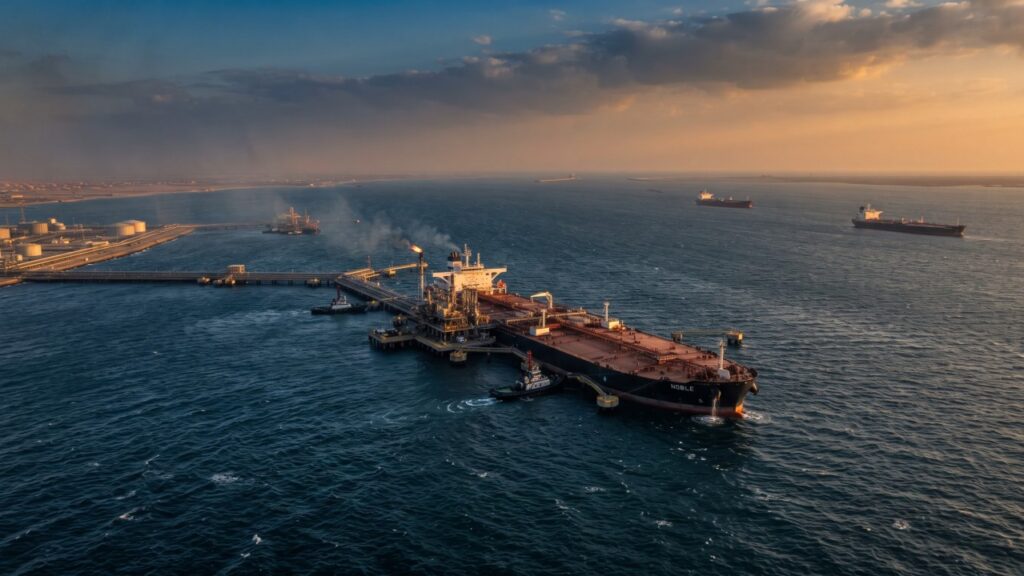
Soufre jaune solide en granulés et concassé, négoce de soufre E-Station
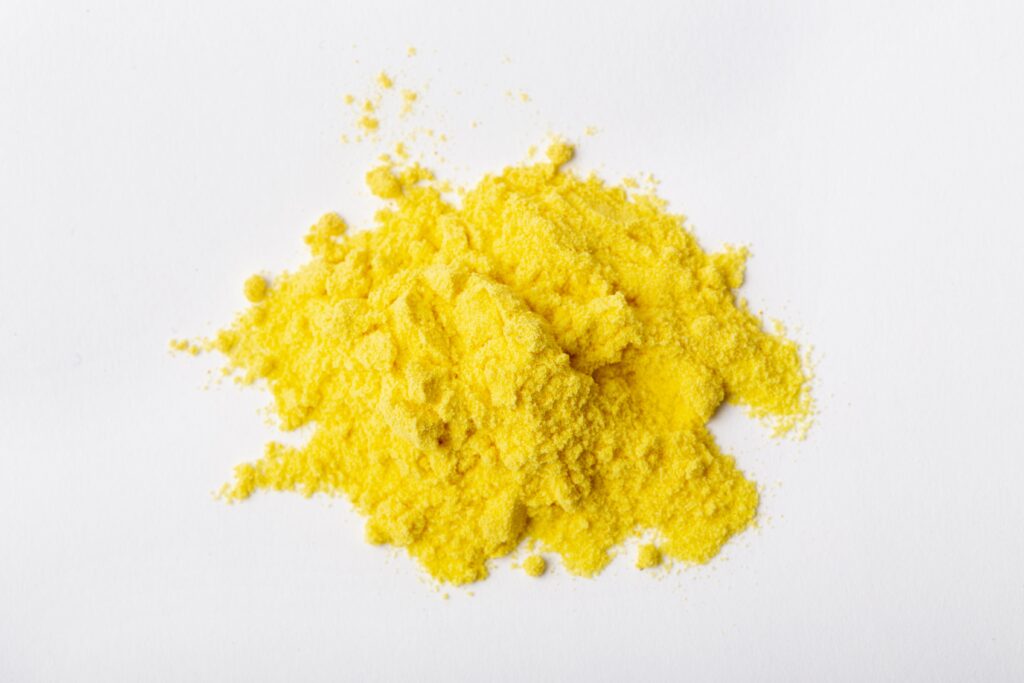
Superphosphate simple : soufre jaune transformé en acide sulfurique pour l'engrais phosphaté, E-Station

Agronomy · Sulfur

Single or triple superphosphate: phosphorus with or without sulfur

Single superphosphate contains 16 to 22% P2O5 and 12% sulfur, triple 44 to 48% P2O5 with no sulfur. Here is how they are made, what they cost in 2026 and which crops to choose them for.

Request a quotation →

Your supplier offers you superphosphate 18 at a price per tonne well below that of superphosphate 45, and you are hesitating. The comparison is made on the unit of phosphorus delivered to the field, then on an element that single superphosphate contains and the bag of triple lacks: sulfur.

Superphosphate is the oldest industrial phosphate fertilizer. Mosaic points out that the modern fertilizer industry was born in the 1840s with the attack of phosphate rock by sulfuric acid, and FerTech Inform indicates that single superphosphate still supplied more than 60% of the world’s phosphorus in the middle of the twentieth century before giving way to concentrated products.

Two centuries later, sulfuric acid remains the necessary route for all mineral phosphorus, and this acid is made from the solid sulfur we present on our page on sulfur trading. This article compares the two superphosphates, their contents, their prices and their shared dependence on sulfur.

What is single superphosphate?

Single superphosphate, or SSP, results from the direct reaction between ground phosphate rock and sulfuric acid. Mosaic writes the equation: tricalcium phosphate and sulfuric acid give monocalcium phosphate, soluble and available to plants, and calcium sulfate, in other words gypsum. This gypsum stays in the finished product, and it is what supplies the sulfur.

FerTech Inform describes manufacture in four steps: mixing of rock and acid, solidification in a reaction den for 20 to 40 minutes, curing in a pile for two to six weeks, then grinding and possibly granulation. The same source puts the acid requirement at about 390 kg of 93% sulfuric acid per tonne of SSP at 20% P2O5.

Superphosphate 18: reading the label

The product distributors call superphosphate 18 belongs to this family. Cerantis gives a content of 16 to 20% P2O5 and 11 to 12% sulfur, and stresses that single superphosphate is the only major phosphate fertilizer to supply a significant quantity of sulfur. One tonne of superphosphate 18 therefore supplies 180 kg of P2O5 and about 120 kg of sulfur, i.e. nearly 300 kg of SO3, which covers the sulfur needs of several hectares of cereals or of a demanding grassland.

Mosaic adds two industrial qualities: the product requires no special handling precautions and its manufacture generates no phosphogypsum to be stored, unlike the phosphoric acid route.

Triple superphosphate or superphosphate 45: concentration

Triple superphosphate, or TSP, follows a different path. According to Triple Performance, it is obtained by attacking phosphate rock with phosphoric acid, instead of sulfuric acid, which raises the content to about 45.5% P2O5. Cerantis gives a range of 44 to 48% P2O5, with no nitrogen and no sulfur, and presents it as the most concentrated straight phosphate fertilizer on the market.

The superphosphate 45 sold in France and the Maghreb corresponds to this grade. The sulfur has disappeared from the bag, but it has not disappeared from the chain: the phosphoric acid used to make triple is itself produced by sulfuric attack of the rock, as we explain in our article on sulfuric acid and phosphate fertilizers.

Single and triple superphosphate, figure by figure

Criterion Single superphosphate (SSP, “18”) Triple superphosphate (TSP, “45”) Source
P2O5 content 16 to 22% 44 to 48% Cerantis, FerTech Inform
Sulfur content 11 to 12% S 0 % Cerantis
Acid used Sulfuric, 390 kg/t Phosphoric FerTech Inform, Triple Performance
World price, July 2026 No benchmark quotation $719.50/t World Bank

Superphosphate price: what a unit of P2O5 costs in 2026

Triple has a regularly tracked international quotation, single much less so. The World Bank Pink Sheet gives for TSP an average of 474.60 dollars a tonne in 2024 and 577.60 dollars in 2025, then 713.50 dollars in May 2026, 735.60 in June and 719.50 in July 2026. At 45% P2O5, the July 2026 tonne works out at about 16 dollars per unit of P2O5, against a little over 10 dollars in 2024.

For single superphosphate, the price is negotiated locally, often ex-works, and the buyer has to redo the calculation: divide the price per tonne by 18 units of P2O5, then ask what the 120 kg of sulfur that come with it are worth.

Tunisian buyers know this trade-off well; we detail it in our article on DAP, TSP and MAP fertilizer prices in Tunisia, where Groupe Chimique Tunisien has been producing TSP at Sfax for decades.

Superphosphate fertilizer: which crop, which soil?

The agronomic choice follows from the contents. Mosaic places the advantage of SSP where phosphorus and sulfur are lacking at the same time, with grassland fertilization as the textbook case, and acknowledges that as a source of phosphorus alone it often costs more than concentrated products once transport is counted.

The COMIFER ranks lucerne, clover and forage grasses among the high-demand crops, between 100 and 200 kg of SO3 per hectare, which explains livestock farmers’ loyalty to this product, a point developed in our article on the sulfur requirement of grassland.

In West Africa, groundnuts benefit from the same effect: Industries Chimiques du Sénégal included a single superphosphate unit of 350,000 tonnes a year in its investment plan of 126 billion CFA francs signed in October 2025, according to AllAfrica, to feed the formulas intended for the groundnut basin. Triple superphosphate keeps the advantage over long distances and on soils already well supplied with sulfur, or in blends where sulfur comes from ammonium sulfate.

SSP and calcareous soil

A final criterion is the soil. Triple Performance points out that phosphorus availability depends on pH, with an optimum between 6.5 and 7.2, and that cold and wet conditions reduce the effectiveness of the application. The gypsum in SSP also supplies calcium, which makes it valued on acid sandy soils, and the sulfate it releases is directly available to the crop from the first spring.

Why superphosphate depends on sulfur

The 390 kg of sulfuric acid needed for each tonne of SSP come from a unit that burns solid sulfur. ICS has in fact coupled its future SSP unit with a new sulfuric acid unit of 700 tonnes a day.

Yet the World Bank notes that the price of sulfur has doubled since January 2026 following the disruptions in the Strait of Hormuz, which interrupted exports from Qatar. The 2026 global sulfur crisis thus hits both superphosphates, directly for single and through phosphoric acid for triple, and the manufacturer that secures its sulfur outside the Gulf secures its cost price at the same time.

What E-Station does

E-Station supplies solid sulfur to producers of sulfuric acid, superphosphate and phosphoric acid, and to the importers who supply them. The sulfur is offered as granules, pastilles or crushed lump, in bulk or in big bags, with a certificate of analysis per batch and origins outside the Gulf.

Our sulfur trading hub presents the available grades, and our pages on sulfur in Tunisia, sulfur prices in Tunisia and sulfur in Morocco are aimed at phosphate manufacturers in the Maghreb. West African producers will find the logistics through to the port of Dakar on sulfur in Senegal.

Frequently asked questions

What is the difference between single and triple superphosphate?

Single contains 16 to 22% P2O5 and 11 to 12% sulfur, because it is made with sulfuric acid, which leaves gypsum in the product. Triple superphosphate, obtained with phosphoric acid, contains 44 to 48% P2O5 and no sulfur.

How much does superphosphate cost in 2026?

The World Bank quotes triple superphosphate at 719.50 dollars a tonne in July 2026, against an average of 474.60 dollars in 2024. Single has no world benchmark quotation and is negotiated locally, often ex-works.

Why does single superphosphate contain sulfur?

The reaction between phosphate rock and sulfuric acid produces monocalcium phosphate and calcium sulfate. This gypsum stays in the fertilizer and supplies about 12% sulfur, which makes it the only major phosphate fertilizer that genuinely contains sulfur.

When should you choose single superphosphate rather than triple?

Single is the right choice when the plot lacks both phosphorus and sulfur, on grassland, lucerne or groundnuts, and when the transport distance remains short. Triple wins over long distances and on soils already supplied with sulfur.

How much sulfuric acid does a tonne of superphosphate need?

FerTech Inform puts the requirement at about 390 kg of 93% sulfuric acid per tonne of SSP at 20% P2O5. This acid comes from burning solid sulfur, whose price has doubled since January 2026 according to the World Bank.

You produce superphosphate, sulfuric acid or phosphoric acid and are looking for a certified supply of solid sulfur, from outside the Gulf, delivered to the port of your choice. Request a quotation stating your sulfuric acid capacity and the port of entry, to obtain a delivered price and a shipping schedule.
Foliar sulfur application: what the leaf really absorbs

Soufre en poudre jaune, matière première des engrais soufrés négociée par E-Station
Apport de soufre en foliaire : soufre jaune, matière première des engrais soufrés liquides, négociée par E-Station

Agronomy · Sulfur

Foliar sulfur application: what the leaf really absorbs

A foliar fertilizer at 4 or 5 litres per hectare supplies at most 1.7 kg of SO3, while a wheat crop absorbs 50 to 70. Here is what foliar application can correct, and why the rate should be planned through the soil.

Request a quotation →

Your wheat is yellowing from the top at the end of winter, your adviser mentions sulfur deficiency and the sprayer is already hitched up for the fungicide. It is tempting to slip a sulfur foliar fertilizer into the tank and consider the problem solved. Before doing so, you need to know how much sulfur a leaf can really absorb, because a foliar sulfur application carries far less weight than a rate incorporated into the soil.

Sulfur entered fertilisation programmes through the soil, and the foliar route was added with liquid products and tank mixes. The COMIFER points out that atmospheric fallout, down to about 10 kg of SO3 per hectare per year in France, no longer covers crop requirements, which has made fertilizer applications essential.

This sulfur, whether sprayed on the leaf or spread on the soil, comes from the same raw material, the solid sulfur we describe on our page on sulfur trading. This article compares foliar sulfur application with the root route, using figures from Arvalis and Terres Inovia.

Foliar sulfur application: how much gets through the leaf?

The starting point for a foliar sulfur application is an order of magnitude. In its summary of foliar fertilizers on straw cereals, Arvalis calculates that at the usual rates of 4 to 5 litres per hectare, a foliar fertilizer supplies up to 1.7 kg of SO3 per hectare, an amount the institute describes as negligible compared with requirements ranging from a few dozen to several hundred kilos depending on the crop.

The same document specifies that foliar uptake requires high humidity and that in dry weather only a very small fraction of the sprayed nutrients enters the leaf. The website Fertilisation-edu draws the practical conclusion: the leaf absorbs a limited amount of sulfur and foliar application cannot replace soil application.

Against this ceiling, requirements are well known. Arvalis puts the uptake of a straw cereal at between 50 and 70 kg of SO3 per hectare over the cycle, with a peak at stem elongation, and notes that 70% of requirements have already been absorbed by the 2-node stage. Rapeseed far exceeds these values, as we explain in our article on sulfur on rapeseed.

Foliar sulfur application: reading the label in kilos of SO3

Products sold for spraying come in two families. Complex foliar fertilizers, at a few litres per hectare, fall within the range described by Arvalis. High-rate soluble salts do better: the K+S epsoTOP, a magnesium sulfate with 32.5% SO3 and 16% MgO, is used as a 5 or 7% solution at 25 kg per hectare on cereals, maize and sunflower, or about 8 kg of SO3 per hectare per pass.

The manufacturer itself presents it as a complement to cover peak demand when root uptake weakens. That is the only setting in which a foliar sulfur application lives up to its promise. Before buying, always convert the recommended rate into kilos of SO3 actually supplied per hectare, by multiplying the quantity of product by its content, then compare this result with the crop's requirements.

When is foliar sulfur application on wheat justified?

The answer lies in the calendar. According to the sheet from Arvalis, the effective window for sulfur on wheat and winter barley runs from mid-tillering to the 1 cm ear stage, with a rate of 20 to 50 kg of SO3 per hectare in situations without regular organic inputs, and a deficiency can cost up to 12 q/ha through a reduced number of ears.

When symptoms appear later, Semences de France, drawing on Arvalis references, states that an application of 30 to 40 kg of SO3 remains possible up to the 1 to 2-node stage, with partial recovery, and that all forms of sulfur are equally effective, foliar or soil-applied, as long as the rate is reached.

Foliar sulfur application on wheat is therefore justified when a symptom is visible, before 2 nodes, with a product dosed accordingly, and it complements a soil application already made. We describe the symptoms to look for in our article on sulfur deficiency in wheat.

Correcting rapeseed according to CETIOM

On rapeseed, the historical CETIOM reference, cited by Fertilisation-edu, is to spray 60 kg of SO3 per hectare as ammonium sulfate diluted in 500 litres of water when a deficiency is observed. This rate clearly shows the logic: the product is applied with the sprayer, but most of it falls to the ground and acts through the roots, with the leaf taking up only a fraction. Here the sprayer serves to spread a dose of sulfate quickly on a field that is already covered.

How should sulfur be applied to the soil?

The soil remains the main route and the benchmarks are simple. Arvalis considers sulfate, elemental sulfur and thiosulfate equally effective on cereals when applied at the right time, the choice being made on cost per unit and compatibility with nitrogen, and the institute observes no further gain above 60 kg of SO3 per hectare.

The COMIFER distinguishes sulfate, which is directly available, thiosulfate, which is quickly converted into sulfate, and micronised elemental sulfur, whose oxidation by micro-organisms is slower. On a winter cereal, sulfate is applied at the end of winter, with the first or second nitrogen pass; on a spring crop, it is applied before sowing. None of these forms needs to be replaced by a foliar sulfur application when the calendar has been respected. Rates by crop are detailed in our article on sulfur for wheat.

Liquid agricultural sulfur: sulfur-enriched nitrogen solution and thiosulfate

Liquid agricultural sulfur holds a special place, because it is sprayed onto the soil with liquid nitrogen. Sulfur-enriched nitrogen solution and ammonium thiosulfate supply dozens of units of SO3 per hectare in one pass, which places them in base fertilisation, even though the equipment used is a sprayer. We devote a full article to liquid sulfur fertilizer and thiosulfate, and another to ammonium sulfate, the most common solid form.

Cost per unit: foliar or soil sulfur application

The last criterion is economic. Arvalis concludes that, per unit of nutrient, foliar fertilizers are far less cost-effective than conventional fertilizers applied to the soil.

This difference widened in 2026: the World Bank notes that the price of sulfur has doubled since January 2026 following disruption in the Strait of Hormuz, which raises the cost of ammonium sulfate, thiosulfate and magnesium sulfates alike. The 2026 global sulfur crisis is a reminder that every unit, whether it comes from a foliar sulfur application or a soil pass, was extracted from a tonne of solid sulfur bought by a fertilizer manufacturer.

What E-Station does

E-Station supplies solid sulfur to sulfur fertilizer manufacturers, sulfuric acid producers and distributors serving cereal and oilseed growing areas. The sulfur is offered as granules, pastilles or crushed lumps, in bulk or big bags, with a certificate of analysis per lot and origins outside the Gulf.

Our sulfur trading hub presents the available grades, and our pages on sulfur in France and sulfur delivery in France describe the sea logistics through to unloading, on FOB, CFR, CIF or DAP terms. Liquid fertilizer manufacturers in Quebec and Ontario will find the same information on sulfur in Canada. Whether it ends up in solution for a foliar sulfur application or as granules for the soil, the product starts from the same tonne.

Frequently asked questions

How much sulfur does a foliar application supply?

Arvalis calculates that a foliar fertilizer at 4 or 5 litres per hectare supplies up to 1.7 kg of SO3, whereas a cereal absorbs 50 to 70 kg of SO3 over its cycle. A soluble magnesium sulfate at 25 kg/ha rises to about 8 kg of SO3 per pass.

When should foliar sulfur be applied to wheat?

Foliar sulfur on wheat is justified when symptoms are visible, before the 2-node stage, because 70% of requirements have been absorbed by that stage according to Arvalis. It complements a soil application of 20 to 50 kg of SO3 made between mid-tillering and the 1 cm ear stage.

How should sulfur be applied to the soil?

Sulfate, thiosulfate and elemental sulfur are equally effective on cereals when applied at the end of winter with nitrogen, or before sowing for a spring crop. Arvalis observes no further gain above 60 kg of SO3 per hectare.

Why does foliar sulfur cost more per unit?

Foliar fertilizers are formulated for a few litres per hectare and charge for the formulation as much as for the nutrient. Arvalis considers them far less cost-effective than conventional fertilizers per unit of nutrient, and the rise in sulfur prices in 2026 has widened the gap.

What sulfur rate for correcting deficient rapeseed?

CETIOM, cited by Fertilisation-edu, recommends 60 kg of SO3 per hectare as ammonium sulfate diluted in 500 litres of water. Most of this dose acts through the soil after spraying, with the leaf absorbing only a fraction.

You manufacture liquid or solid sulfur fertilizers, or you produce sulfuric acid, and you are looking for certified solid sulfur supply from outside the Gulf, delivered to the port of your choice. Request a quotation stating whether the sulfur feeds a liquid or solid line, so that we can steer the choice of form from the first offer, whether it supplies a foliar sulfur application or base fertilisation.

Fertilizer prices in Senegal: subsidised bags, quotas and real cost in 2026

Soufre élémentaire jaune destiné aux fabricants d'engrais et d'acide sulfurique, E-Station
Prix engrais Sénégal : sacs d'engrais subventionnés et soufre pour les ICS, matière première négociée par E-Station

Energy markets · Sulfur

Senegal fertilizer prices: subsidised bags, quotas and real cost in 2026

The bag of 6-20-10 groundnut fertilizer fell from 8,000 to 6,000 FCFA between 2023 and 2025, with the State covering more than 60% of the bill. Here are the prices, the tonnages and what lies behind the bag.

Request a quotation →

You are a groundnut grower in the Kaolack basin, manager of an input outlet in Touba or an importer in Dakar, and you are looking for the real price of inputs for the 2026 season. The Senegal fertilizer price shown on the subsidised bag tells only part of the story. The other part is written at the port of Dakar and on the world markets for phosphate, urea and sulfur.

The Senegal fertilizer price is first of all an administered price. Every spring, the Ministry of Agriculture, Food Sovereignty and Livestock publishes a circular setting the selling price of subsidised fertilizers, and growers then learn the price of the 50 kg bag.

Behind this posted price, the industrial chain starts at Industries Chimiques du Sénégal, in Darou and Mbao, which process Taïba phosphate with sulfuric acid, and therefore with imported sulfur of the kind we present on our page on sulfur trading. Here are the known prices, the volumes committed by the State and the growing weight of the subsidy.

Senegal fertilizer prices: how much does a 50 kg bag cost?

The subsidised Senegal fertilizer price has fallen three years in a row. In May 2024, Minister Mabouba Diagne presented a comparison reported by Senego : the bag of 6-20-10 fell from 8,000 FCFA in 2023 to 6,500 FCFA in 2024, 15-15-15 from 11,000 to 9,500 FCFA and 9-23-30 from 13,000 to 12,500 FCFA, with the subsidy rate raised to as much as 61.19% on some formulas.

For the 2025-2026 season, the Senegalese Press Agency reports a further drop: 8,500 FCFA for the bag of 15-15-15 intended for maize and 6,000 FCFA for the bag of 6-20-10 intended for groundnuts.

Senegal fertilizer prices, formula by formula

Formula (50 kg bag) 2023 2024 2025 Source
NPK 6-20-10 (groundnut) 8,000 FCFA 6,500 FCFA 6,000 FCFA Senego, APS
NPK 15-15-15 (maize, rice) 11,000 FCFA 9,500 FCFA 8,500 FCFA Senego, APS
NPK 9-23-30 (horticulture) 13,000 FCFA 12,500 FCFA not published Senego

10-10-20 and urea are missing from this table, because the prices published by the Senegalese press focus on the groundnut and maize formulas that account for most of the volume. If you are looking for the price of 10-10-20 fertilizer in Senegal, ask your regional rural development directorate for the scale in the current circular, as it changes every season.

The 1,000 FCFA bag applies to organic fertilizers

A circular of 22 April 2025 gave rise to talk of a 1,000 FCFA bag of fertilizer. According to Senego, this single price applies to foliar fertilizers, organic fertilizers and organic soil improvers, subsidised at between 86.67% and 94.44%. NPK and urea fall under the scale described above.

Who sets the Senegal fertilizer price?

The decision rests with the Ministry of Agriculture, which negotiates with approved suppliers and the National Council for Rural Consultation and Cooperation. For the 2026-2027 season, PressAfrik reports that a circular of 30 April 2026 sets a subsidy rate above 60% on the main inputs, with the State covering between 260,000 and 275,000 FCFA per tonne on supplier prices of between 385,000 and 430,000 FCFA per tonne.

By difference, the grower pays roughly 125,000 to 155,000 FCFA per tonne depending on the formula, which puts the 50 kg bag in a range close to that of 2025.

The season budget follows the same logic and weighs directly on the Senegal fertilizer price. According to Senego, the State mobilised 130 billion FCFA for the 2026 season, including 69 billion for fertilizers, while still owing 154 billion FCFA to fertilizer and seed suppliers from past seasons. The same article puts the fertilizers to be distributed under the subsidised programme at 59,152 tonnes, a four-year high. These arrears explain why the subsidised price is holding steady rather than falling further.

Senegal fertilizer prices 2026: how the bag price is made up

The supplier price of 385,000 to 430,000 FCFA per tonne is formed on international markets, far from the counter where the Senegal fertilizer price is displayed. In April 2026, the World Bank recorded urea at 850 dollars per tonne, up 80% since February, and a sulfur price that had doubled since January 2026 following disruption in the Strait of Hormuz.

The August 2026 Pink Sheet from the same institution gives DAP at 781.30 dollars per tonne and TSP at 719.50 dollars in July 2026, against 2024 annual averages of 563.70 and 474.60 dollars. The bag sold at 6,000 FCFA therefore hides a raw material whose cost has risen by more than a third in two years, and the 2026 global sulfur crisis is one of the drivers.

ICS, Taïba phosphate and imported sulfur

The ICS, a subsidiary of the Indorama group, delivered a record 105,000 tonnes of fertilizer for the 2025-2026 season, against 70,000 tonnes the previous season, and are targeting 125,000 tonnes in 2026-2027.

The breakdown published by Dakaractu counts more than 54,000 tonnes of 6-20-10 and more than 27,000 tonnes of 15-15-15. The 126 billion FCFA investment agreement signed with APIX in October 2025, described by AllAfrica, provides for a 700 tonnes-per-day sulfuric acid unit, a 350,000 tonnes-per-year single superphosphate unit and fertilizer capacity raised to 400,000 tonnes per year by 2028. This unit will burn imported solid sulfur, unloaded at the port of Dakar. The Senegal fertilizer price therefore depends on the price and availability of this sulfur, which we track on our page on sulfur in Senegal.

Groundnut fertilizer in Senegal: the right calculation for the grower

Groundnuts remain the crop that absorbs the most subsidised fertilizer. The 2026 programme described by Senego provides for 61,923 tonnes of groundnut seed, far ahead of cowpea, maize and sorghum, and ICS devotes more than half of its production to 6-20-10.

This formula supplies phosphorus from superphosphate, which also contains sulfur in the form of calcium sulfate, useful to the legume for protein synthesis. We detail the agronomic reasoning in our article on fertilizers for groundnuts in Senegal and West African crops and the chemistry of the product in our article on single and triple superphosphate.

Growers comparing the Senegal fertilizer price of the subsidised bag with the parallel market should check the printed formula and the presence of sulfur in the analysis. The same reasoning applies in neighbouring countries, as we show in our article on NPK fertilizer prices in Côte d’Ivoire.

What E-Station does

E-Station supplies solid sulfur to producers of sulfuric acid and phosphate fertilizers, to manufacturers and to importers in West Africa. The sulfur is offered as granules, pastilles or crushed lumps, in bulk or big bags, with a certificate of analysis per lot and origins outside the Gulf. Our sulfur trading hub presents the available grades, and our pages on sulfur in Senegal and sulfur delivery to Senegal describe the sea logistics through to unloading at the port of Dakar, on FOB, CFR, CIF or DAP terms.

The pages sulfur in Mali and sulfur in Côte d’Ivoire cover the neighbouring countries. Following the Senegal fertilizer price means going back to this raw material, and that is exactly the business we are in.

Frequently asked questions

How much does a bag of fertilizer cost in Senegal in 2026?

The Senegal fertilizer price is set every year by ministerial circular. For the 2025-2026 season, the 50 kg bag of 6-20-10 groundnut fertilizer sold for 6,000 FCFA and the bag of 15-15-15 for 8,500 FCFA according to APS. For 2026-2027, the circular of 30 April 2026 maintains a subsidy above 60%, with the State covering 260,000 to 275,000 FCFA per tonne.

Why are fertilizer prices subsidised in Senegal?

The supplier price is between 385,000 and 430,000 FCFA per tonne in 2026, a level out of reach for most family farms. The State devotes 69 billion FCFA to fertilizers out of a season budget of 130 billion to keep the bag at an affordable price.

Which fertilizer should be used for groundnuts in Senegal?

The reference formula of the subsidised programme is NPK 6-20-10, produced by ICS from Taïba phosphate. It supplies phosphorus and sulfur in the form of superphosphate, two nutrients useful to the legume on the sandy soils of the groundnut basin.

Why do fertilizer prices depend on sulfur?

Taïba phosphate is converted into phosphoric acid and then into fertilizer using sulfuric acid, made from imported sulfur. The World Bank notes that the sulfur price has doubled since January 2026, which raises the cost of every tonne of 6-20-10 or 15-15-15 produced in Darou.

When are fertilizer prices announced in Senegal?

The Ministry of Agriculture publishes a circular in spring, before distribution starts. The circular for the 2025-2026 season is dated 22 April 2025 and the one for 2026-2027 30 April 2026, with fertilizers made available from May.

You produce sulfuric acid or phosphate fertilizers in Senegal, or you import sulfur for the West African market, and you are looking for certified supply from outside the Gulf, delivered to the port of Dakar. Request a quotation stating the tonnage and the arrival window in Dakar, so that your supply matches the season calendar, when the Senegal fertilizer price is decided.

Nitrogen-sulfur fertilizer: choosing the right N/SO3 ratio and rate

Soufre jaune solide en granulés et concassé, négoce de soufre E-Station
Engrais azoté soufré : granulés de soufre jaune, matière première des ammonitrates soufrés fournie par E-Station

Agronomy · Sulfur

Nitrogen-sulfur fertilizer: choosing the right N/SO3 ratio and rate

Between a 27+9, a 25+20 and ammonium sulphate, the nitrogen-to-sulfur ratio ranges from 3 to 0.35. Arvalis sets the target at 2-3 on wheat. Here is how to decide.

Request a quotation →

Your adviser suggests a sulfur ammonium nitrate for the first application, your neighbour swears by ammonium sulphate, and the cooperative catalogue lists six formulas that all contain sulfur. The useful question is how much nitrogen comes with each unit of SO3.

Nitrogen-sulfur fertilizers exist because soil sulfur is no longer enough. Atmospheric deposition in France has fallen to around ten kilos of SO3 per hectare per year according to COMIFER, while French arable crops remove nearly 742,000 tonnes a year. The deficit is made up with fertilizer, whose sulfur goes back to the raw material described on our page on sulfur trading. Our position fits in one sentence: choose a nitrogen-sulfur fertilizer on the ratio between the nitrogen and sulfur it supplies, rather than on the trade name on the bag.

What does a nitrogen-sulfur fertilizer add compared with straight ammonium nitrate?

Sulfur and nitrogen work together in the synthesis of sulfur amino acids. When sulphate is lacking, the nitrogen taken up accumulates in a form the plant cannot use, and yield plateaus despite adequate nitrogen fertilization. Arvalis puts losses due to sulfur deficiency at more than 10 quintals per hectare on shallow soils. Supplying both elements in the same granule solves a logistical problem as much as an agronomic one, with a single pass and even distribution across the field.

The N/SO3 ratio of a nitrogen-sulfur fertilizer at the 1 cm ear stage

According to Arvalis, the optimal N/SO3 ratio is between 2 and 3 at the 1 cm ear stage, when uptake of both elements really begins. Among products on the market, a 27+9 sulfur ammonium nitrate gives a ratio of 3, a 25+20 falls to 1.25, and ammonium sulphate, with 21% nitrogen for 60% SO3, drops to 0.35. The first covers a maintenance need while the nitrogen does its work; the last corrects an established deficiency.

One unit of sulfur does not replace one unit of nitrogen

The idea has been doing the rounds in farmyards since the price of nitrogen soared. Arvalis rejects it outright: one unit of sulfur can never replace one unit of nitrogen. The two elements have similar uptake patterns and distinct roles, and the institute specifies that sulfur has no systematic effect on grain protein content. The sulfur in a nitrogen-sulfur fertilizer serves to unlock nitrogen, never to save on it.

Sulfur ammonium nitrate: how do the formulas on the market compare?

Arvalis fertilizer sheets give the exact compositions. The 27+9 sulfur ammonium nitrate contains 27% nitrogen, split equally between 13.5% ammoniacal and 13.5% nitrate forms, plus 9% SO3. The 25+20 sulfur ammonium nitrate lowers nitrogen to 25% and raises sulfur to 20% SO3, with the same 12.5 / 12.5 split. Ammonium sulphate supplies 21% nitrogen and 24% sulfur, i.e. 60% SO3 according to the compound’s data sheet, entirely in ammoniacal form.

Nitrogen-sulfur fertilizer Nitrogen and SO3 N/SO3 ratio Typical use
Sulfur ammonium nitrate 27+9 27% N, 9% SO3 3,0 Wheat and barley, tillering application, maintenance
Sulfur ammonium nitrate 25+20 25% N, 20% SO3 1,25 Free-draining soils, wet winter, oilseed rape at the end of winter
Ammonium sulphate 21+60 21% N, 60% SO3 0,35 Correcting deficiency, alkaline soils

One detail reassures those hesitating between chemical forms. Arvalis considers that the form of the fertilizer (sulphate, thiosulphate or elemental sulfur) does not affect the effectiveness of the application on cereals, and that the choice comes down to cost and balance with other nutrients. A nitrogen-sulfur fertilizer is therefore judged on the price per unit of SO3 delivered to the field. Liquid forms are covered in our article on liquid sulfur fertilizer, and ammonium sulphate in the article on its rates and use.

Nitrogen and sulfur on wheat: what rate to choose?

The figures from Arvalis remain modest compared with oilseed rape. On soft wheat and winter barley grown without regular organic inputs, the institute recommends 20 to 50 kg of SO3 per hectare in high-risk situations and 20 kg in intermediate situations, and allows skipping it only on deep soils after a dry winter. Spring cereals need 20 units less.

A nitrogen-sulfur fertilizer applied at tillering covers this need without an extra pass. The application is made between the start and end of tillering on wheat and winter barley, and before the two-node stage to correct visible symptoms, as detailed in our article on sulfur for wheat.

The winter rainfall threshold and the application decision

Sulphate follows drainage water, and rainfall from October to March serves as an indicator. Arvalis observes almost no leaching below 300 mm cumulative rainfall over this period, whereas above 550 mm the available stock, around 60 kg of SO3 per hectare, is entirely lost to the drains. Between these two limits, soil type decides: chalk, shallow clay-limestone soils and sands require a systematic application, deep clay silts much less so. A field that has received manure for twenty years can generally do without mineral sulfur, except after an exceptionally wet winter.

Sulfur fertilizer prices: what the 2026 season cost

The sulfur added to the granule comes at a price, and its cost depends on a world market. Réussir Grandes Cultures reports an oilseed rape formula 24-0-0+18S bought at 346 euros a tonne in May 2025 and a cereal formula 21-13-0+14S at 475 euros, while 33.5 ammonium nitrate in big bags went from 380 euros in May 2025 to 550 euros in March 2026. The ex-works price of ammonium nitrate 27 stood at 440.50 euros a tonne on 4 September.

The price of a nitrogen-sulfur fertilizer therefore has two parts, nitrogen and sulfur. The cause lies in the 2026 global sulfur crisis : the Middle East FOB price rose from 173 dollars a tonne at the end of January 2025 to 531.50 dollars at the end of January 2026 according to Argus Media. Manufacturers of sulfur ammonium nitrate pass this cost on through their 9 or 20 points of SO3.

Organic sulfur fertilizer: permitted products

No synthetic nitrogen-sulfur fertilizer, whether sulfur ammonium nitrate or ammonium sulphate, is allowed under organic specifications. The permitted sulfur fertilizers are listed in Annex II of Implementing Regulation (EU) 2021/1165, of which the Nouvelle-Aquitaine Regional Chamber of Agriculture gives a practical reading: elemental sulfur, natural calcium sulphate containing at least 25% CaO and 35% SO3, natural kieserite, and potassium sulphate obtained from crude potash salt by physical extraction.

On organic cereals, the trial results are surprising. Arvalis conducted seven trials in 2019 and 2020 in the Paris Basin, on winter soft wheat, oats and triticale, with 50 kg of SO3 per hectare as kieserite at the end of winter. No yield difference appeared between the control and the sulfur treatment, and protein content was even significantly reduced. The institute advises keeping sulfur for truly demanding crops, as our articles confirm on sulfur for oilseed rape and on the sulfur requirements of grassland and lucerne.

What E-Station does

E-Station supplies the solid sulfur that goes into every nitrogen-sulfur fertilizer, to granulation plants, sulfuric acid producers and agricultural distributors. The product comes as granules, pastilles or crushed lumps, in bulk or in big bags, with a certificate of analysis for each lot and origins outside the Gulf, a criterion that has become decisive since the tensions around Hormuz. Our sulfur trading hub presents the available grades, and the pages sulfur in France, sulfur delivery in France and sulfur in Belgium describe the shipping organisation up to unloading on FOB, CFR, CIF or DAP terms, complemented by our page shipping documents and incoterms.

Frequently asked questions

Which nitrogen-sulfur fertilizer should you choose for wheat?

Arvalis sets an N/SO3 ratio of 2 to 3 at the 1 cm ear stage. A 27+9 sulfur ammonium nitrate has a ratio of 3 and suits the tillering application in most situations, while a 25+20 is best kept for free-draining soils after a very wet winter.

How many units of sulfur should be applied to cereals?

Arvalis recommends 20 to 50 kg of SO3 per hectare on soft wheat and winter barley in high-risk situations, and 20 kg in intermediate situations. Spring cereals need 20 units less.

Does sulfur save on nitrogen?

No. Arvalis states that one unit of sulfur can never replace one unit of nitrogen. Sulfur lets the plant make use of the nitrogen it absorbs, without reducing the nitrogen rate in the fertilization plan.

Why have sulfur fertilizer prices risen?

The sulfur in the granule comes from the world market for solid sulfur, whose Middle East FOB price rose from 173 dollars a tonne at the end of January 2025 to 531.50 dollars at the end of January 2026 according to Argus Media. Manufacturers pass this cost on to sulfur formulas.

Which sulfur fertilizer can be used in organic farming?

Implementing Regulation (EU) 2021/1165 allows elemental sulfur, natural calcium sulphate, kieserite of natural origin and potassium sulphate obtained by physical extraction. On organic cereals, seven Arvalis trials showed no yield gain with 50 kg of SO3 per hectare.

You granulate sulfur ammonium nitrates, formulate SO3-enriched NPKs or distribute these fertilizers to cooperatives, and securing the solid sulfur for your nitrogen-sulfur fertilizer determines your season. Request a quotation from E-Station, specifying the particle size and target port, to get a priced answer in the form that suits you.

Sulfur supplier in Algeria: how to import and at what price in 2026

Soufre en poudre jaune, matière première des engrais soufrés négociée par E-Station
Fournisseur soufre en Algérie : soufre granulé jaune pour l'industrie et l'agriculture algériennes, livré par E-Station

Africa · Sulfur

Sulfur supplier in Algeria: how to import and at what price in 2026

Superphosphate in Annaba, the future Bled El Hadba complex, sulfur dusting of vines: Algeria consumes imported sulfur. Here are the buyers, the delivered price in Annaba or Arzew and the documentary process in 2026.

Request a quotation →

You run purchasing for a fertilizer complex, a sulfuric acid unit or an agricultural distribution network in Algeria, and your long-standing sulfur supplier ships from the Gulf with delays and prices that double. You are looking for a sulfur supplier in Algeria able to secure the origin, the quality and the import file.

Algeria is a leading producer of nitrogen fertilizers and an importer of sulfur for its phosphates. The French Treasury Directorate General puts Algerian fertilizer exports at 1.4 billion dollars in 2023, down 41.6% year on year, in foreign trade 91% dominated by hydrocarbons.

The solid sulfur that feeds the sulfuric acid and superphosphate units arrives by ship, and our page on sulfur trading describes the available grades. Our conviction: in 2026, the right sulfur supplier in Algeria is judged on three points, an origin outside the Strait of Hormuz, a certificate of analysis per lot and command of the Algerian documentary process.

Who buys agricultural and industrial sulfur in Algeria?

The first buyer is the phosphate fertilizer industry. The Fertial platform in Annaba, a joint venture 66% owned by the Spanish group Villar Mir and 34% by Asmidal according to a University of Annaba dissertation, has a single superphosphate line of 1,200 tonnes per day and two phosphate fertilizer lines of 1,000 tonnes per day each, alongside its ammonia, nitric acid and ammonium nitrate units. Single superphosphate is made by attacking phosphate with sulfuric acid, and this acid comes from burning sulfur. These two sites are the first customer of any sulfur supplier in Algeria.

Bled El Hadba, the future major consumer of sulfuric acid

The integrated phosphate project at Bled El Hadba changes the scale. According to Algérie Éco, the complex will process nearly 10 million tonnes of raw phosphate per year at the Tébessa mine to produce about 6 million tonnes of enriched phosphate, then 4 million tonnes of phosphate fertilizers, DAP, MAP and NPK, at the Oued Kebrit industrial site in Souk Ahras, with its own sulfuric acid, phosphoric acid and ammonia units.

A sulfur supplier in Algeria must now plan its volumes on this scale. The first cargoes are expected in the first quarter of 2027 through the new ore quay at the port of Annaba, linked by 422 km of railway. A sulfuric acid unit of this size will represent an unprecedented need for imported sulfur in Algeria.

Agricultural sulfur in Algeria: vines, orchards and calcareous soils

The second outlet is directly agricultural. Dusting sulfur and wettable sulfur remain the basis of powdery mildew control on vines, and Techniloire records in France an average of 17 kg per pass for dusting and 6.7 kg for wettable sulfur, for 6.5 to 7.5 anti-mildew treatments per season. The vineyards of the Mitidja and Oran regions, citrus orchards and irrigated areas on calcareous soils use the same products, as well as elemental sulfur to lower the pH and correct the deficiencies described in our article on elemental sulfur in agriculture.

A sulfur supplier in Algeria therefore serves two very different markets. These distributors buy crushed or powdered sulfur, in big bags or bags, with certified purity.

Sulfur prices in Algeria: what makes up the delivered price in Annaba or Arzew

The price of sulfur delivered to Algeria is built from international indices. Argus Media reports that CFR Indonesia sulfur rose from 101 dollars per tonne in July 2024 to 554 dollars at the end of January 2026, before the conflict in the Middle East, and that spot offers to Africa reached 580 to 700 dollars per tonne CFR at the end of March 2026.

A sulfur supplier in Algeria builds its offer on these same quotations. On 28 May 2026, S&P Global recorded Middle East FOB at 815 to 820 dollars and CFR Brazil at 1,200 dollars, records that pushed Mosaic to suspend part of its phosphate production in Brazil and Louisiana. The 2026 global sulfur crisis therefore hit Maghreb buyers dependent on the Gulf head-on, and our article on the price of sulfur per tonne details the indices to follow.

Sulfur supplier in Algeria: why origin matters as much as the FOB price

An attractive Middle East FOB price is worthless if the vessel cannot leave the Gulf. Since the Strait of Hormuz closed, cargoes loaded at Ras Laffan, Jubail or Ruwais have suffered delays and insurance surcharges that feed into the delivered price. Mediterranean, European, North American or Kazakh origins give Algerian buyers a direct transit to Annaba, Skikda, Arzew or Algiers, without passing through a closed strait. The same reasoning applies to the whole Maghreb, as shown on our pages on sulfur prices in Morocco and agricultural sulfur in Tunisia.

Importing sulfur into Algeria: the 2026 regulatory process

Algeria reorganised its foreign trade in summer 2025. The law firm LEX Africa describes executive decrees 25-233, 25-234 and 25-235 of 3 September 2025, which dissolve the ALGEX agency and create an Algerian Import Authority and an Algerian Export Authority. Since 9 July 2025, importers must submit a provisional import programme approved by the Ministry of Foreign Trade before any bank domiciliation or opening of a letter of credit, and must domicile all their operations with a single bank, except by derogation for large companies. Only companies that produce or resell goods as they are may import goods.

Documents the supplier must provide for customs clearance

A sulfur supplier in Algeria must deliver a complete, consistent file: pro forma invoice for domiciliation, certificate of origin, certificate of analysis per lot stating purity, moisture, ash and acidity, bill of lading, packing list and declaration under customs heading 2503. The most widely used Incoterms are CFR and CIF Annaba or Arzew, with the buyer keeping control of customs clearance, or DAP when the buyer wants sulfur delivered to the plant. We explain the documentary mechanics and Incoterms in our article on bitumen purchasing and documentary logistics, whose principles apply to sulfur.

How to choose a sulfur supplier in Algeria?

The first criterion is quality. Sulfur intended for sulfuric acid must have a purity of at least 99.5% with very low ash and organic matter content, and agricultural sulfur must be free of arsenic and selenium above regulatory thresholds. The certificate of analysis per lot, issued by an independent laboratory, separates serious suppliers from middlemen.

A serious sulfur supplier in Algeria provides this document without being asked. The second criterion is form: granules for industrial bulk, pastilles or crushed sulfur for big bags and agricultural distribution. The third is the supplier's ability to organise the vessel, insurance and unloading from start to finish, rather than selling FOB and leaving the buyer to handle chartering in a tight market.

What E-Station does

E-Station acts as a sulfur supplier in Algeria for sulfuric acid producers, phosphate fertilizer manufacturers and agricultural distributors. The sulfur is offered as granules, pastilles or crushed lumps, in bulk or big bags, with a certificate of analysis per lot and origins outside the Gulf, which avoids the Strait of Hormuz. Sea logistics are organised through to unloading in Annaba, Skikda, Arzew or Algiers, on FOB, CFR, CIF or DAP terms. Our pages on sulfur in Algeria and sulfur delivery to Algeria set out the conditions, and our sulfur trading hub presents the grades available for the whole Maghreb, including Tunisia.

Frequently asked questions

Who are the sulfur buyers in Algeria?

The main buyers are producers of phosphate fertilizers and sulfuric acid, such as the Fertial platform in Annaba with its single superphosphate line of 1,200 tonnes per day, and tomorrow the Bled El Hadba complex. Agricultural distributors also buy dusting and wettable sulfur for vines and orchards.

What is the price of sulfur in Algeria in 2026?

The delivered price in Annaba or Arzew follows international indices. Argus Media recorded spot offers to Africa of 580 to 700 dollars per tonne CFR at the end of March 2026, and S&P Global a record Middle East FOB price of 815 to 820 dollars at the end of May. Freight, insurance and the origin of the sulfur explain the gap between these indices and the delivered price.

How do I import sulfur into Algeria?

Since July 2025, importers must have a provisional import programme approved by the Ministry of Foreign Trade before bank domiciliation, and concentrate their operations with a single bank. The supplier must provide the invoice, certificate of origin, certificate of analysis, bill of lading and packing list under customs heading 2503.

Why choose sulfur from outside the Gulf for Algeria?

The choice of a sulfur supplier in Algeria has shifted to origin. The closure of the Strait of Hormuz in 2026 blocked or delayed cargoes loaded in the Gulf and sent insurance premiums soaring. A Mediterranean, European or North American origin offers direct transit to Annaba, Skikda or Arzew, with more predictable lead times and delivered prices.

What quality of sulfur for sulfuric acid and agriculture?

Sulfuric acid units require sulfur of at least 99.5% purity, low in ash and organic matter, generally as bulk granules. Agriculture uses crushed, powdered or wettable sulfur, in big bags or bags, with a certificate of analysis guaranteeing the absence of contaminants.

You import sulfur for a sulfuric acid unit, a fertilizer complex or an agricultural distribution network in Algeria and are looking for a sulfur supplier in Algeria with a certified non-Gulf origin, delivered to the discharge port. Request a quotation stating Annaba, Arzew or Skikda and the chosen Incoterm, so that the delivered price can be calculated before the documentary file is opened.

Sulfur requirements for grassland and lucerne: rates, deficiency and N/S ratio

Soufre élémentaire jaune destiné aux fabricants d'engrais et d'acide sulfurique, E-Station
Besoin en soufre prairie et luzerne : soufre jaune à l'origine des engrais soufrés pour fourrages, négocié par E-Station

Agronomy · Sulfur

Sulfur requirements for grassland and lucerne: rates, deficiency and N/S ratio

A hay meadow loses up to 25% of its autumn forage without sulfur, and 60% of Quebec lucerne fields are short of sulfur. Here is how to read a grass analysis and set the rate.

Request a quotation →

Your forage analyses show a protein content that falls year after year while nitrogen has stayed the same. On grassland as on lucerne, this drift often bears the signature of a lack of sulfur, which a grass analysis can confirm before the fertilizer bag is opened. The sulfur requirement of grassland and lucerne is worked out from these results.

Grassland rarely receives sulfur, yet it removes a great deal. COMIFER ranks forage grasses, lucerne and clover among the crops with the highest requirements, between 100 and 200 kg of SO3 per hectare, and estimates that grassland accounts for about 23% of national SO3 removal by harvests, and forage crops as a whole for 41%.

The sulfate that meets this need comes from fertilizers made from solid sulfur; our page on sulfur trading describes the supply chain. Our view: the sulfur requirement of grassland and lucerne is best judged on the nitrogen-to-sulfur ratio of the harvested grass, more than on the rate itself.

Why the sulfur requirement of grassland has changed in forty years

For decades, rain fed the grasslands. The magazine Réussir Bovins Viande, which draws on work by Arvalis and INRA at Le Pin-au-Haras, points out that atmospheric deposition covered twice the needs of grass in the 1980s and now covers only about half.

The COMIFER puts average national deposition at some 10 kg of SO3 per hectare per year. In Quebec, Le Bulletin des agriculteurs describes the same fall, from more than 30 kg of sulfate per hectare per year in the 1990s to less than 6 kg today. The sulfur requirement of grassland, long covered by the sky, is therefore back in the hands of fertilizer.

The soil covers half of grassland’s sulfur requirement

The soil’s organic stock takes over, but only in part. According to COMIFER, 60 to 95% of soil sulfur is in organic form in humus, residues and microbial biomass, and it has to be mineralised before it becomes sulfate that plants can take up. Yara France estimates that a productive grassland, above 10 tonnes of dry matter per hectare, needs 60 to 100 kg of SO3, about half of which comes from soil mineralisation. Shallow, stony or sandy plots, exposed to wet autumns and receiving no manure, are those where Réussir sees the highest risk.

How do you spot a sulfur deficiency on grassland or lucerne?

Visual diagnosis comes late and confirms grassland’s sulfur requirement once the forage loss has already happened. The nitrogen-to-sulfur ratio of the harvested forage gives a much earlier signal. The journal Fourrages, published by AFPF, which analysed 790 grass samples in Wallonia over thirteen years, sets an optimum N/S ratio of between 10 and 12, and puts at 13 the threshold above which agronomic deficiency becomes likely. Yara uses the same benchmark: above 12 to 1 in the silage analysis, the plot is short of sulfur.

The 0.25% sulfur threshold in lucerne

On lucerne, plant analysis gives a single figure. Le Bulletin des agriculteurs reports, on the basis of Lactanet analyses from 2020 to 2024, that 60% of legume-based mixtures in Quebec fall below the threshold of 0.25% sulfur in dry matter, below which lucerne loses 1 to 4 tonnes of dry matter per hectare and 1 to 4 points of crude protein.

The sulfur requirement of grassland and lucerne can thus be read from a single line of the analysis. Lucerne that is well supplied with sulfur exceeds 25 to 26% crude protein. The journal Fourrages puts the recommended content at between 0.2 and 0.4% of dry matter for grass, with 0.4% marking the toxicity threshold for the animal.

What rate covers grassland’s sulfur requirement?

French trials converge on a narrow range. Réussir Bovins Viande recommends 40 to 60 kg of SO3 per hectare at the time of the first nitrogen application at the end of winter, and reports that 15 units are already enough to produce an effect on temporary grassland, with the effect becoming clear between 30 and 50 units when the grassland receives 180 units of nitrogen.

The trials also put figures on the return once grassland’s sulfur requirement is covered. Measured gains range from 10 to 30% of dry matter depending on the year in the Lot trials on shallow soils, and up to 25% more forage in autumn on hay meadows. The Belgian trials compiled by AFPF show an average gain of 0.8 tonne of dry matter per hectare, i.e. 6%, and an extra 190 kg of protein per hectare, with 20 kg of SO3 per cut.

Split at each cut or apply in one go?

Sulfate moves with water and leaches, which argues for split applications on grassland mown several times. Yara indicates that four split applications gave a better yield than a single application, and suggests the rule of thumb of 5 to 7.5 kg of SO3 per 10 kg of nitrogen applied.

Grassland’s sulfur requirement is therefore spread across the cuts rather than supplied in one go. This rule matches the N/SO3 ratio of between 2 and 3 that Arvalis advises for cereals, detailed in our article on applying sulfur to barley and cereals. A livestock farmer who spreads sulfur-containing ammonium nitrate at each cut keeps to this ratio without any calculation, and the top-up described in our article on foliar sulfur application remains a catch-up solution.

What is the sulfur requirement of lucerne?

Lucerne fixes its own nitrogen, so the issue centres on sulfur. Le Bulletin des agriculteurs cites the recommendation of Quebec’s Ministry of Agriculture, MAPAQ, of 25 kg of sulfur per hectare on deficient fields, i.e. about 62 kg of SO3, an order of magnitude close to the sulfur requirement of a hay meadow.

A trial by Agriculture and Agri-Food Canada at Normandin, reported by La Terre de chez nous, raised the sulfur content of lucerne from 0.10% to more than 0.25% with 80 kg of K2O as potassium sulfate, i.e. 28 kg of sulfur, and yields rose from 2.4, 3.3 and 1.7 tonnes of dry matter per hectare depending on the season to 3.3, 5.6 and 5.4 tonnes. Here potassium sulfate supplies two elements that lucerne removes in large quantities, and we cover this product in detail in our article on potassium sulfate.

Where the sulfur in your forage fertilizers comes from

Sulfur-containing ammonium nitrate, ammonium sulfate, potassium sulfate and single superphosphate share the same industrial origin. Sulfur enters them as sulfuric acid, produced from solid sulfur recovered from refining and gas processing. When this sulfur runs short, sulfur fertilizer costs more or disappears from catalogues, as shown by the 2026 global sulfur crisis. The livestock farmer therefore depends, at the end of the chain, on the fertilizer manufacturer’s supply of elemental sulfur, described in our article on elemental sulfur in agriculture.

What E-Station does

E-Station supplies solid sulfur to sulfuric acid producers, to manufacturers of sulfur fertilizers and to the distributors who cover grassland’s sulfur requirement in livestock regions. The sulfur is offered as granules, pastilles or crushed lump, in bulk or in big bags, with a certificate of analysis per batch and origins outside the Gulf.

The sulfur trading hub presents the grades available. Manufacturers in the French and Walloon grassland regions will find the terms on our pages sulfur in France and sulfur in Belgium, and those serving the lucerne fields of Quebec on sulfur in Canada and sulfur delivery to Canada, on FOB, CFR, CIF or DAP terms to the discharge port.

Frequently asked questions

What is the sulfur requirement of grassland?

Grassland’s sulfur requirement reaches 60 to 100 kg of SO3 per hectare above 10 tonnes of dry matter produced, according to Yara France. About half of this total comes from soil mineralisation. COMIFER ranks forage grasses and legumes among the crops with the highest requirements, between 100 and 200 kg of SO3 per hectare.

How much sulfur should be applied to grassland?

The trials reported by Réussir Bovins Viande recommend 40 to 60 kg of SO3 per hectare with the first nitrogen application at the end of winter. On grassland mown several times, splitting at each cut with 5 to 7.5 kg of SO3 per 10 kg of nitrogen gives better results than a single application.

How do you recognise a sulfur deficiency on lucerne?

Plant analysis is the most reliable benchmark: below 0.25% sulfur in dry matter, lucerne loses 1 to 4 tonnes of dry matter per hectare and 1 to 4 points of crude protein. Visually, the young leaves turn yellow and the protein content of the forage falls.

What nitrogen-to-sulfur ratio should you aim for in grass?

The AFPF journal Fourrages sets an N/S ratio of between 10 and 12 in harvested grass, and considers that above 13 deficiency becomes likely. Yara sets the same alert threshold at 12 to 1 in the silage analysis.

When should sulfur be applied to grassland and lucerne?

On grassland, sulfur is applied at the end of winter with the first nitrogen, then at each cut on hay meadows. On lucerne, applying potassium sulfate when growth restarts or after the first cut covers the sulfur and potash removed.

You manufacture or distribute sulfur fertilizers for livestock regions and are looking for a certified supply of solid sulfur, from outside the Gulf, delivered to the port of your choice. Request a quotation stating your season’s volumes and target port, so that a supply schedule can be built for the year.

Ammonium sulfate hazards: what the SDS says, useful precautions

Soufre jaune solide en granulés et concassé, négoce de soufre E-Station
Sulfate d'ammonium danger : cristaux d'engrais soufré et soufre jaune, précautions FDS expliquées par E-Station

Agronomy · Sulfur

Ammonium sulfate hazards: what the SDS says, useful precautions

Not classified under CLP, oral LD50 above 2,000 mg/kg, decomposition above 235 °C: ammonium sulfate is stored without the nitrate regime. Its real points of attention lie elsewhere.

Request a quotation →

You are receiving your first pallets of ammonium sulfate and the storekeeper asks whether they should be treated like ammonium nitrate. A customer asks you about the product's toxicity for their staff. Here is what the safety data sheet and the regulations say about ammonium sulfate hazards, figure by figure.

Ammonium sulfate, with the formula (NH4)2SO4, is one of the oldest fertilizers on the market. According to Wikipedia, it contains 21% nitrogen and 24% sulfur, or 60% SO3, which makes it the most concentrated sulfur carrier among common nitrogen fertilizers. Its sulfur comes from sulfuric acid, itself produced from the solid sulfur described on our page on sulfur trading.

Our view on ammonium sulfate hazards: the product presents little danger for health or for storage, and attention should focus on dust, soil acidification and confusion with ammonium nitrate.

Ammonium sulfate hazards: what the safety data sheet says

The safety data sheet of a French supplier of food-grade ammonium sulfate, Lamothe-Abiet, states in section 2 that it is "not classified" under the CLP regulation. No pictogram appears on the packaging.

The same sheet gives an oral LD50 in rats above 2,000 mg/kg, with an alternative value of 4,250 mg/kg, a solubility of 754 g per litre at 20 °C, a solution pH between 4 and 6 and a decomposition temperature above 235 °C. The product also carries the number E517 as a food additive. On paper, the ammonium sulfate hazard file therefore comes down to an absence of classification, which is rare for a nitrogen fertilizer.

Ammonium sulfate hazards and REACH dossier limit values

The dossier filed with the ECHA confirms this reading. The registrants conclude that no hazard has been identified for acute exposure by any route, that there is no local effect on the skin, eyes or airways, and that there is no sensitisation.

For workers, the dossier sets a derived no-effect level, or DNEL, of 11.167 mg/m³ for long-term inhalation and 42.667 mg/kg body weight per day for dermal exposure. For the general population, the values fall to 1.667 mg/m³ by inhalation and 6.4 mg/kg per day orally. These thresholds frame ammonium sulfate hazards in terms of occupational exposure, and they remain far above the concentrations found in a fertilizer store.

First aid and simple measures

The data sheet from Lamothe-Abiet recommends, in case of dust inhalation, moving the person to fresh air, and in case of eye contact, rinsing with water for ten to fifteen minutes. If swallowed, rinse the mouth without inducing vomiting and contact a poison centre if symptoms appear. These instructions are those of an ordinary mineral salt.

Ammonium sulfate or ammonium nitrate: two storage regimes

The confusion comes from the word "ammonium", and it explains a good share of searches on ammonium sulfate hazards. Ammonium nitrate, the basis of ammonium nitrate fertilizers, falls under a strict regulatory framework that the French Ministry of Agriculture details on its page on ammonium nitrate-based fertilizers.

French regulations set a threshold of 24.5% nitrogen, equivalent to 70% ammonium nitrate, above which the risk of detonation is taken into account, and stores fall under heading 4702 of the classified installations regulations, with declaration, authorisation or Seveso thresholds depending on tonnage. The Ministry also notes that self-sustaining decomposition can start from 130 °C and release dense fumes of nitrogen dioxide and chlorine.

Ammonium sulfate contains no nitrate ion, which places it outside the scope of the detonation and self-sustaining decomposition covered by heading 4702. The table below summarises the difference.

Criterion Ammonium sulfate Ammonium nitrate
Main hazard Not classified (SDS) Detonation risk taken into account above 24.5% N (French Ministry of Agriculture)
Critical temperature Decomposition above 235 °C Self-sustaining decomposition possible from 130 °C
ICPE regime Outside heading 4702 in respect of detonation Heading 4702, declaration, authorisation and Seveso thresholds

What precautions for handling and storage?

The data sheet from Lamothe-Abiet sums up the main instruction in four words: avoid creating dust. Crystalline or granulated ammonium sulfate produces fines when handled, and repeated inhalation of this dust is the only real exposure for staff. In practice, ammonium sulfate hazards come down to this dust. A dry, cool, ventilated store, closed big bags and handling without drops from height are enough to contain this risk, the sheet also asking to avoid static discharges during bulk transfers.

Incompatibilities and decomposition products

Ammonium sulfate reacts with strong acids, bases, oxidisers and strong reducing agents, which the data sheet from Lamothe-Abiet classifies as incompatible materials. The sheet from the North American supplier Chemtrade, covering the liquid form, adds nitrites to this list and specifies that above 235 °C the product releases ammonia, sulfur dioxide and sulfur trioxide. In practice, the storekeeper keeps ammonium sulfate apart from quicklime, hypochlorites and nitrate fertilizers.

Ammonium sulfate pH: the risk of soil acidification

The agronomic side of ammonium sulfate hazards concerns the soil. Each ammonium ion absorbed or nitrified releases acidity, and Wikipedia points out that the product's main use is precisely on alkaline soils, whose pH it lowers. On soil that is already acidic, repeated use without liming lowers the pH. The data sheet from Lamothe-Abiet also measures a pH of 4 to 6 in solution, and the liquid solution described by Chemtrade shows a pH of 3.

The second point of attention is the nitrogen to sulfur ratio. Arvalis considers ammonium sulfate very rich in sulfur relative to nitrogen and advises calculating the rate on the sulfur requirement, then including the nitrogen supplied in the split nitrogen programme, the ideal on wheat being a fertilizer with an N/SO3 ratio between 2 and 3 at the 1 cm ear stage. Rates and timings are detailed in our article on ammonium sulfate rates and use, and the comparison with sulfur-enriched ammonium nitrate in our article on nitrogen-sulfur fertilizer.

Ammonium sulfate as a weedkiller: what the regulations allow

Ammonium sulfate is known for its role as a herbicide adjuvant. Arvalis explains that sulfate ions bind to the calcium in hard water and that the salt's hygroscopic effect keeps droplets liquid for longer, glyphosate being the only active substance truly sensitive to water hardness. The usual rate for a formulated adjuvant is 1 litre per hectare, combined with an oil or a wetting agent.

The point many users overlook concerns regulatory rather than health-related ammonium sulfate hazards. Arvalis points out that it is prohibited to use fertilizer-grade ammonium sulfate to correct spray water, only formulated and authorised adjuvants containing ammonium sulfate being permitted. Used on its own, the product leaves weeds untouched.

What E-Station does

E-Station supplies solid sulfur to sulfuric acid producers and to plants manufacturing ammonium sulfate and other sulfur fertilizers. The sulfur is offered as granules, pastilles or crushed lumps, in bulk or big bags, with a certificate of analysis per lot and origins outside the Gulf, a criterion that became decisive with the 2026 global sulfur crisis. Ammonium sulfate hazards are the fertilizer manufacturer's business, but the purity of the incoming sulfur determines that of the salt obtained.

The sulfur trading hub presents the available grades. Producers of sulfur-enriched nitrogen fertilizers in the Maghreb will find the delivery conditions on our pages on sulfur in Algeria, sulfur delivery to Algeria and sulfur in Tunisia, on FOB, CFR, CIF or DAP terms to the discharge port.

Frequently asked questions

Is ammonium sulfate dangerous to health?

On ammonium sulfate hazards, safety data sheets declare it not classified under the CLP regulation, with an oral LD50 in rats above 2,000 mg/kg. The REACH dossier filed with ECHA identifies no hazard from acute exposure and no irritant or sensitising effect. The only practical precaution concerns inhaling dust during handling.

Can ammonium sulfate explode like ammonium nitrate?

Ammonium sulfate, which contains no nitrate ion, is free from the risk of detonation and self-sustaining decomposition. It only decomposes above 235 °C, releasing ammonia and sulfur oxides, and it falls outside ICPE heading 4702, which governs ammonium nitrate.

What is the pH of ammonium sulfate?

In solution, ammonium sulfate has a pH between 4 and 6 according to the safety data sheet, and a concentrated solution can drop to 3. In the soil, it acidifies markedly, which makes it useful on alkaline soils and calls for monitoring liming on soils that are already acidic.

Can ammonium sulfate be used as a weedkiller?

Ammonium sulfate acts only as a glyphosate adjuvant by neutralising the calcium in hard water, but Arvalis points out that in France only formulated and authorised adjuvants containing ammonium sulfate are permitted, the use of fertilizer-grade product in the tank being prohibited.

How should ammonium sulfate be stored?

It should be kept in a dry, cool, ventilated store, avoiding dust formation and static discharges. Safety data sheets require it to be kept away from strong acids, bases, oxidisers, reducing agents and nitrites.

You manufacture ammonium sulfate or sulfuric acid and are looking for certified solid sulfur from outside the Gulf, delivered to the port of your choice. Request a quotation attaching your purity specifications, so that we can check the product's compatibility with your process before any commitment, including the ammonium sulfate hazard aspects specific to your plant.

Bentonite sulfur: how the 90% slow-release fertilizer works

Soufre en poudre jaune, matière première des engrais soufrés négociée par E-Station
Soufre bentonite : pastilles de soufre élémentaire 90 % pour engrais à libération lente, fournies par E-Station

Agronomy · Sulfur

Bentonite sulfur: how the 90% slow-release fertilizer works

Bentonite sulfur 90% swells, breaks up and oxidises over several months. Here is how it is made, its speed of action measured in the field, its customs code and what drives its price in 2026.

Request a quotation →

Your supplier offers you bentonite sulfur 90% pastilles to complete the autumn NPK blend. You want to know exactly what this product contains, how fast it feeds the crop and why its price has moved so much since the winter.

Bentonite sulfur has established itself in fertilizer blends because it supplies a lot of sulfur in a small volume. The Sulphur Institute describes a product made of elemental sulfur into which about 10% by weight of a swelling clay, bentonite, is incorporated, sized to blend with solid nitrogen, phosphate and potash fertilizers. This pastille is made from the high-purity sulfur described on our page on sulfur trading. Our conviction: bentonite sulfur should be reasoned as a multi-year reserve in the soil, applied before sowing and completed by a sulfate when the crop is hungry straight away.

What is bentonite sulfur 90%?

The name of the product states its composition. Grade 90 therefore contains 90% elemental sulfur and 10% bentonite, a clay of the smectite family able to absorb several times its volume of water. The equipment manufacturer IPCO, whose Rotoform lines equip a large share of pastillation plants, specifies that the incoming sulfur must be at least 99.9% pure and that the bentonite must not exceed 11% moisture. Mixing takes place in liquid sulfur held between 125 and 140 °C, then the drops solidify on a cooled steel belt into regular, low-dust pastilles.

Why elemental sulfur alone acts too slowly

The root takes up sulfur only in sulfate form. Elemental sulfur must therefore first be oxidised by soil bacteria, and this reaction takes place on the surface of the particles. Mosaic Crop Nutrition points out that a granule containing 90% sulfur offers a much smaller contact surface than a co-granulated fertilizer containing only 5%, and therefore oxidises more slowly. Soil temperature and pH weigh most on the speed, oxidation being faster in warm, moist and alkaline soil. We detail this chemistry in our article on elemental sulfur in agriculture.

The role of bentonite: swelling and dispersing

Bentonite solves this surface problem. On contact with soil moisture, the clay absorbs water and swells, which bursts the pastille into finely divided sulfur, as explained by Sulphur Institute. The surface exposed to bacteria increases at a stroke, and conversion to sulfate speeds up. The same institute observes that repeated use builds up the populations of oxidising micro-organisms in the plot, which makes later applications faster. The product thus combines the density of elemental sulfur in transport with the fineness of a powder in the soil.

Sulfur bentonite fertilizer: how fast does it feed the crop?

An Australian study published in Plant and Soil used a 35S tracer to follow two successive canola crops. Phosphate fertilizers enriched with finely distributed elemental sulfur oxidised at 0.6 to 0.7% per day and supplied about 20% of the sulfur taken up by the first crop, then 43% by the second. Pure elemental sulfur pastilles, tested in the same trial, oxidised at only 0.03% per day and supplied practically nothing over the two seasons. This twenty-fold difference comes from the exposed surface, exactly what bentonite increases.

The Sulphur Institute recommends working these pastilles into the soil before sowing, because the oxidation rate remains variable during the first season, and adding a directly available sulfate form on severely deficient soils.

When should bentonite elemental sulfur be used in preference to a sulfate?

On small-grain cereals, Arvalis considers the sulfate, elemental sulfur and thiosulfate forms equally effective, the choice being made on cost and the balance of other nutrients, with a rate of 20 to 50 kg of SO3 per hectare in situations at risk and a useful ceiling of 60 kg. On oilseed rape, however, the uptake peak at stem extension demands immediately available sulfate, as we explain in our article on sulfur on rapeseed. Bentonite sulfur then has its place in autumn, on the previous crop or in the base blend, to replenish the soil stock that will feed the following crops.

Perennial crops, grassland and alkaline soils

Crops that occupy the ground for several years make particularly good use of a spread-out release. Orchards, vineyards and grassland receive a reserve that converts at the pace of the warm seasons, without massive leaching in winter. The product is also used to lower the pH of calcareous soils, since the oxidation of sulfur acidifies the soil. Readers looking for the fast-acting powder version should refer to our article on micronised sulfur.

Sulfur bentonite price and HS code: what the importer pays

Bentonite sulfur is declared to customs under heading 2503, which covers sulfur of all kinds other than sublimed, precipitated or colloidal sulfur, as shown by the tariff database of Flexport. Indian customs data compiled by Zauba show imports of this product declared under national subheading 25030010, from Oman, the United Arab Emirates and Saudi Arabia, discharged at Nhava Sheva, Kandla and Mundra, at an average price of 0.31 dollar per kilogram between 2013 and 2016. Each administration may read the product as a fertilizer or as sulfur, and the importer does well to have the classification validated by its freight forwarder before the first lot.

The price follows that of raw sulfur, plus the pastillation premium

As 90% of the product is sulfur, its price follows that of the raw material. According to Argus Media, CFR Indonesia sulfur rose from 101 dollars a tonne in July 2024 to 554 dollars at the end of January 2026, even before the conflict in the Middle East, and spot offers to Africa reached 580 to 700 dollars CFR at the end of March.

S&P Global reported on 28 May 2026 a Middle East FOB of 815 to 820 dollars and a CFR Brazil of 1,200 dollars a tonne, record highs that led Mosaic to suspend part of its phosphate production in Brazil. The 2026 global sulfur crisis can therefore be read directly on the invoice for these pastilles, to which are added the cost of bentonite, pastillation energy and freight. Our article on the price of sulfur per tonne details the benchmark indices.

What E-Station does

We supply solid sulfur to the plants that make bentonite sulfur, to sulfuric acid producers and to fertilizer distributors. The sulfur is available as granules, pastilles or crushed, in bulk or in big bags, with a certificate of analysis per batch attesting the purity required by pastillation lines, and origins outside the Gulf, a decisive point since the tensions over Hormuz.

The sulfur trading hub presents the grades available. Manufacturers and importers in the Maghreb will find the delivery terms on our pages on sulfur in Morocco and sulfur prices in Morocco, those in North America on sulfur in Canada and sulfur delivery to Canada, on FOB, CFR, CIF or DAP terms depending on the port of discharge.

Frequently asked questions

What is bentonite sulfur 90?

It is a pastille made of 90% elemental sulfur and 10% bentonite, a swelling clay. On contact with soil moisture, the bentonite swells and bursts the pastille into fine sulfur, which soil bacteria then oxidise into sulfate that plants can take up.

How long does bentonite sulfur take to act?

Oxidation is spread over several months and depends on soil temperature, moisture and pH. The Sulphur Institute advises working the product in before sowing and completing it with a sulfate on very deficient soils, because the first season remains variable.

When should bentonite sulfur be applied?

The best time is autumn or soil preparation before sowing, blended with base fertilizers, so that oxidation starts before the crop needs it. On oilseed rape, a sulfate application in spring remains necessary at stem extension.

What is the HS code of bentonite sulfur?

The product is generally declared under customs heading 2503, which groups sulfur of all kinds apart from sublimed, precipitated or colloidal sulfur. Some administrations may classify it as a fertilizer, hence the value of validating the code with your freight forwarder.

Why did the price of bentonite sulfur rise in 2026?

The product contains 90% sulfur, and raw sulfur reached record highs in 2026, with a Middle East FOB of 815 to 820 dollars a tonne at the end of May according to S&P Global, against around a hundred dollars in mid-2024. The closure of the Strait of Hormuz and demand from phosphate plants explain this rise.

You produce or distribute bentonite sulfur and you are looking for high-purity solid sulfur, certified and delivered from outside the Gulf to the port of your choice. Request a quotation stating the purity level required by your granulation line, and you will receive a firm price and a certificate of analysis per batch.

Sulfur for barley: rate, stage and decision grid

Soufre élémentaire jaune destiné aux fabricants d'engrais et d'acide sulfurique, E-Station
Apport soufre orge : granulés de soufre jaune, matière première des engrais soufrés sur céréales, par E-Station

Agronomy · Sulfur

Sulfur for barley: rate, stage and decision grid

From 20 to 60 units of SO3 depending on soil and winter rainfall, from tillering to the 1 cm ear stage, with up to 20 q/ha at stake. Arvalis benchmarks, with sources.

Request a quotation →

Barley often comes after wheat and far behind rapeseed in sulfur fertilisation decisions, even though it occupies the same soils and goes through the same wet winters. Yet a decision grid for sulfur on barley exists, based on three criteria, and it should be read before the first nitrogen application.

Sulfur has stopped falling from the sky. The French Academy of Agriculture points out that atmospheric deposition has fallen sevenfold in thirty years and now supplies only about 11 kg of SO3 per hectare, while straw cereals need between 50 and 100 kg. The balance comes from fertilizer, and therefore from an industrial chain that starts with the solid sulfur presented on our page on sulfur trading. Here is how to plan sulfur for barley, on winter and spring barley alike, figure by figure.

What is the sulfur requirement of barley?

Exports give the order of magnitude. The barley sheet from Fertilisation-edu puts the sulfur removed by a crop of 80 quintals of grain with 4 tonnes of straw at 28 kg of SO3 per hectare, 23 kg in the grain and 5 kg in the straw. Next to the 146 units of nitrogen and 96 units of potash exported by the same crop, the quantity looks modest. Yet it determines the fate of the others, because the plant makes neither methionine nor cysteine without sulfur, and a block in protein synthesis prevents the nitrogen from being used.

The difficulty lies in availability rather than quantity. Soil sulfur is stored overwhelmingly in organic form, and the sulfate ion, the only form the root can absorb directly, behaves like nitrate: it moves down with drainage water. A wet winter empties the reserve in the ploughed layer just before the barley needs it.

Sulfur for barley: what rate of SO3 per hectare?

Sulfur recommendations for barley follow those for wheat. Arvalis states it plainly: application recommendations for winter and spring barley are identical to those for wheat, and the decision grid leads to rates of 20 to 50 kg of SO3 per hectare depending on the level of risk. On spring cereals, the institute deducts 20 kg of SO3 compared with the equivalent winter crop, as requirements are lower. The data sheet from Fertilisation-edu for its part recommends 40 kg of SO3 per hectare in sulfate form in at-risk situations, applied with the nitrogen at tillering.

Yield potential pushes the rate up. In its Rhône-Alpes analysis for 2026, Arvalis advises 30 to 60 kg of SO3 per hectare on plots without regular organic inputs, with 60 units on irrigated gravels targeting 90 quintals and 30 to 40 units on medium loams. Shallow, free-draining soils low in organic matter are the priority target; deep clay-loam or clay soils only need sulfur after an exceptionally wet winter.

Situation Sulfur application rate (SO3/ha) Source
Winter barley, general grid by risk 20 to 50 kg Arvalis
Shallow or free-draining soil, no organic inputs, high potential up to 60 kg Arvalis Rhône-Alpes 2026
Medium loam, standard potential 30 to 40 kg Arvalis Rhône-Alpes 2026
Spring barley winter crop rate minus 20 kg Arvalis

Sulfur for spring barley: trial results

Even with the lower rate for spring crops, skipping sulfur still carries a cost. A fertilisation trial presented by the Chambers of Agriculture on spring barley sown on 1 March shows that an application of 40 units of mineral sulfur at sowing made up for an early-cycle deficiency and achieved 84.4 quintals per hectare, above the maximum yield obtained with nitrogen alone. The author sees this as an effect of sulfur on nitrogen uptake and proposes repeating the trial. On malting barley, where protein content determines payment, this interaction deserves close attention.

When should sulfur be applied to barley?

The window is wider than on rapeseed, but it closes quickly. Arvalis places the application between mid-tillering and the 1 cm ear stage, so that sulfate is available during rapid growth. The 2026 regional analysis sets out the order of preference: tillering is best, 1 cm ear is the limit, uptake remains possible up to 2 nodes, and the third nitrogen application comes too late to serve as a carrier. If symptoms are visible at the start of stem elongation, correction must take place before the 2-node stage to be effective.

Sulfur for barley: the rainfall threshold

The operational criterion is cumulative winter rainfall. Arvalis Bretagne considers that a total above 250 mm between 1 October and 1 March tips plots into the high-risk category, the tipping zone ranging from 250 to 400 mm depending on soil type.

For the 2026 season, the institute noted that the whole of Brittany had exceeded 250 mm since 1 October 2025, and its counterpart in Rhône-Alpes reported more than 400 mm in the Drôme, Bresse, Bièvre and Dombes. On farms that regularly receive manure or compost, only sandy, shallow and free-draining soils justified an application that year.

Sulfur for cereals: which form of fertilizer to choose?

For sulfur on barley, the choice of product comes down to price. Arvalis concludes that the fertilizer form, whether sulfate, thiosulfate or elemental sulfur, does not affect the effectiveness of the application, and advises choosing according to cost and compatibility with other nutrients. Ammonium sulfate often comes out on top for this reason, the institute recommending an N to SO3 ratio of 2 to 3 in the chosen fertilizer. The characteristics of this product are detailed in our article on ammonium sulfate, and the equivalent benchmarks for wheat in our article on sulfur for wheat.

Organic sulfur fertilizer: elemental sulfur is permitted

Barley grown organically has access to a limited but real range. The Annex II of the European regulation on fertilizers approved for organic farming, as summarised by the Brittany Chamber of Agriculture, authorises elemental sulfur as well as potassium sulfate that may contain magnesium salt, the latter provided it is obtained from crude potash salt by a physical extraction process.

Since 16 July 2022, both products must comply with the contaminant limits of European regulation 2019/1009. Elemental sulfur acts more slowly, since it must be oxidised into sulfate by soil micro-organisms, which places the barley sulfur application early in the cycle rather than as a correction. We develop this point in our articles on elemental sulfur in organic farming and on the potassium sulfate.

The cost of skipping sulfur and the origin of the sulfur

The agronomic penalty has been quantified. Arvalis mentions common losses of 5 to 12 quintals per hectare and losses above 20 quintals in the most exposed situations when the deficiency is not corrected. Compared with the cost of a 40-unit SO3 application on barley, the comparison needs no complicated calculation. Symptoms and diagnostic tools are described in our article on sulfur deficiency in wheat and cereals.

The price of these units, however, is completely beyond the farmer's control. The sulfur in sulfur fertilizers is a co-product of refining and gas processing, and world demand exceeded 71 million tonnes in 2024, 60% of it for fertilizers, according to World Fertilizer. The 2026 global sulfur crisis pushed the Middle East FOB price from 173 dollars per tonne at the end of January 2025 to 531.50 dollars at the end of January 2026, according to Argus Media. The bag of ammonium sulfate delivered to a cooperative in the Beauce or Hainaut bears the mark of this market.

What E-Station does

E-Station supplies solid sulfur to sulfur fertilizer manufacturers, sulfuric acid producers and distributors supplying cereal-growing areas. This raw material then becomes the sulfur fertilizer behind every late-winter application on barley. The product is delivered as granules, pastilles or crushed lumps, in bulk or big bags, with a certificate of analysis per lot and origins outside the Gulf.

Our sulfur trading hub presents the available grades, while the pages sulfur in France and sulfur delivery in France describe the sea logistics through to unloading, on FOB, CFR, CIF or DAP terms. Buyers in the Benelux and across the Atlantic will find the same conditions on sulfur in Belgium and sulfur in Canada.

Frequently asked questions

How much sulfur should be applied to barley?

The Arvalis grid leads to 20 to 50 kg of SO3 per hectare on winter barley depending on the level of risk, and the 2026 regional analyses go up to 60 units on free-draining, high-potential soils. Fertilisation-edu recommends 40 kg of SO3 in sulfate form in at-risk situations.

When should sulfur be applied to barley?

Between mid-tillering and the 1 cm ear stage, usually with the first nitrogen application. Uptake remains possible up to 2 nodes, but the third nitrogen application comes too late to carry the barley sulfur application.

What is the sulfur requirement of barley?

A crop of 80 quintals of grain with 4 tonnes of straw exports 28 kg of SO3 per hectare according to Fertilisation-edu. Atmospheric deposition now supplies only about 11 kg of SO3 per hectare according to the French Academy of Agriculture, which leaves the balance to fertilisation.

Should sulfur be applied to barley after a wet winter?

According to Arvalis, cumulative rainfall above 250 mm between 1 October and 1 March tips plots into the high-risk category, the tipping zone ranging from 250 to 400 mm depending on the soil. Shallow, free-draining soils low in organic matter are the first concerned.

Which sulfur fertilizer can be used in organic farming?

Annex II of the European regulation authorises elemental sulfur and potassium sulfate obtained by physical extraction from crude potash salt. Since elemental sulfur must be oxidised into sulfate by soil micro-organisms, it is applied early in the cycle rather than to correct a deficiency.

You formulate sulfur fertilizers for barley and wheat growing areas, or you supply a sulfuric acid plant, and your buyers ask for traceable origins outside the Gulf. Request a quotation from E-Station stating the particle size and target port, and you will receive a costed proposal with the matching certificate of analysis, for the material that will go into the fertilizers for next spring's barley sulfur applications.

DAP fertilizer price in Tunisia: TSP, MAP and NPK in dinars, 2026

Soufre jaune solide en granulés et concassé, négoce de soufre E-Station
DAP engrais prix Tunisie : soufre jaune importé par le Groupe chimique tunisien, négocié par E-Station

Energy markets · Sulfur

DAP fertilizer price in Tunisia: TSP, MAP and NPK in dinars, 2026

790 dinars a tonne for DAP, 700 for Super 45: a price scale frozen while the world DAP price exceeds 650 dollars. The prices, and what holds them in place.

Request a quotation →

You are preparing your sowings in Le Kef, Béja or Jendouba, your cooperative announces an unchanged DAP price, yet your neighbour tells you he paid much more for his at a private dealer. Both are right, and the explanation comes down to one word: availability. The DAP fertilizer price in Tunisia is in fact set on two markets at once.

Tunisia is unusual in being both a major producer of phosphate fertilizers and a country where farmers struggle to find a bag. The Tunisian Chemical Group (GCT) is running at a capacity rate that “currently does not exceed 40%”, according to figures reported by La Presse de Tunisie in March 2026. The same group consumes around 600,000 tonnes of sulfur a year, all imported, the very sulfur presented on our page on sulfur trading. This article gives the official DAP fertilizer price in Tunisia in dinars, explains why this price scale holds, and shows what would decide how it changes.

DAP fertilizer price in Tunisia: the official scale in dinars

The DAP fertilizer price in Tunisia is set by the State for sales to farmers and has not moved since the 2020-2021 season. According to the Ministry of Agriculture statement reported by Le Temps News, DAP is sold at 790 dinars per bagged tonne, ammonium nitrate at 720 dinars and Super 45 at 700 dinars.

Nessma published the same three figures at the start of distribution, confirming that the market is supplied by the Chemical Group.

DAP fertilizer price in Tunisia: the scale renewed for 2026-2027

The restricted ministerial council of May 2026 settled the matter clearly. According to the report published by allAfrica, the government decided to keep current chemical fertilizer prices to support farmers, to speed up the build-up of stocks covering all the needs of the 2026-2027 season, to guarantee the energy supply of storage centres and to open the digital “Engrais” platform to all market players.

Webdo specifies that these measures aim at a regular supply of the market with agricultural ammonium nitrate, diammonium phosphate and triple superphosphate, as part of the social role of the State.

TSP fertilizer price in Tunisia: Super 45 at 700 dinars

What Tunisia calls Super 45 is triple superphosphate with 45% P2O5, the TSP of international trade. Its official price of 700 dinars per bagged tonne makes it the cheapest phosphate fertilizer on the scale, compared with the DAP fertilizer price in Tunisia of 790 dinars, and the public catalogue of administered prices kept by Agridata Tunisia lists only three products: 33.5% ammonium nitrate, DAP and 45% TSP. We explain the difference between single and triple superphosphate, and their respective sulfur content, in our article on single and triple superphosphate.

Fertilizers Official price (dinars/bagged tonne) World price, March 2026 Source
DAP 18-46 790 $658.30/t Le Temps / World Bank
Ammonium nitrate 33.5% 720 urea at $725.60/t Nessma / World Bank
Super 45 (TSP) 700 not published separately Le Temps
MAP and NPK outside the scale indexed to imports Agridata

MAP, NPK and DAP fertilizer price in Tunisia: two separate markets

Monoammonium phosphate and complete NPK formulas do not appear in any public Tunisian price scale. The catalogue ofAgridata, which lists the prices of companies supplied directly by the Chemical Group, is limited to the three products mentioned above.

A market gardener in Sidi Bouzid or an olive grower in Sfax looking for soluble MAP or a specific NPK formula therefore ends up on a free market, supplied by imports, where the price follows the international price, the dinar exchange rate and the cost of freight to Radès or Sfax. Any firm MAP price announced in dinars, without reference to a date and a supplier, should be checked before placing an order.

This duality explains the feeling of inconsistency on the ground. A farmer who gets his quota benefits from the official DAP fertilizer price in Tunisia of 790 dinars a tonne; one who arrives after the stock runs out buys an imported equivalent at the day’s price, and the gap between the two widens every time the world price rises.

Fertilizer prices in Tunisia in 2026: the pressure comes from the world market

2026 has been a harsh year for all fertilizer buyers. In its April 2026 report, quoted by Agence Ecofin, the World Bank expects fertilizer prices to rise by more than 30% over the year, as a result of the conflict in the Middle East and disruption in the Strait of Hormuz.

The breakdown of March 2026 prices speaks for itself: urea at 725.60 dollars a tonne, 53.7% more than in February; DAP at 658.30 dollars, up 5%; potassium chloride at 380.60 dollars. The same source points out that about a third of world seaborne fertilizer trade, nearly 16 million tonnes a year, passes through Hormuz.

On the European market, the scale of the shock is even clearer: Terre-net quoted DAP at 932.50 euros a tonne ex port on 4 September 2026. The DAP fertilizer price in Tunisia, frozen at 790 dinars a tonne, is thus far below the replacement cost of the goods. Keeping the official price automatically results in a budget burden and pressure on available volumes, exactly the mechanism we describe for neighbouring Morocco in the article on fertilizer prices in Morocco in dirhams.

The role of the GCT in fertilizer prices in Tunisia

The DAP fertilizer price in Tunisia ultimately depends on the Chemical Group. La Presse de Tunisie describes an industrial base that consumes about 2 million tonnes of phosphate a year against an available stock of about 600,000 tonnes, with a 2026-2030 plan targeting 5.5 million tonnes of production in 2026 and then 13.6 million tonnes in 2030, and 300,000 tonnes of dried phosphate for export from 2026, against one million tonnes targeted in 2030.

The recovery relies on the Om El Khcheb 1 unit, the construction of Om El Khcheb 2 and the completion of the M’dhilla 2 plant, which has been idle since 2020.

600,000 tonnes of sulfur a year, all imported

The same source puts the GCT’s annual sulfur consumption at about 600,000 tonnes. Tunisia produces no sulfur: every tonne of sulfuric acid made in Gabès, Skhira or M’dhilla starts from a yellow solid unloaded at the port. This sulfur bill is what will ultimately decide the DAP fertilizer price in Tunisia that the State can sustain. As long as the capacity rate is capped at 40%, it remains contained; the day production doubles to reach the 5.5 million tonne target, sulfur demand will follow the same curve.

The 2026 global sulfur crisis pushed the Middle East FOB price from 173 dollars a tonne at the end of January 2025 to 531.50 dollars at the end of January 2026, according to Argus Media. We track these prices and their local equivalent on the pages sulfur prices in Tunisia and in the article on agricultural sulfur in Tunisia.

What buyers can do now

A Tunisian distributor or manufacturer has no control over the price scale, but does control its timing. Ordering before the September peak, securing physical stock rather than a promised allocation and diversifying the origins of raw materials remain the three available levers. For those who make sulfur fertilizer or acid themselves, the question becomes the origin of the sulfur, covered in our article on the price of sulfur per tonne.

What E-Station does

E-Station supplies solid sulfur to sulfuric acid producers, phosphate fertilizer manufacturers and Tunisian industrial companies, as granules, pastilles or crushed lumps, in bulk or in big bags, with a certificate of analysis for each lot and origins outside the Gulf.

Our sulfur trading hub presents the available grades, the page sulfur in Tunisia describes unloading conditions in Gabès, Sfax, Skhira or Radès, and the page sulfur prices in Tunisia tracks the prices you need to build a budget. Shipping logistics, from documents to FOB, CFR, CIF or DAP incoterms, are detailed in our guide on shipping documents and incoterms.

Frequently asked questions

What is the price of DAP in Tunisia in dinars?

The official DAP fertilizer price in Tunisia is 790 dinars per bagged tonne for sales to farmers, unchanged since the 2020-2021 season according to the Ministry of Agriculture. The restricted ministerial council of May 2026 decided to keep this scale for the 2026-2027 season.

How much does TSP or Super 45 cost in Tunisia?

Super 45, which is triple superphosphate with 45% P2O5, is sold at 700 dinars per bagged tonne on the official scale. It remains the cheapest phosphate fertilizer of the three administered products, ahead of DAP at 790 dinars and ammonium nitrate at 720 dinars.

Is there an official price for MAP and NPK in Tunisia?

No. The public catalogue of chemical fertilizer prices lists only 33.5% ammonium nitrate, DAP and 45% TSP. MAP and NPK formulas belong to the free market, where the price depends on the international price, the dinar exchange rate and freight to Radès or Sfax.

Why are fertilizers in short supply in Tunisia despite a low price?

The Tunisian Chemical Group is running at a capacity rate that does not exceed 40% according to La Presse de Tunisie, while the administered price remains far below the world price, quoted at 658.30 dollars a tonne for DAP in March 2026. The gap shows up as pressure on volumes rather than on prices.

How much sulfur does Tunisia import for its fertilizers?

The Tunisian Chemical Group consumes about 600,000 tonnes of sulfur a year, all imported, to produce the sulfuric acid needed for its phosphate fertilizers. This need would increase proportionally if the group reached its 5.5 million tonne production target.

You buy sulfur for a sulfuric acid unit or a fertilizer line in Tunisia, and availability now counts as much as the posted price, whether for the DAP fertilizer price in Tunisia or an imported product. Send us your specifications and your port of discharge, then Request a quotation : we will tell you which origins outside the Gulf can be mobilised and a realistic loading schedule for your season.