
You buy DAP, MAP or TSP and you see the price climb while phosphate itself has not moved. The explanation lies in a link that invoices never mention: the sulfur-to-sulfuric-acid link, somewhere between the mine and the granule you spread.
Almost all the world’s phosphate fertilizers go through sulfuric acid. Without it, phosphate rock remains an inert stone that the plant cannot use. This dependence explains why world sulfur demand exceeded 71 million tonnes in 2024, 60% of it for fertilizer manufacture, according to Argus analysts quoted by World Fertilizer. The entry link in this chain is solid sulfur, a co-product of refining and gas desulfurisation, which we present on our page on sulfur trading. This article follows the sulfur and sulfuric acid chain step by step, with the ratios manufacturers actually use.
Sulfur to sulfuric acid: how the conversion works
Converting sulfur to sulfuric acid takes three operations, known together as the contact process. Solid sulfur is melted at around 140 °C and burned in a dry-air furnace to give sulfur dioxide; this sulfur dioxide is then oxidised to trioxide over a vanadium pentoxide catalyst before being absorbed in concentrated acid. The material yield is excellent: one tonne of sulfur produces about three tonnes of sulfuric acid, a ratio confirmed by World Fertilizer and consistent with the molar masses, 32 grams of sulfur giving 98 grams of H2SO4.
An acid plant produces energy
Sulfur combustion is strongly exothermic, to the point that the acid unit of a phosphate complex works like a power station. The equipment manufacturer Elessent Clean Technologies describes the on-site sulfuric acid unit as a net energy producer, whose steam offsets the energy cost of concentrating phosphoric acid. A modern phosphate complex is therefore organised around its sulfur-burning acid unit, which makes shutting down a line costly and rarely reversible within a few days.
From sulfuric acid to phosphoric acid: the wet process
Sulfuric acid then attacks the phosphate rock to release phosphoric acid and precipitate calcium sulfate. The reference document from Fertilizers Europe on phosphoric acid production gives a consumption of 2.6 to 3.5 tonnes of phosphate rock per tonne of P2O5 produced, and the generation of about 5 tonnes of phosphogypsum per tonne of P2O5. This phosphogypsum, a bulky by-product, contains the sulfur supplied by the acid, which explains the white mountains visible at Jorf Lasfar as in Florida: that is where the sulfur committed as sulfuric acid ends up.
Sulfur and sulfuric acid: how much per tonne of DAP?
The most directly usable figure comes from the University of Illinois. In an analysis published on 25 August 2026, farmdoc daily notes that one tonne of DAP requires 1.5 to 2 tonnes of phosphate rock, 0.4 tonne of sulfur and 0.2 tonne of ammonia. Applying the three-to-one ratio of sulfur to sulfuric acid, this 0.4 tonne of sulfur corresponds to about 1.2 tonnes of sulfuric acid per tonne of DAP. As DAP contains 46% P2O5, this gives an order of magnitude of 2.6 tonnes of acid per tonne of P2O5, the value process engineers have always used.
| Step in the chain | Ratio | Source |
|---|---|---|
| Sulfur to sulfuric acid | 1 t of sulfur gives about 3 t of H2SO4 | Argus / World Fertilizer |
| Phosphate rock to P2O5 | 2.6 to 3.5 t of rock per t of P2O5 | Fertilizers Europe |
| Phosphoric acid to phosphogypsum | about 5 t of gypsum per t of P2O5 | Fertilizers Europe |
| Sulfur per tonne of DAP | 0.4 t of sulfur, 0.2 t of ammonia, 1.5 to 2 t of rock | farmdoc daily |
DAP, MAP and TSP: the sulfur disappears from the finished product
DAP and MAP come from neutralising phosphoric acid with ammonia, TSP from attacking phosphate rock with phosphoric acid. In all three cases, the sulfur used as sulfuric acid has served as a process tool and ends up in the phosphogypsum, so that little sulfur remains in the fertilizer delivered to the farmer. Single superphosphate is the exception, since it results from a direct attack with sulfuric acid and retains 10 to 14% sulfur according to The Sulphur Institute.
That is why a fertilization plan built on DAP alone often creates a sulfur deficiency after a few seasons, a subject we cover in our article on single and triple superphosphate. The same questions of sulfur content arise for nitrogen forms, detailed in our article on nitrogen-sulfur fertilizer.
China, sulfuric acid and fertilizers: the 2026 context
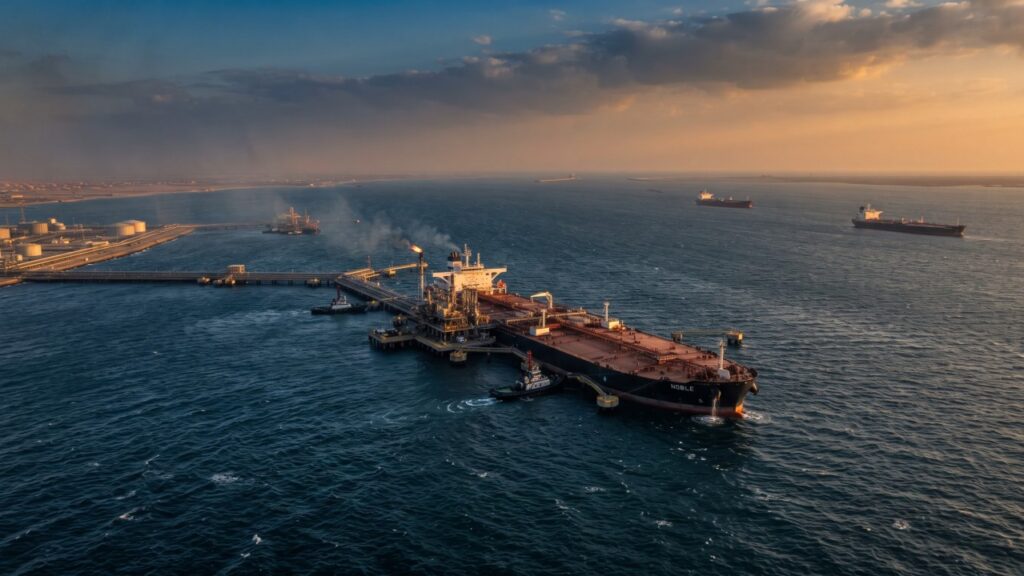
The sulfur and sulfuric acid chain was put to the test from February 2026. The Strait of Hormuz, through which nearly half of the world’s seaborne sulfur exports pass, was disrupted, and prices took off. S&P Global reported on 28 May 2026 sulfur at 815-820 dollars a tonne FOB Middle East and 1,200 dollars CFR Brazil, with about 47% of the world’s seaborne exports disrupted, a situation Mosaic described as the most serious supply crisis since 2008.
The same source puts the rise in the cost of sulfur for the Brazilian producer at nearly 1,100%, from about 100 to more than 1,200 dollars a tonne.
China’s ban on acid exports
The second shock came from Beijing. According to S&P Global, China banned exports of sulfuric acid other than electronic grade from 1 May 2026, removing about 4.6 million tonnes a year from the market. Sulfuric acid on the US Gulf went from 155 dollars a tonne at the end of February to 400 dollars in May, while elemental sulfur there reached 1,060 dollars.
The Moroccan newspaper Barlamane reports that the last Gulf sulfur cargo received by OCP at Jorf Lasfar arrived on 10 April 2026 aboard the vessel Kallone, the group having since switched to Russian and American origins, while more than 600,000 tonnes remained stuck on vessels.
Phosphate producers are cutting output
When the sulfur burned for sulfuric acid costs more than the margin earned, the line stops. S&P Global reports the shutdown on 21 May 2026 of the three granular single superphosphate lines of Egyptian Financial & Industrial, and Mosaic’s idling of its Brazilian complexes at Catalão for 45 days and Tapira for 30 days from 1 June.
The result can be read in the quotations: the World Bank’s August 2026 Pink Sheet gives DAP at 781.30 dollars a tonne and TSP at 719.50 dollars in July 2026, against 2024 annual averages of 563.70 and 474.60 dollars. The analysis by farmdoc daily measures a correlation of 0.70 between the price of DAP and that of sulfur since 2024, which gives a fairly clear idea of which one is in command.
We have told the full story in our article on the 2026 global sulfur crisis, and its effects on prices per tonne in the one devoted to the price of sulfur per tonne.
What E-Station does
E-Station supplies the solid sulfur that feeds the sulfur and sulfuric acid chain at acid and phosphate fertilizer producers, to manufacturers and importers in the Maghreb, French-speaking Africa, Europe and Canada. The sulfur is offered as granules, pastilles or crushed lump, in bulk or in big bags, with a certificate of analysis per batch and origins outside the Gulf, a point that has become decisive since the Hormuz disruptions.
Our sulfur trading hub presents the grades available, our pages on sulfur in Morocco, sulfur prices in Morocco and sulfur in Tunisia cover the major phosphate regions, and our page on shipping documents and incoterms details how a FOB, CFR, CIF or DAP contract works.
Frequently asked questions
Sulfur to sulfuric acid: how much acid per tonne?
One tonne of sulfur gives about three tonnes of sulfuric acid in the contact process, a ratio recalled by Argus analysts in World Fertilizer. The calculation follows from the molar masses, 32 grams of sulfur leading to 98 grams of H2SO4.
How much sulfur does a tonne of DAP need?
According to farmdoc daily, one tonne of DAP requires 1.5 to 2 tonnes of phosphate rock, 0.4 tonne of sulfur and 0.2 tonne of ammonia. This 0.4 tonne of sulfur corresponds to about 1.2 tonnes of sulfuric acid consumed per tonne of fertilizer produced.
Why do DAP and TSP contain no sulfur?
Sulfuric acid is used to open up the phosphate rock, then its sulfur precipitates with the calcium as phosphogypsum, at about 5 tonnes per tonne of P2O5. Single superphosphate is the exception and retains 10 to 14% sulfur according to The Sulphur Institute.
Why did China block its sulfuric acid exports?
Beijing banned exports of sulfuric acid other than electronic grade from 1 May 2026 to protect its domestic industry in the face of the sulfur shortage. S&P Global puts the volume removed from the world market at about 4.6 million tonnes a year.
Does the price of sulfur explain the price of phosphate fertilizers?
farmdoc daily measures a correlation of 0.70 between the price of DAP and that of sulfur since 2024. The World Bank’s August 2026 Pink Sheet puts DAP at 781.30 dollars and TSP at 719.50 dollars a tonne in July 2026, against 563.70 and 474.60 dollars on average in 2024.
You run a sulfur-burning acid unit or a DAP, MAP or TSP line and you are rebuilding your supply portfolio away from the Gulf. Open the Request a quotation form with your annual tonnages and your port of entry, and we will study the origins that can be mobilised and the phasing of cargoes.