

Bitumen emulsion: principle, uses and application

Émulsion de bitume appliquée en voirie urbaine
ENERGY TRADING · BINDERS

Bitumen emulsion : principle and uses

How emulsion allows cold application and where it is used.

Request a quotation →

Bitumen emulsion is one of the most widely used binders outside hot asphalt mixes, yet one of the least understood by buyers. Its principle, dispersing bitumen in water, makes it possible to work cold, without heating, for uses that conventional asphalt does not cover. Used well, it simplifies entire worksites; poorly chosen, it gives disappointing results. E-Station puts emulsion back in the context of its real uses.

Here is how an emulsion works and what it is used for.

The principle of emulsion

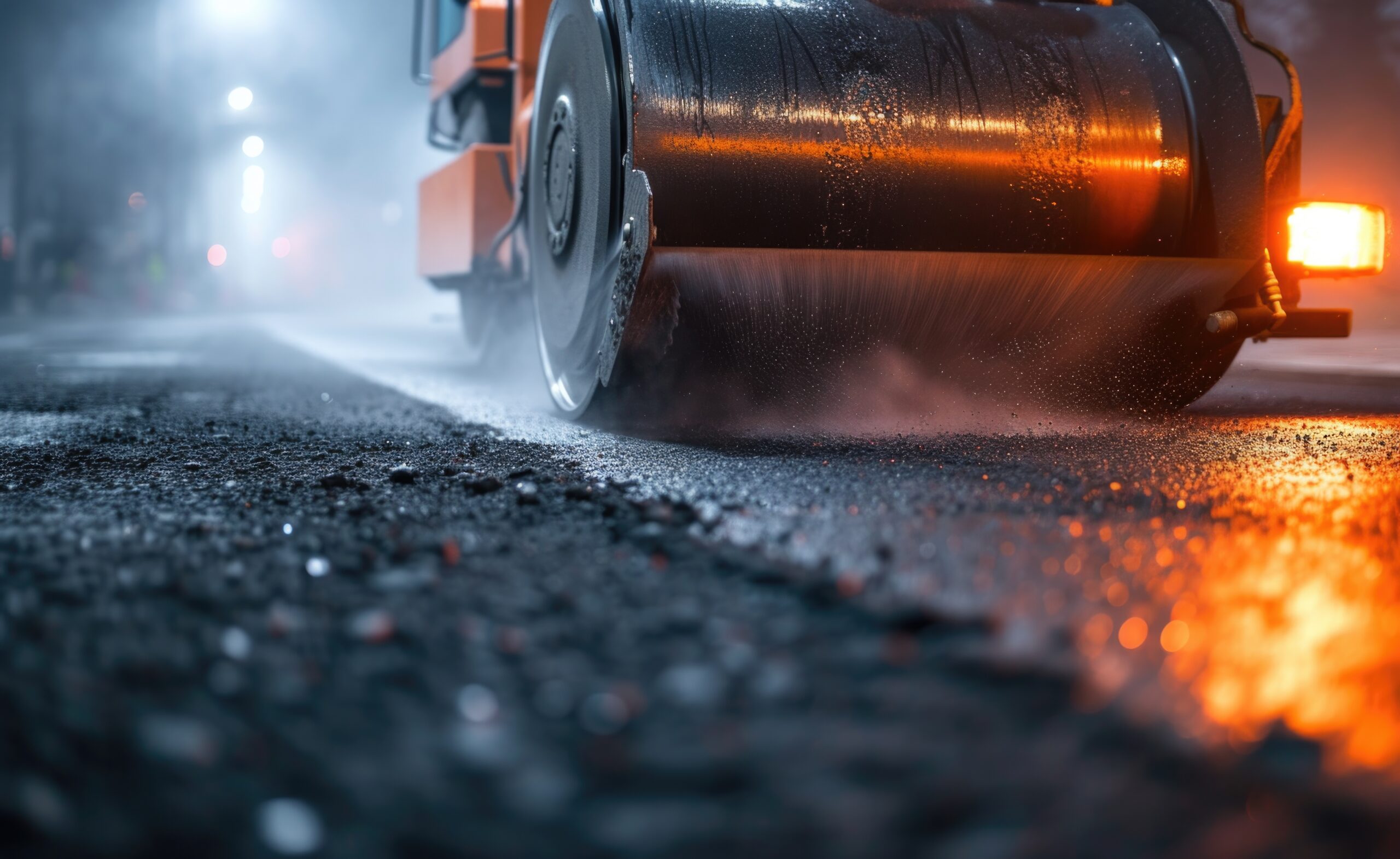
An emulsion disperses fine droplets of bitumen in a water phase, stabilised by an emulsifier. The mixture stays fluid and can be applied at ambient temperature. On contact with the surface, the emulsion “breaks”: the water separates and evaporates, and the bitumen settles and recovers its binding properties. This break, which is more or less rapid, is a key characteristic of the product.

Rapid, medium and slow-setting emulsions

Emulsions are classified by their breaking speed. A rapid break suits tack coats and surface dressings, where quick setting is wanted; a slow break suits techniques where the binder must stay workable for longer, such as emulsion-bound granular materials. Choosing the right breaking speed is as important as choosing the right grade for an binder laid hot.

Common uses

Emulsion is used above all for the tack coat — the thin film that bonds two layers of asphalt mix — as well as for surface dressings and some cold techniques. It is valuable where mobilising a hot-mix chain would be disproportionate, or for maintenance work.

  • Tack coat: bonding between layers, rapid break.
  • Surface dressing: wearing surface, surface maintenance.
  • Cold techniques: emulsion-bound granular materials, slower break.

Benefits and limits

Emulsion avoids heating, reduces logistical constraints and suits small worksites as well as maintenance. In return, its structural uses remain limited: on a heavy-traffic wearing course, hot asphalt remains the right choice. Its cost and application are assessed according to the intended use, rather than as a universal alternative to straight bitumen.

Storage and conditions of use

An emulsion is sensitive to storage conditions: temperature, duration, agitation. Unsuitable storage can cause premature breaking or settling that makes it unusable. The weather at the time of application also matters: rain and cold disrupt the break. These constraints need to be anticipated, as with any choice of binder according to context.

Frequently asked questions

Does emulsion replace hot bitumen?

No: it serves cold uses (tack coats, surface dressings, maintenance). A structural asphalt mix under heavy traffic remains the domain of hot bitumen.

What does the “break” of an emulsion mean?

It is the separation of water and bitumen on contact with the surface. Its speed (rapid, medium, slow) determines the appropriate use.

Can an emulsion be stored for a long time?

Its stability is limited: storage temperature and duration can cause settling or premature breaking. It should be used within controlled time limits.

Need a quotation? E-Station draws up a priced offer, grade by grade, with a certificate of analysis and specified delivery terms. Request a quotation.

Bituminous binders: bitumen, emulsion, modified binder, fluxed

Panorama des familles de liants bitumineux routiers
ENERGY TRADING · BINDERS

Bituminous binders : an overview

Pure bitumen, oxidised bitumen, emulsion, modified binder, fluxed binder: the families and their uses.

Request a quotation →

People often speak of “bitumen” as if it were a single product. In reality, bituminous binders form a family: pure bitumen, emulsion, modified binder, fluxed binder. Each meets a use, and confusing them leads to unsuitable choices. Knowing where these families sit helps the buyer order the right product and not a binder chosen out of habit. We distinguish these categories clearly from the quotation stage.

Here is an overview of the main binders and their role.

Pure bitumen: the reference binder

The road bitumen in its pure form is the base binder for hot mix asphalt. Produced by refining, it is classified by grade according to its penetration. It is the starting point for most pavements: it is chosen according to climate and traffic, then built into the formula of theasphalt mix. The other binders often derive from it, through modification or a particular method of use.

Bitumen emulsion: the water-based binder

Emulsion disperses bitumen in water, which allows it to be used at ambient temperature. It is used for tack coats, surface dressings and certain cold techniques. Its benefit: it avoids heating and makes possible applications where hot mix asphalt has no place. After application, the water evaporates and the bitumen recovers its properties.

Polymer-modified binder

The modified binder incorporates polymers that widen its performance range: better resistance when hot, flexibility when cold, resistance to fatigue. It is justified under heavy stress, such as heavy traffic or wide temperature swings, where a pure bitumen reaches its limits. More expensive and more demanding to lay, it answers a specific need and is reserved for those cases.

Fluxed binders and special cases

Fluxed binders incorporate a fluxing agent to lower their viscosity and make certain applications easier at reduced temperature. Alongside them, oxidised bitumens, obtained by air blowing, serve waterproofing and industry more than roads. Each variant meets a constraint: laying temperature, waterproofing use, cold technique.

Choosing the right family

The choice starts from the use: structural hot mix asphalt (pure or modified bitumen), tack coat or cold technique (emulsion), heavy stress (modified binder), waterproofing (oxidised). This reasoning ties in with choosing a grade by climate and traffic for road binders. The cost varies from one family to another, which the quotation specifies.

One binder, several states of use

What distinguishes the families of binders lies as much in their composition as in the way they are used. Pure bitumen is worked hot; emulsion is applied cold, with water providing the fluidity; fluxed binder lowers its viscosity with a fluxing agent. This variety of states explains why the same road requirement can be met by very different binders depending on the technique chosen and the constraints of the site.

  • Hot: pure bitumen and modified binder, for structural asphalt.
  • Cold: emulsion, for tack coats, surface dressings and small repairs.
  • At reduced viscosity: fluxed binder, for specific applications.

The role of the certificate of analysis whatever the family

Whatever the family, a binder is ordered with verifiable characteristics. The certificate of analysis attests, batch by batch, that the product delivered matches the binder announced: grade for a pure bitumen, specific specifications for an emulsion or a modified binder. This traceability requirement protects the buyer, particularly on imports, where the binder is seen only on arrival. We provide this certificate systematically.

Frequently asked questions

Are emulsion and pure bitumen the same product?

No: emulsion is bitumen dispersed in water, usable cold. Pure bitumen is used hot in structural asphalt.

When is a modified binder needed?

Under heavy stress: heavy traffic, wide temperature swings. For ordinary use, a well-chosen pure bitumen is enough.

Is oxidised bitumen a road binder?

No: it is used mainly for waterproofing and industry. Its properties differ from those of a pavement binder.

Need a quotation? E-Station draws up a priced offer, grade by grade, with a certificate of analysis and specified delivery terms. Request a quotation.
Which asphalt mix for heavy traffic: resisting rutting

Enrobé pour trafic lourd résistant à l’orniérage
ENERGY TRADING · ASPHALT MIXES

Asphalt mix for heavy traffic and rutting

Mix designs that resist deformation under heavy trucks and high heat.

Request a quotation →

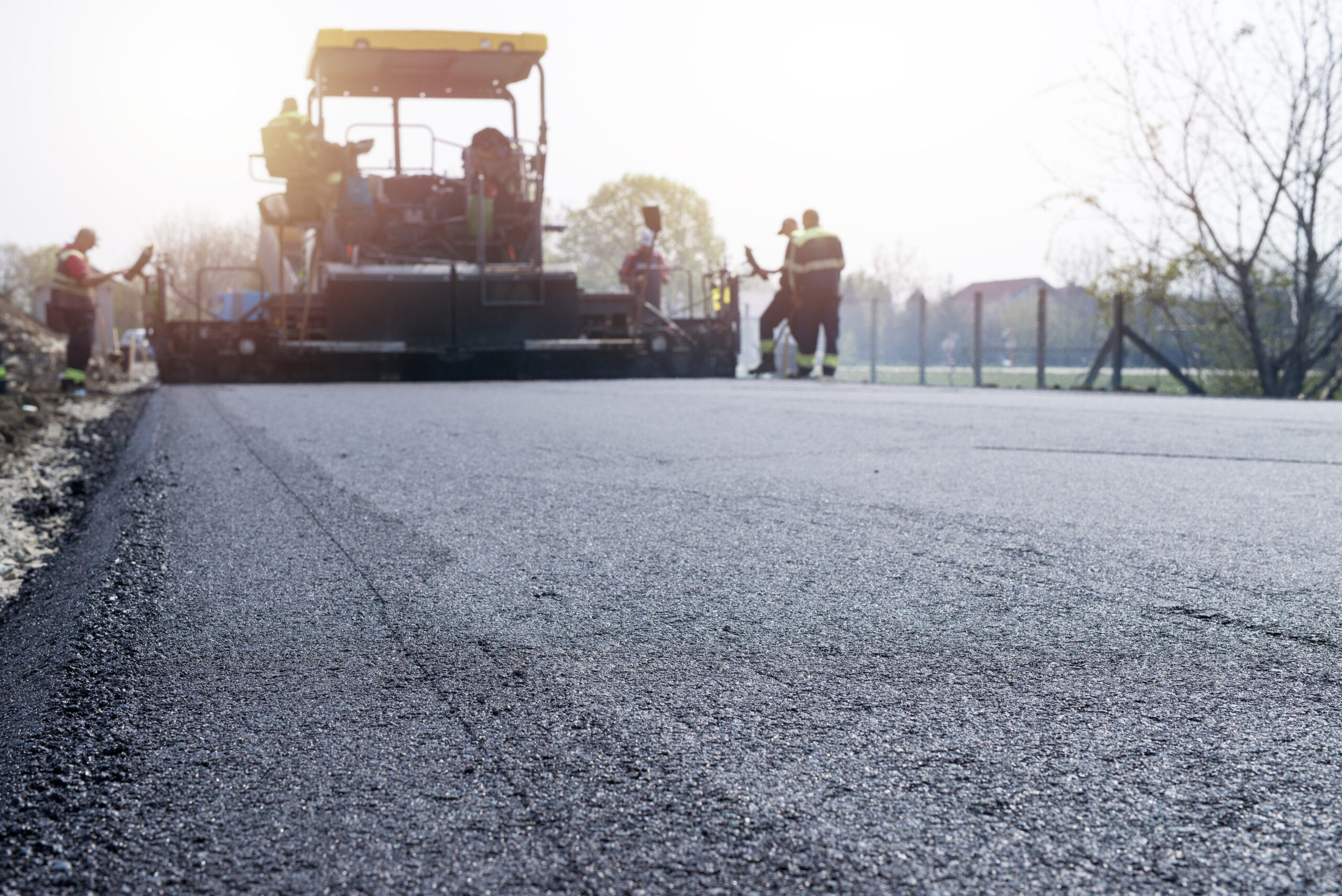
Under heavy traffic, a poorly designed pavement ruts quickly: repeated passes by heavy trucks dig grooves into the wearing course, creating a safety risk and a high repair cost. Choosing the right asphalt mix for these roads is far from a detail: it is what makes a pavement last. E-Station bases this choice on the real load and climate, not on a standard formula.

Here is how an asphalt mix is designed to withstand heavy traffic.

Rutting on heavy-traffic roads

Rutting results from permanent deformation of theasphalt mix under repeated loads, especially in high heat. A binder that is too soft or a poorly balanced aggregate skeleton gives way under wheel shear. The grooves that form hold water, reduce skid resistance and worsen over time. Preventing rutting means acting upstream on the binder and the mix design, because correcting it afterward is costly.

The binder: favoring stiffness

For heavy traffic, the choice leans toward a binder that is harder, or even modified. A hard grade resists deformation better in heat; a polymer-modified binder widens the performance range under shear even further. This choice is made at the crossroads of traffic and climate, exactly following the logic of choice of grade : a heavy-traffic road in a hot climate calls for maximum stiffness.

The asphalt mix design

Beyond the binder, the aggregate structure must carry the loads. High-modulus asphalt mixes such as BBME are designed for this: their stiffness limits deformation under sustained traffic. The grading curve, binder content and grade are set together to obtain a stable mix. Resistance comes from the mix and binder as a whole, not from a single component.

The overall cost

An asphalt mix designed for heavy traffic costs more to lay than a standard mix. But on a heavily used road, it spaces out repairs and extends service life: the extra cost pays for itself over several years. Reasoning only on the binder price or the laying cost leads to under-design and higher maintenance bills. The right indicator is the overall cost over the service life.

The areas most exposed to deformation

On the same road, not all sections bear the same load. Braking zones, intersections, roundabouts and uphill sections concentrate shear forces, because loads are applied longer and with strong tangential stresses. These are the points where rutting appears first. Sound design reinforces these critical zones rather than treating the whole road uniformly, which optimizes the budget by concentrating performance where it is needed.

Prior assessment, the basis of a good choice

Before selecting an asphalt mix, an assessment of traffic and climate avoids two opposite pitfalls: over-designing a moderate road or under-designing a heavy one. This assessment combines the intensity and type of traffic, the service temperature and the function of the layer. It leads to the joint choice of the binder and the mix design, with a certificate of analysis guaranteeing the compliance of the grade delivered. E-Station starts from this framework when quoting, so that the asphalt mix selected matches the real load rather than a default formula.

Frequently asked questions

Which asphalt mix for a road with heavy truck traffic?

A high-modulus asphalt mix (BBME) with a hard or modified binder, matched to the climate. The aim is to resist rutting under load and heat.

Is a modified binder essential?

Not always: a hard grade may be enough depending on load and climate. A modified binder is justified for the most severe loads.

Why not simply make the layer thicker?

Thickness alone does not prevent rutting if the binder and mix design are not suitable. Resistance comes first from the stiffness of the mix.

Need a quotation? E-Station draws up a priced offer, grade by grade, with a certificate of analysis and specified delivery terms. Request a quotation.

Temperature and compaction: the laying that makes an asphalt mix last

Compactage et température de mise en œuvre d’un enrobé bitumineux
ENERGY TRADING · ASPHALT MIXES

Temperature and compaction of asphalt

The temperature window that determines successful, lasting compaction.

Request a quotation →

The best asphalt formula can give a mediocre pavement if laying temperature and compaction are poorly controlled. It is on site, within a window of a few minutes, that much of the durability is decided. Too hot, too cold, compacted too late: every deviation leaves a mark on future performance. We recall these requirements because they determine the performance of the binder delivered.

Here is why temperature and compaction matter so much.

The laying temperature window

A hot mix asphalt must be laid and compacted while it remains within its temperature range. Below a certain threshold, the mix stiffens and no longer compacts properly: voids remain, the layer loses density and ages prematurely. This window depends on the binder, the thickness and the weather conditions. It demands tight site organisation.

Compaction: reaching the right density

Compaction drives out voids and gives the asphalt its service density. Insufficient compaction leaves a porous layer, sensitive to water and ageing; excessive or badly conducted compaction can break up the aggregates. Good compaction is a balance, obtained with the right number of passes, at the right time, with suitable machines. It is the step that turns a mix into a pavement.

The influence of outside conditions

Wind, rain and ambient temperature speed up the cooling of the asphalt and narrow the laying window. A site in cold or windy weather demands greater responsiveness: insulated transport, rapid laying, immediate compaction. These constraints are anticipated from the planning stage, in connection with the choice of grade suited to the climate.

The most common laying errors

Several errors recur regularly and compromise durability. The first is too long a transport time, which lets the temperature drop before laying. The second is late compaction, started when the asphalt has already begun to set. The third is an unsuitable number of passes, too many or too few. The fourth is poorly treated joints between strips, weak points where water seeps in. These errors are often invisible at first: they are paid for in accelerated ageing.

  • Transport too long: asphalt cooled before laying.
  • Late compaction: insufficient density.
  • Badly calibrated passes: voids or broken aggregates.
  • Neglected joints: seepage and early deterioration.

From the binder ordered to the finished pavement

Final quality links three things: the binder ordered, the formula and the laying. A compliant binder, delivered with its certificate of analysis, falls short if laying wastes its qualities; conversely, exemplary laying cannot make up for an unsuitable binder. This is why the choice of grade, its availability and its packaging are thought through according to site constraints. We make this link upstream, so that the binder delivered fully serves the pavement.

Frequently asked questions

What happens if asphalt is laid too cold?

It no longer compacts properly: voids remain, the layer becomes porous and ages quickly. The performance of the pavement suffers lastingly.

Can poor compaction be put right?

With difficulty once the asphalt has cooled. Density is decided within the temperature window; once that window has passed, remedial work is costly.

Does the binder influence the laying window?

Yes: the grade and type of binder change the working temperatures. It is a parameter to take into account from the order stage.

Need a quotation? E-Station draws up a priced offer, grade by grade, with a certificate of analysis and specified delivery terms. Request a quotation.

Recycling asphalt mixes: reusing aggregates without losing quality

Agrégats d’enrobés recyclés réintroduits en centrale
ENERGY TRADING · ASPHALT MIXES

Asphalt recycling and reclaimed asphalt

Feeding millings back into the plant to cut the cost and footprint of works.

Request a quotation →

When a pavement is milled, the asphalt removed is a resource. Reclaimed asphalt contains aggregates and aged binder that can go back into a new formula. Asphalt recycling answers a double challenge: saving materials and reducing the footprint of works. The share of recycled material and the role of the new binder still have to be controlled. We follow this logic of recovery.

Here is how asphalt recycling works and what it involves.

Reusing reclaimed asphalt

Reclaimed asphalt from milling retains quality aggregates and an old binder. Fed back into a plant, it replaces part of the new materials. The principle is virtuous: fewer aggregates quarried, less new binder consumed, and smaller volumes sent to landfill. Recycling turns a cost item, disposal, into a saving of material.

The role of the aged binder

The binder contained in reclaimed asphalt has aged: it is harder and more brittle than new bitumen. The formulation must take this into account, often by adding a softer grade of new binder or a rejuvenating agent to restore the properties of the mix. This is the whole technical challenge of recycling: integrating the old binder without degrading the performance of the final asphalt.

The recycling rate

A variable share of reclaimed asphalt can be incorporated into a new formula. The higher the rate, the greater the saving of material; but the more demanding control of the formulation becomes, because the aged binder weighs more heavily. The right rate depends on the use of the pavement and the equipment of the plant. This setting ties in with the logic of formulation suited to the context.

Environmental and economic benefits

Recycling reduces aggregate extraction, new binder consumption and waste volumes. It also cuts the transport of virgin materials. These benefits, both economic and environmental, explain the growth of the technique. They do, however, require a controlled chain: poorly managed recycled material leads to uneven performance.

The conditions for successful recycling

Quality recycling rests on three conditions. The first is knowledge of the reclaimed asphalt: characterising the aged binder and the aggregates makes it possible to dose the new input correctly. The second is the equipment of the plant, which determines the possible incorporation rate. The third is the formulation, which must compensate for the hardening of the old binder. Together, these conditions give a recycled asphalt as reliable as a new one; neglected, they produce a material of uncertain behaviour.

Recycling and the supply of new binder

Even at a high recycled content, an asphalt needs new binder to rejuvenate the mix. The quality and consistency of this added binder therefore remain decisive: it restores the properties the aged binder has lost. Securing this supply, with a suitable grade and a certificate of analysis, is an integral part of a recycling strategy: recycled material still needs a well-controlled new binder and makes better use of it.

Frequently asked questions

Does recycled asphalt perform less well?

Not necessarily: well formulated, with a suitable new binder, it can match conventional asphalt. The key is control of the aged binder.

Can 100% of reclaimed asphalt be recycled?

A variable share is incorporated depending on the use and the equipment. A very high rate demands an all the more rigorous formulation.

Why add new binder?

Because the binder in reclaimed asphalt has aged and hardened. A softer new binder or a rejuvenator restores the properties of the mix.

Need a quotation? E-Station draws up a priced offer, grade by grade, with a certificate of analysis and specified delivery terms. Request a quotation.

Porous asphalt: principle, safety and maintenance constraints

Enrobé drainant évacuant l’eau de surface pour la sécurité routière
ENERGY TRADING · ASPHALT MIXES

Porous asphalt : principle and safety

How porosity drains water, reduces aquaplaning and improves skid resistance.

Request a quotation →

Porous asphalt, also called drainage asphalt, answers a specific problem: draining surface water to improve safety in wet weather. Its porous structure lets water seep in and flow away, reducing aquaplaning and spray. It does not suit every road: the porosity that makes it effective also brings maintenance and usage constraints. E-Station looks at the function of this product before any choice.

Here is what porous asphalt does, and when it is justified.

The principle: a porous structure

Unlike a conventional asphalt mix that is dense and designed to be watertight, porous asphalt keeps a high percentage of interconnected voids. Rainwater passes through the layer and drains away sideways instead of lying on the surface. The result: less water film, less aquaplaning and better visibility thanks to reduced spray. This porosity is the heart of the product.

Safety benefits

The gains are concentrated on driving in wet weather: preserved skid resistance, less spray from wheels, better visibility of road markings. On high-speed roads exposed to heavy rain, these safety benefits are the main argument. In some configurations, porous asphalt also helps reduce rolling noise.

Constraints to be aware of

Porosity has a downside: the voids can clog over time with dust and debris, which gradually reduces drainage capacity and requires specific maintenance. Mechanical strength and durability differ from those of a dense asphalt mix, and the choice of binder plays a key role, often with a modified binder to maintain cohesion despite the voids.

When to choose porous asphalt

Porous asphalt is justified on high-speed roads heavily exposed to rain, where safety comes first. On a low-speed urban street or a road with little rainfall, its maintenance constraints can outweigh its benefits. The choice therefore depends on speed, exposure to water and the ability to maintain the layer, following the same logic as choosing according to context.

Maintaining porous asphalt

Porous asphalt only keeps its qualities if it is maintained. Gradual clogging of the voids reduces drainage capacity, hence the value of suitable periodic cleaning to preserve porosity. Anticipating this maintenance cost is part of the decision: choosing porous asphalt without planning its upkeep means losing the safety benefit after a few seasons. On roads where maintenance is hard to guarantee, a well-profiled dense asphalt mix can be the better option.

Cost and service life

The cost of porous asphalt includes an often modified binder and specific maintenance, which puts it above a standard asphalt mix. This extra cost is justified by the safety gain on exposed roads, not by a search for savings. As with other asphalt mixes, the relevant reasoning is whole-life cost, including the cost of the binder, laying and maintenance, rather than the laying price alone.

Frequently asked questions

Does porous asphalt really reduce aquaplaning?

Yes: by draining surface water, it reduces the water film and spray, which improves skid resistance in wet weather.

Why not use it on every road?

Its porosity requires specific maintenance and behaves differently from a dense asphalt mix. It is mainly justified on high-speed roads heavily exposed to rain.

Is a special binder needed?

Usually a modified binder, to maintain cohesion despite the high void content. The choice of binder is decisive for durability.

Need a quotation? E-Station draws up a priced offer, grade by grade, with a certificate of analysis and specified delivery terms. Request a quotation.

Warm mixes: less energy, what performance

Mise en œuvre d’un enrobé tiède économe en énergie
ENERGY TRADING · ASPHALT MIXES

Warm mix asphalt : energy and performance

The trade-off between lower production temperature, energy savings and mechanical strength.

Request a quotation →

Warm mix asphalt occupies a growing place between conventional hot mix asphalt and cold asphalt. The principle: lower the production and laying temperature while keeping performance close to that of a hot mix. The result is less energy consumed and better working conditions, with durability maintained. We follow these techniques because they change the logistics and the environmental picture.

Here is what characterises warm mix asphalt and what it really delivers.

The principle of warm mix asphalt

A conventional hot mix is produced at high temperature. Warm mix reduces that temperature by several tens of degrees thanks to processes that improve the workability of the binder at lower heat. The aim is to keep good coating of the aggregates and lasting cohesion, while working at a lower temperature. The result targets performance comparable to that of a hot mix asphalt used as a reference.

The practical benefits

The lower temperature means lower energy consumption in production and reduced emissions and fumes on site, which improves working conditions for the crews. It also lengthens the laying window: a mix that leaves the plant less hot stays workable a little longer, a logistical advantage on medium-distance hauls.

  • Energy: reduced production temperature, hence less fuel.
  • Working conditions: less fume and heat at the workstation.
  • Logistics: potentially wider laying window.

The role of the binder

The performance of a warm mix rests on control of the binder and of the associated processes. The grade is still chosen according to climate and traffic, as for a conventional hot mix; it is the heating technique that changes. The choice of grade therefore keeps all its logic.

When to prefer a warm mix

Warm mix comes into its own on sites where energy reduction and working conditions matter, as well as on medium-distance hauls where the wider laying window is a real asset. It also interests clients attentive to the environmental footprint of their works. On a very conventional local site, the difference from a hot mix may be less decisive, but the energy benefit remains.

Points to watch

Warm mix calls for the same rigour as any other technique: its success depends on well-controlled formulation and laying. Poorly controlled temperature or a badly applied process can reduce the expected benefits. As with any asphalt, the quality of the binder and compliance with the compaction window remain decisive. The cost can also vary with the process chosen: the decision is made on overall cost, including the energy saving and the service life, rather than solely on the binder price.

Frequently asked questions

Does a warm mix perform less well than a hot mix?

The aim is to achieve comparable performance. Well formulated and well laid, it targets the same durability while consuming less energy.

Is warm mix a cold asphalt?

No: it is still heated, but at a reduced temperature. Cold asphalt requires no heating and is intended for other uses.

Is a special binder needed?

The grade is chosen as usual according to climate and traffic; it is the heating process that sets warm mix apart.

Need a quotation? E-Station draws up a priced offer, grade by grade, with a certificate of analysis and specified delivery terms. Request a quotation.

How a bituminous asphalt mix is formulated: aggregates, binder, dosage

Granulats et liant entrant dans la formulation d’un enrobé bitumineux
ENERGY TRADING · ASPHALT MIXES

The formulation of an asphalt mix

How aggregates, binder and bitumen content determine the performance of an asphalt mix.

Request a quotation →

An asphalt mix is a measured formula in which every component has a function, far more than a simple blend of chippings and bitumen. The grading curve, the binder content and the chosen grade determine how the pavement performs much more than the choice of a “good” bitumen alone. Understanding the logic of mix design helps the buyer talk usefully with the mix designer. E-Station links this choice of formula to the binder order.

Here are the levers that make up an asphalt mix and their respective roles.

The aggregate skeleton

The aggregates form the skeleton that carries the loads. Their distribution, the grading curve, determines compactness, stability and surface texture. A well-locked skeleton resists rutting and provides skid resistance; a poorly proportioned one leaves voids or lacks bearing capacity. This is the first mix design lever, even before the binder.

Binder content

The bitumen coats the aggregates and provides cohesion. With too much binder, the mix creeps and ruts in the heat; with too little, it breaks up and ages quickly. The right dosage is a balance, set according to the grading and the use. This content, often expressed as a percentage by mass, is one of the most sensitive parameters of the formula.

Binder grade: adapting to climate and traffic

With the same skeleton and dosage, the binder grade changes how the mix behaves. A hard grade withstands heat better, a soft grade resists cold better. The choice is made where climate and traffic meet, exactly as described in the choice of grade. Fixing the grade before finalising the formula avoids redoing the calculations.

Additives and possible corrections

Depending on requirements, the formula can include additives: adhesion agents, fibres for some thin layers, or a modified binder for heavy loads. These additions meet a specific need and are justified case by case. Mix design remains a trade-off between target performance and cost.

The tests that validate a formula

A formula has to be verified in the laboratory before it goes into series production. Tests assess compactness, rutting resistance, water resistance and the mechanical behaviour of the mix. They make it possible to adjust the binder content or grading curve before production starts. Skipping this step means risking laying tonnes of an asphalt mix whose real behaviour differs from what was intended.

These tests link mix design to real conditions on site: an asphalt mix validated in the laboratory is all the more likely to deliver on the road.

From formula to worksite: keeping the quality

A good formula poorly laid gives a poor result. Production temperature, transport and compaction must stay within the window set by the mix design. That is why the choice of formula and the order for the binder are best considered together: the chosen grade, its availability and its packaging determine feasibility on site. E-Station links the target formula with the binder actually delivered, backed by a certificate of analysis.

Frequently asked questions

What matters most in an asphalt mix?

No single component on its own: performance comes from the balance between grading curve, binder content and grade.

Can you improve an asphalt mix by adding bitumen?

No: excess binder causes creep and rutting. The dosage is a balance to respect, and adding more does not make the mix better.

Is the binder grade chosen before or after the formula?

Before: the grade is fixed according to climate and traffic, then the formula is set around it. Doing it the other way round means starting again.

Need a quotation? E-Station draws up a priced offer, grade by grade, with a certificate of analysis and specified delivery terms. Request a quotation.

Hot or cold asphalt mix: differences and use cases

Application d’un enrobé à chaud sur chaussée, comparé à l’enrobé à froid
ENERGY TRADING · ASPHALT MIXES

Asphalt mix : hot or cold ?

When to choose each one depending on the worksite, the temperature and the laying time.

Request a quotation →

Hot asphalt or cold asphalt: the choice depends on the context of the worksite more than on preference. One offers performance and durability, the other flexibility of use and light logistics. Setting them against each other without nuance leads to disappointed expectations: cold asphalt is a product designed for other uses, rather than a low-cost hot asphalt. E-Station guides this choice according to the real nature of the need.

Here is what separates the two techniques and when to use each.

Hot asphalt: performance and durability

Hot asphalt is produced and laid at high temperature, which ensures good coating of the aggregates and lasting cohesion. It is the reference technique for structural wearing courses and sustained traffic. Laying it requires a well-controlled chain: hot transport, placing and compaction within a precise temperature window. This is where much of the final quality of the asphalt mix.

Cold asphalt: flexibility and light logistics

Cold asphalt is used without heating and can often be stored and handled over longer periods. It suits spot repairs, potholes, small worksites or hard-to-reach sites, where mobilising a hot-mix chain makes no sense. In return, its performance and durability remain below those of hot asphalt: it repairs and patches more than it builds structure.

The role of the binder in both cases

In both techniques, the binder determines the result. Hot asphalt relies on a road bitumen whose grade is set according to climate and traffic. Cold asphalt uses binders suited to setting without heating. The choice of binder is therefore not interchangeable from one technique to the other: it is an integral part of the product definition.

When to choose one or the other

The rule is simple: hot asphalt for anything that must last and carry loads, cold asphalt for what must be repaired quickly or on an isolated site. On a heavy-traffic wearing course, cold asphalt is not an option. For an emergency repair in winter, mobilising a hot-mix plant would be disproportionate. This reasoning ties in with choosing a grade according to context.

Logistical constraints

Logistics clearly separate the two techniques. Hot asphalt requires proximity to an asphalt plant and insulated transport: beyond a certain time or distance, the temperature falls below the laying threshold. Cold asphalt, by contrast, can be transported and stored without this constraint, which makes it valuable on remote sites or for deferred work. This logistical difference weighs as much as performance in the final choice.

Expected service life and maintenance

Well-laid hot asphalt offers a long service life, provided the binder is suitable and compaction is successful. Cold asphalt, by nature, aims at a shorter term: it lasts for the time of a repair, pending a permanent hot-mix repair. Anticipating this difference avoids treating a cold repair as a permanent solution. The cost of the binder and the cost of laying are therefore assessed over the target service life, rather than the laying day alone.

Frequently asked questions

Is cold asphalt cheaper than hot asphalt?

It avoids heating costs and the hot-mix chain, but its performance is lower. It serves other uses and should not be seen as an economical substitute.

Can a wearing course be made with cold asphalt?

Not for lasting use under sustained traffic. Cold asphalt is mainly used for repairs and small worksites.

Why is temperature so important with hot asphalt?

Because laying and compaction must take place within a precise temperature window: outside this range, cohesion and durability drop.

Need a quotation? E-Station draws up a priced offer, grade by grade, with a certificate of analysis and specified delivery terms. Request a quotation.

BBSG, BBME or BBTM: choosing the right asphalt mix

Couche de roulement en enrobé bitumineux comparant BBSG, BBME et BBTM
ENERGY TRADING · ASPHALT MIXES

Choosing your asphalt mix: BBSG, BBME or BBTM

The practical differences between asphalt concretes and the right choice for the traffic and the layer concerned.

Request a quotation →

Behind the word “asphalt mix” lie very different formulas. BBSG, BBME, BBTM: these French acronyms refer to asphalt concretes with distinct uses, and confusing them leads to laying a layer that does not suit its function in the pavement. Knowing what sets them apart helps you order the right product and budget accurately. E-Station chooses an asphalt mix according to its role in the pavement structure, not on price alone.

Here is what these three families cover and how to tell them apart.

BBSG: semi-coarse asphalt concrete, the everyday standard

BBSG is the most widely used wearing-course asphalt mix in France. Its semi-coarse grading offers a good balance between comfort, skid resistance and durability on most roads. It is the default choice for secondary roads and urban streets with moderate to medium traffic. Its classic formulation also makes it a product whose behaviour is well known and whose laying is well mastered.

BBME: high-modulus asphalt concrete for heavy traffic

BBME is designed to withstand heavy loads. Its higher stiffness allows it to carry truck traffic and limit rutting on major routes. It is often used with a hard or modified binder, which improves its resistance at high temperatures. It costs more than BBSG, but it is justified wherever the load and frequency of traffic exceed the range of a standard asphalt mix.

BBTM: very thin asphalt concrete for the surface

BBTM is laid as a very thin layer, mainly for its surface qualities: skid resistance, lower rolling noise and surface drainage. It has no structural role: it covers a pavement that already carries the load. Its value lies in the comfort and safety it brings at the surface, with reduced thickness and material consumption.

Choosing the right asphalt mix: start from its function

The choice depends on the expected function: bearing capacity and load resistance, or surface quality. BBME under a heavy-traffic wearing course, BBSG for an ordinary road, BBTM to improve skid resistance and reduce noise: each family meets a specific need. This reasoning ties in with choosing a grade by climate and traffic, since the asphalt mix and the binder are determined together.

Thickness and material consumption

These three families are not laid at the same thicknesses, which affects the quantity of material and therefore the budget. Very thin BBTM keeps consumption to a minimum for the same surface area; BBSG is laid at a standard thickness; BBME, which is more structural, goes into layers designed for the load. Comparing two asphalt mixes without taking the laid thickness into account distorts any cost analysis.

  • BBTM: very thin layer, surface role, low consumption.
  • BBSG: standard thickness, versatile use.
  • BBME: structural layer, designed for heavy traffic.

Turning the choice into a budget

The cost of an asphalt mix is not just the price of the mix: it combines the binder, the grading, the thickness and the laying. BBME costs more than BBSG, but its service life under heavy traffic can make it cheaper in the long run. Conversely, over-specifying an asphalt mix on a lightly used road wastes budget. The cost of the binder is part of this calculation, alongside the asphalt mix itself, in a whole-life cost approach rather than a unit-price one.

Frequently asked questions

What is the difference between BBSG and BBME?

BBSG is the standard asphalt mix for moderate traffic; BBME, which is stiffer, carries heavy traffic and limits rutting on major routes.

Can BBTM be used as a load-bearing layer?

No: it is laid as a very thin layer for its surface qualities. Bearing capacity comes from the layers below.

How do you choose between these asphalt mixes?

Start from the function: load resistance (BBME), everyday use (BBSG) or surface quality (BBTM).

Need a quotation? E-Station draws up a priced offer, grade by grade, with a certificate of analysis and specified delivery terms. Request a quotation.