
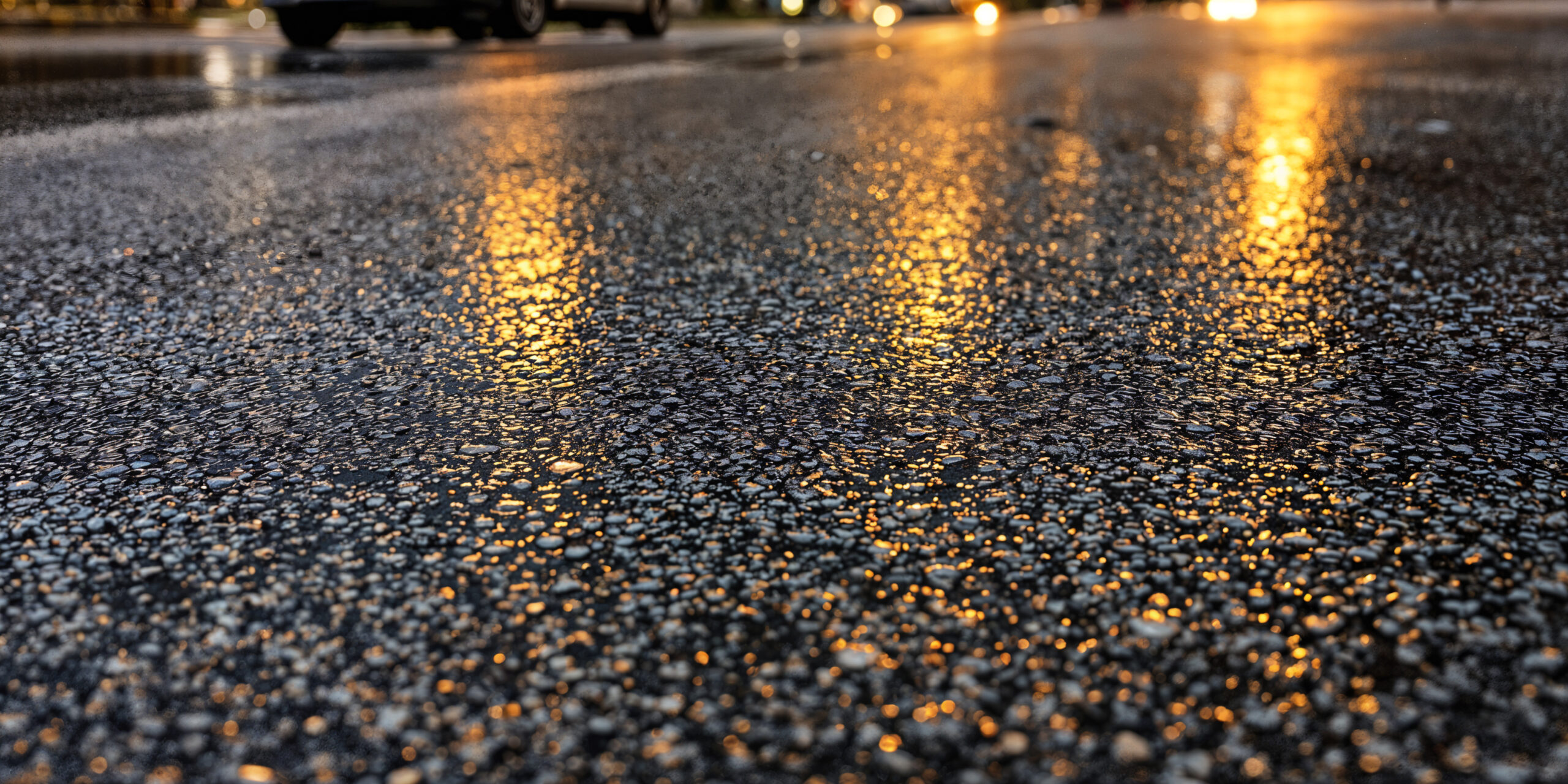
Porous asphalt, also called drainage asphalt, answers a specific problem: draining surface water to improve safety in wet weather. Its porous structure lets water seep in and flow away, reducing aquaplaning and spray. It does not suit every road: the porosity that makes it effective also brings maintenance and usage constraints. E-Station looks at the function of this product before any choice.
Here is what porous asphalt does, and when it is justified.
The principle: a porous structure
Unlike a conventional asphalt mix that is dense and designed to be watertight, porous asphalt keeps a high percentage of interconnected voids. Rainwater passes through the layer and drains away sideways instead of lying on the surface. The result: less water film, less aquaplaning and better visibility thanks to reduced spray. This porosity is the heart of the product.
Need cold asphalt? We deliver Époxy végétal in one-tonne big bags anywhere in mainland France, with traffic possible 10 minutes after laying. Choose your department and the delivered price is displayed.
Order cold asphaltSafety benefits
The gains are concentrated on driving in wet weather: preserved skid resistance, less spray from wheels, better visibility of road markings. On high-speed roads exposed to heavy rain, these safety benefits are the main argument. In some configurations, porous asphalt also helps reduce rolling noise.
Constraints to be aware of
Porosity has a downside: the voids can clog over time with dust and debris, which gradually reduces drainage capacity and requires specific maintenance. Mechanical strength and durability differ from those of a dense asphalt mix, and the choice of binder plays a key role, often with a modified binder to maintain cohesion despite the voids.
When to choose porous asphalt
Porous asphalt is justified on high-speed roads heavily exposed to rain, where safety comes first. On a low-speed urban street or a road with little rainfall, its maintenance constraints can outweigh its benefits. The choice therefore depends on speed, exposure to water and the ability to maintain the layer, following the same logic as choosing according to context.
Maintaining porous asphalt
Porous asphalt only keeps its qualities if it is maintained. Gradual clogging of the voids reduces drainage capacity, hence the value of suitable periodic cleaning to preserve porosity. Anticipating this maintenance cost is part of the decision: choosing porous asphalt without planning its upkeep means losing the safety benefit after a few seasons. On roads where maintenance is hard to guarantee, a well-profiled dense asphalt mix can be the better option.
Cost and service life
The cost of porous asphalt includes an often modified binder and specific maintenance, which puts it above a standard asphalt mix. This extra cost is justified by the safety gain on exposed roads, not by a search for savings. As with other asphalt mixes, the relevant reasoning is whole-life cost, including the cost of the binder, laying and maintenance, rather than the laying price alone.
Frequently asked questions
Does porous asphalt really reduce aquaplaning?
Yes: by draining surface water, it reduces the water film and spray, which improves skid resistance in wet weather.
Why not use it on every road?
Its porosity requires specific maintenance and behaves differently from a dense asphalt mix. It is mainly justified on high-speed roads heavily exposed to rain.
Is a special binder needed?
Usually a modified binder, to maintain cohesion despite the high void content. The choice of binder is decisive for durability.
Need a quotation? E-Station draws up a priced offer, grade by grade, with a certificate of analysis and specified delivery terms. Request a quotation.
No comments yet!