
Bitumen trading
Choosing the right bitumen grade for your climate and traffic
Once the families of bitumen grades are understood, the practical question remains: which one to order for your chantier ? Le bon grade dépend avant tout de deux paramètres : le climat de la zone de pose et l’intensité du trafic. Ce guide vous aide à sécuriser un choix qui garantit la durée de vie de la chaussée et évite les surcoûts de réfection. Le bon grade de bitume découle du croisement entre le climat et le trafic, deux propriétés clés du bitumen (asphalt).
Climate: the first selection criterion
Bitumen must stay rigid enough in high heat so it does not flow, and soft enough in cold weather so it does not crack. A binder that is too soft will rut in summer; one that is too hard will craze in winter.
- ✓Hot climate (Mediterranean regions, Africa, the Middle East): opt for hard grades (35/50, VG-30, VG-40).
- ✓Temperate climate (most of mainland France): 50/70 is the versatile standard.
- ✓Cold or mountain climate : choose softer grades (70/100, VG-10) that resist thermal cracking.
Traffic: intensity and loads
The heavier and slower the traffic, the more rigid the binder must be to resist rutting. Areas where heavy goods vehicles brake, park or move slowly are the most heavily stressed.
- ✓Light traffic (residential streets, car parks): soft grades are acceptable.
- ✓Medium to heavy traffic (departmental and national roads): 50/70 or VG-30.
- ✓Very heavy traffic and high-stress areas (motorways, junctions, toll plazas, HGV rest areas): hard grades 35/50 or VG-40, or even polymer-modified bitumen (PMB).
Combining climate and traffic: the decision matrix
The optimal choice comes from cross-referencing the two criteria. A motorway in a hot climate calls for the hardest grade available (35/50, VG-40 or PMB); a lightly trafficked mountain road, on the other hand, calls for a soft binder. When constraints are extreme or conflicting, a Performance Grade (PG) or a modified bitumen offers the best safety margin.
Beyond the grade: supply quality
The best grade is only worth as much as its on-time, on-spec delivery. The specifications and standards guarantee the conformity of the binder, while transport and packaging preserve its quality all the way to the jobsite. In a context of volatile prices — see our analysis of the 2026 bitumen market — securing your volumes at the right grade is becoming a strategic priority.
Support
E-Station helps you decide
Our team of bitumen brokers advises you on the grade suited to your project and secures your supply, whatever the reference standard imposed by your specifications.
Request your tailored quote →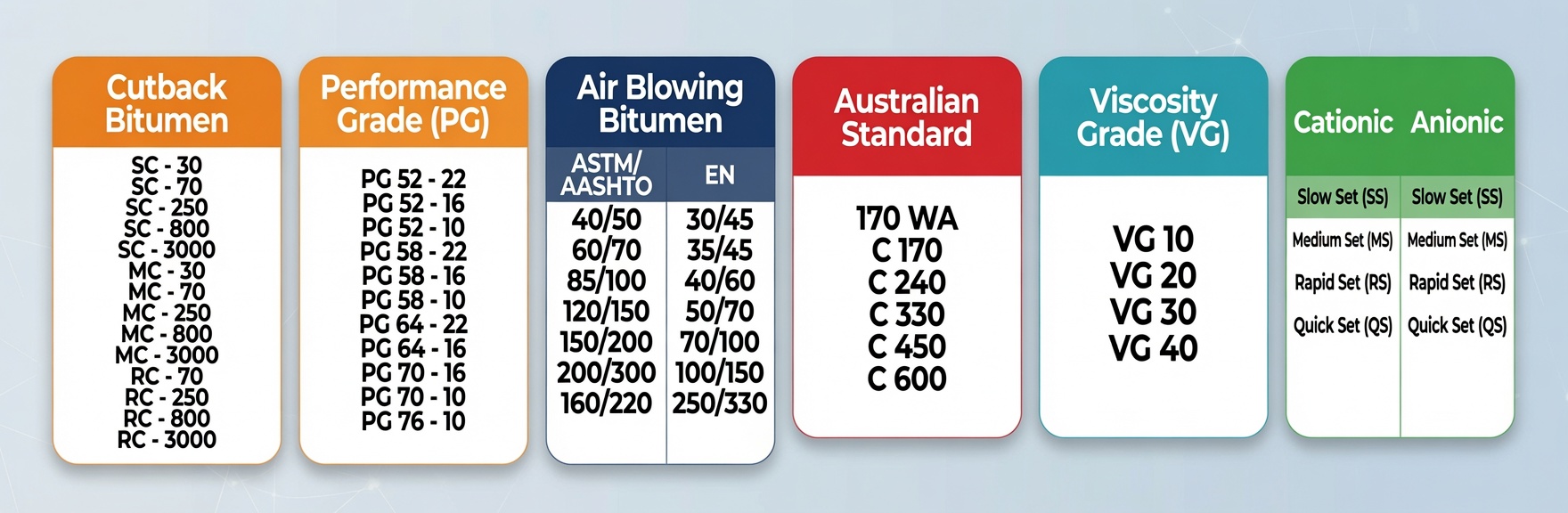
Bitumen grade: the E-Station method in practice
Selecting the right bitumen grade is not just about copying a standard: you have to compare the theoretical classification with the real conditions of the job site. A grade that is too soft will flow under heavy traffic and high heat; a grade that is too hard will crack in the cold. The right decision arbitrates between these two risks, taking into account availability and the delivered price.
In practice, we start from your laying area and your
Finally, bear in mind that the grade is only part of the quality equation. Two batches of the same bitumen grade may differ in their origin, their storage stability or their ageing behaviour. That is why we attach as much importance to traceability and the certificate of analysis as to the classification itself: a good grade choice that is poorly sourced remains a bad purchase.