
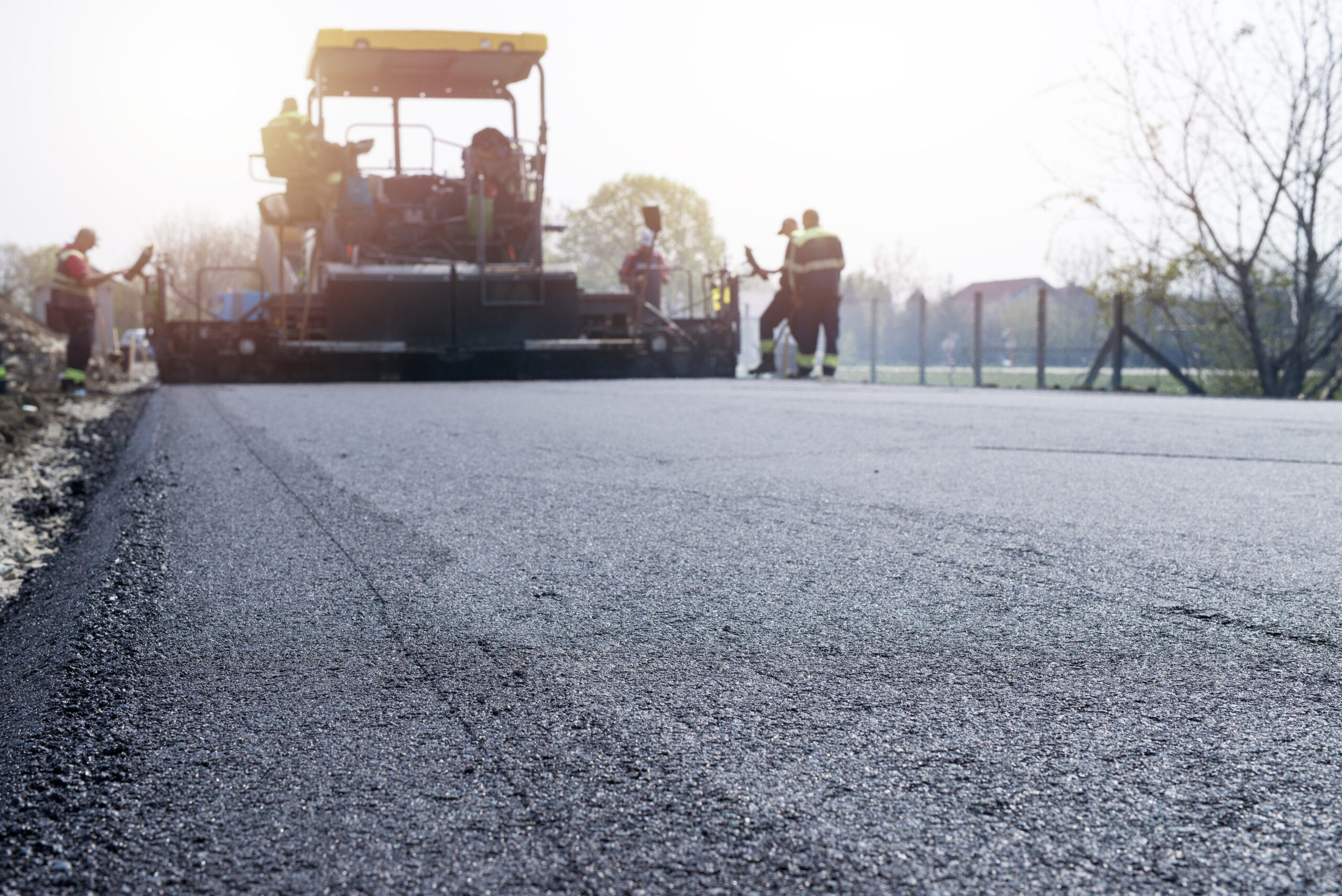
The best asphalt formula can give a mediocre pavement if laying temperature and compaction are poorly controlled. It is on site, within a window of a few minutes, that much of the durability is decided. Too hot, too cold, compacted too late: every deviation leaves a mark on future performance. We recall these requirements because they determine the performance of the binder delivered.
Here is why temperature and compaction matter so much.
The laying temperature window
A hot mix asphalt must be laid and compacted while it remains within its temperature range. Below a certain threshold, the mix stiffens and no longer compacts properly: voids remain, the layer loses density and ages prematurely. This window depends on the binder, the thickness and the weather conditions. It demands tight site organisation.
Need cold asphalt? We deliver Époxy végétal in one-tonne big bags anywhere in mainland France, with traffic possible 10 minutes after laying. Choose your department and the delivered price is displayed.
Order cold asphaltCompaction: reaching the right density
Compaction drives out voids and gives the asphalt its service density. Insufficient compaction leaves a porous layer, sensitive to water and ageing; excessive or badly conducted compaction can break up the aggregates. Good compaction is a balance, obtained with the right number of passes, at the right time, with suitable machines. It is the step that turns a mix into a pavement.
The influence of outside conditions
Wind, rain and ambient temperature speed up the cooling of the asphalt and narrow the laying window. A site in cold or windy weather demands greater responsiveness: insulated transport, rapid laying, immediate compaction. These constraints are anticipated from the planning stage, in connection with the choice of grade suited to the climate.
The most common laying errors
Several errors recur regularly and compromise durability. The first is too long a transport time, which lets the temperature drop before laying. The second is late compaction, started when the asphalt has already begun to set. The third is an unsuitable number of passes, too many or too few. The fourth is poorly treated joints between strips, weak points where water seeps in. These errors are often invisible at first: they are paid for in accelerated ageing.
- Transport too long: asphalt cooled before laying.
- Late compaction: insufficient density.
- Badly calibrated passes: voids or broken aggregates.
- Neglected joints: seepage and early deterioration.
From the binder ordered to the finished pavement
Final quality links three things: the binder ordered, the formula and the laying. A compliant binder, delivered with its certificate of analysis, falls short if laying wastes its qualities; conversely, exemplary laying cannot make up for an unsuitable binder. This is why the choice of grade, its availability and its packaging are thought through according to site constraints. We make this link upstream, so that the binder delivered fully serves the pavement.
Frequently asked questions
What happens if asphalt is laid too cold?
It no longer compacts properly: voids remain, the layer becomes porous and ages quickly. The performance of the pavement suffers lastingly.
Can poor compaction be put right?
With difficulty once the asphalt has cooled. Density is decided within the temperature window; once that window has passed, remedial work is costly.
Does the binder influence the laying window?
Yes: the grade and type of binder change the working temperatures. It is a parameter to take into account from the order stage.
Need a quotation? E-Station draws up a priced offer, grade by grade, with a certificate of analysis and specified delivery terms. Request a quotation.
No comments yet!