
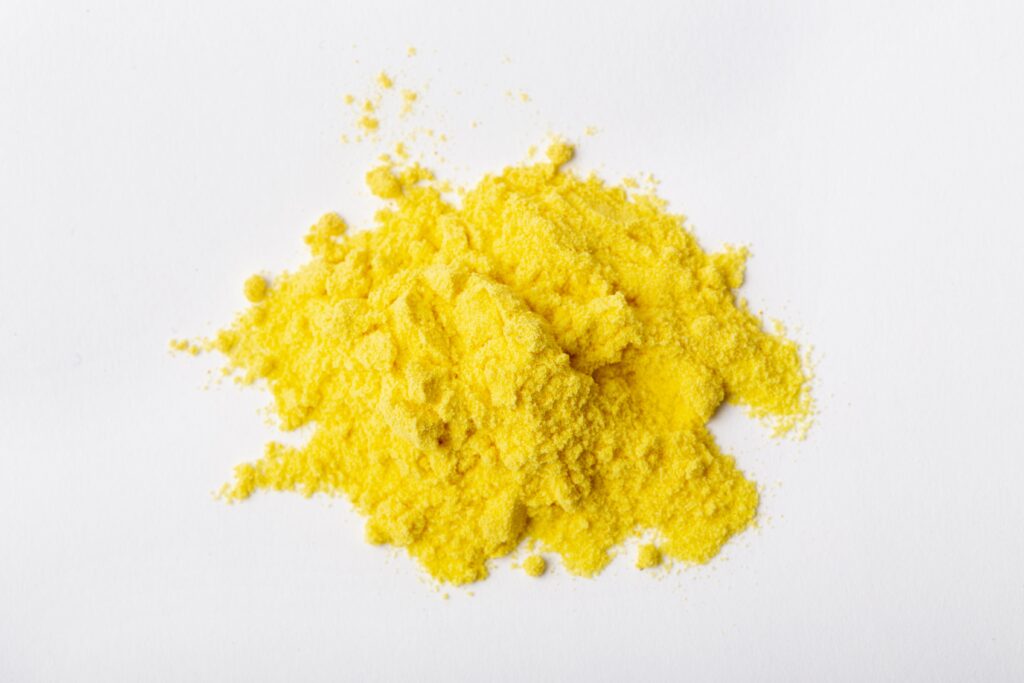
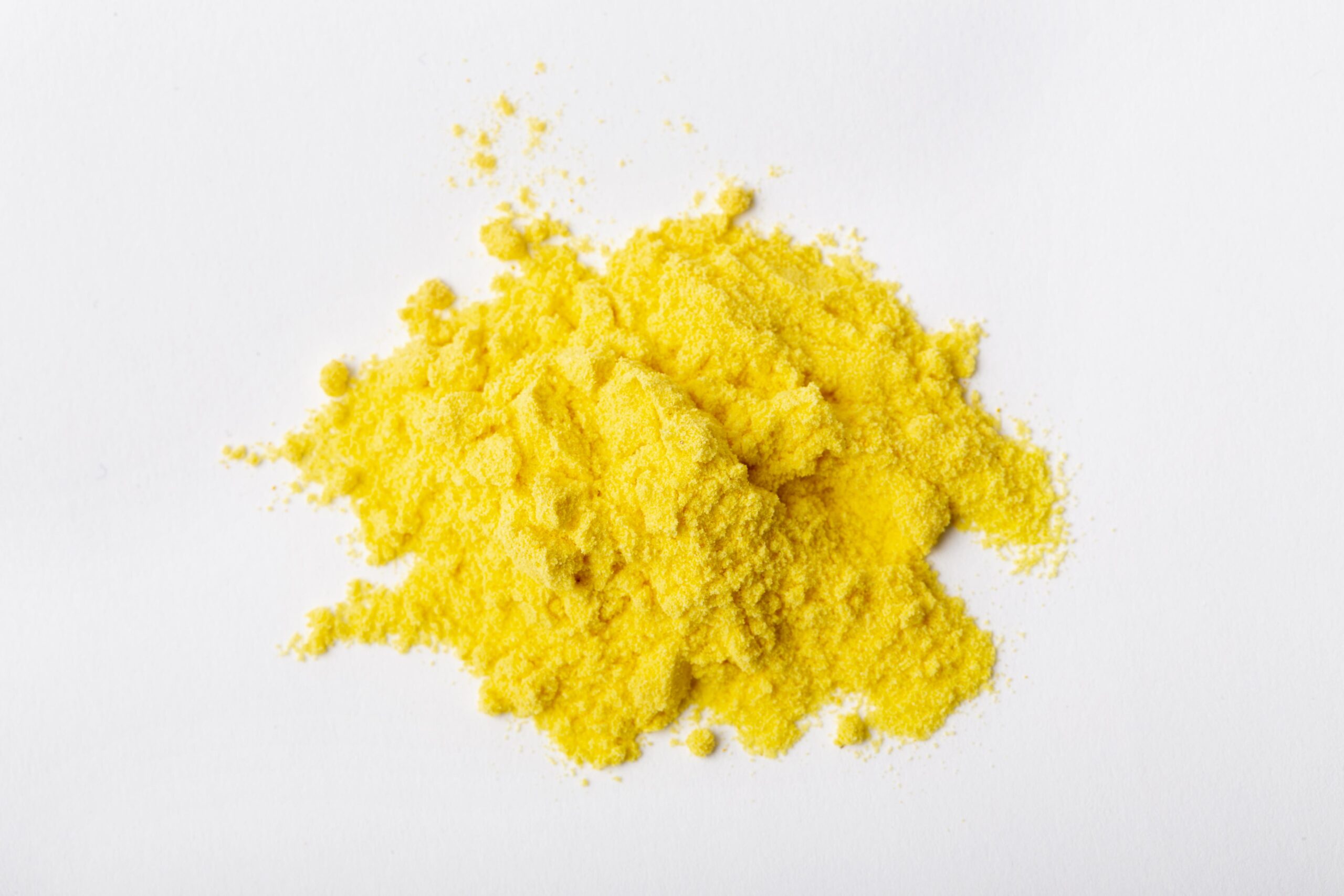
You are receiving your first pallets of ammonium sulfate and the storekeeper asks whether they should be treated like ammonium nitrate. A customer asks you about the product's toxicity for their staff. Here is what the safety data sheet and the regulations say about ammonium sulfate hazards, figure by figure.
Ammonium sulfate, with the formula (NH4)2SO4, is one of the oldest fertilizers on the market. According to Wikipedia, it contains 21% nitrogen and 24% sulfur, or 60% SO3, which makes it the most concentrated sulfur carrier among common nitrogen fertilizers. Its sulfur comes from sulfuric acid, itself produced from the solid sulfur described on our page on sulfur trading.
Our view on ammonium sulfate hazards: the product presents little danger for health or for storage, and attention should focus on dust, soil acidification and confusion with ammonium nitrate.
Ammonium sulfate hazards: what the safety data sheet says
The safety data sheet of a French supplier of food-grade ammonium sulfate, Lamothe-Abiet, states in section 2 that it is "not classified" under the CLP regulation. No pictogram appears on the packaging.
The same sheet gives an oral LD50 in rats above 2,000 mg/kg, with an alternative value of 4,250 mg/kg, a solubility of 754 g per litre at 20 °C, a solution pH between 4 and 6 and a decomposition temperature above 235 °C. The product also carries the number E517 as a food additive. On paper, the ammonium sulfate hazard file therefore comes down to an absence of classification, which is rare for a nitrogen fertilizer.
Ammonium sulfate hazards and REACH dossier limit values
The dossier filed with the ECHA confirms this reading. The registrants conclude that no hazard has been identified for acute exposure by any route, that there is no local effect on the skin, eyes or airways, and that there is no sensitisation.
For workers, the dossier sets a derived no-effect level, or DNEL, of 11.167 mg/m³ for long-term inhalation and 42.667 mg/kg body weight per day for dermal exposure. For the general population, the values fall to 1.667 mg/m³ by inhalation and 6.4 mg/kg per day orally. These thresholds frame ammonium sulfate hazards in terms of occupational exposure, and they remain far above the concentrations found in a fertilizer store.
First aid and simple measures
The data sheet from Lamothe-Abiet recommends, in case of dust inhalation, moving the person to fresh air, and in case of eye contact, rinsing with water for ten to fifteen minutes. If swallowed, rinse the mouth without inducing vomiting and contact a poison centre if symptoms appear. These instructions are those of an ordinary mineral salt.
Ammonium sulfate or ammonium nitrate: two storage regimes
The confusion comes from the word "ammonium", and it explains a good share of searches on ammonium sulfate hazards. Ammonium nitrate, the basis of ammonium nitrate fertilizers, falls under a strict regulatory framework that the French Ministry of Agriculture details on its page on ammonium nitrate-based fertilizers.
French regulations set a threshold of 24.5% nitrogen, equivalent to 70% ammonium nitrate, above which the risk of detonation is taken into account, and stores fall under heading 4702 of the classified installations regulations, with declaration, authorisation or Seveso thresholds depending on tonnage. The Ministry also notes that self-sustaining decomposition can start from 130 °C and release dense fumes of nitrogen dioxide and chlorine.
Ammonium sulfate contains no nitrate ion, which places it outside the scope of the detonation and self-sustaining decomposition covered by heading 4702. The table below summarises the difference.
| Criterion | Ammonium sulfate | Ammonium nitrate |
|---|---|---|
| Main hazard | Not classified (SDS) | Detonation risk taken into account above 24.5% N (French Ministry of Agriculture) |
| Critical temperature | Decomposition above 235 °C | Self-sustaining decomposition possible from 130 °C |
| ICPE regime | Outside heading 4702 in respect of detonation | Heading 4702, declaration, authorisation and Seveso thresholds |
What precautions for handling and storage?
The data sheet from Lamothe-Abiet sums up the main instruction in four words: avoid creating dust. Crystalline or granulated ammonium sulfate produces fines when handled, and repeated inhalation of this dust is the only real exposure for staff. In practice, ammonium sulfate hazards come down to this dust. A dry, cool, ventilated store, closed big bags and handling without drops from height are enough to contain this risk, the sheet also asking to avoid static discharges during bulk transfers.
Incompatibilities and decomposition products
Ammonium sulfate reacts with strong acids, bases, oxidisers and strong reducing agents, which the data sheet from Lamothe-Abiet classifies as incompatible materials. The sheet from the North American supplier Chemtrade, covering the liquid form, adds nitrites to this list and specifies that above 235 °C the product releases ammonia, sulfur dioxide and sulfur trioxide. In practice, the storekeeper keeps ammonium sulfate apart from quicklime, hypochlorites and nitrate fertilizers.
Ammonium sulfate pH: the risk of soil acidification
The agronomic side of ammonium sulfate hazards concerns the soil. Each ammonium ion absorbed or nitrified releases acidity, and Wikipedia points out that the product's main use is precisely on alkaline soils, whose pH it lowers. On soil that is already acidic, repeated use without liming lowers the pH. The data sheet from Lamothe-Abiet also measures a pH of 4 to 6 in solution, and the liquid solution described by Chemtrade shows a pH of 3.
The second point of attention is the nitrogen to sulfur ratio. Arvalis considers ammonium sulfate very rich in sulfur relative to nitrogen and advises calculating the rate on the sulfur requirement, then including the nitrogen supplied in the split nitrogen programme, the ideal on wheat being a fertilizer with an N/SO3 ratio between 2 and 3 at the 1 cm ear stage. Rates and timings are detailed in our article on ammonium sulfate rates and use, and the comparison with sulfur-enriched ammonium nitrate in our article on nitrogen-sulfur fertilizer.
Ammonium sulfate as a weedkiller: what the regulations allow
Ammonium sulfate is known for its role as a herbicide adjuvant. Arvalis explains that sulfate ions bind to the calcium in hard water and that the salt's hygroscopic effect keeps droplets liquid for longer, glyphosate being the only active substance truly sensitive to water hardness. The usual rate for a formulated adjuvant is 1 litre per hectare, combined with an oil or a wetting agent.
The point many users overlook concerns regulatory rather than health-related ammonium sulfate hazards. Arvalis points out that it is prohibited to use fertilizer-grade ammonium sulfate to correct spray water, only formulated and authorised adjuvants containing ammonium sulfate being permitted. Used on its own, the product leaves weeds untouched.
What E-Station does
E-Station supplies solid sulfur to sulfuric acid producers and to plants manufacturing ammonium sulfate and other sulfur fertilizers. The sulfur is offered as granules, pastilles or crushed lumps, in bulk or big bags, with a certificate of analysis per lot and origins outside the Gulf, a criterion that became decisive with the 2026 global sulfur crisis. Ammonium sulfate hazards are the fertilizer manufacturer's business, but the purity of the incoming sulfur determines that of the salt obtained.
The sulfur trading hub presents the available grades. Producers of sulfur-enriched nitrogen fertilizers in the Maghreb will find the delivery conditions on our pages on sulfur in Algeria, sulfur delivery to Algeria and sulfur in Tunisia, on FOB, CFR, CIF or DAP terms to the discharge port.
Frequently asked questions
Is ammonium sulfate dangerous to health?
On ammonium sulfate hazards, safety data sheets declare it not classified under the CLP regulation, with an oral LD50 in rats above 2,000 mg/kg. The REACH dossier filed with ECHA identifies no hazard from acute exposure and no irritant or sensitising effect. The only practical precaution concerns inhaling dust during handling.
Can ammonium sulfate explode like ammonium nitrate?
Ammonium sulfate, which contains no nitrate ion, is free from the risk of detonation and self-sustaining decomposition. It only decomposes above 235 °C, releasing ammonia and sulfur oxides, and it falls outside ICPE heading 4702, which governs ammonium nitrate.
What is the pH of ammonium sulfate?
In solution, ammonium sulfate has a pH between 4 and 6 according to the safety data sheet, and a concentrated solution can drop to 3. In the soil, it acidifies markedly, which makes it useful on alkaline soils and calls for monitoring liming on soils that are already acidic.
Can ammonium sulfate be used as a weedkiller?
Ammonium sulfate acts only as a glyphosate adjuvant by neutralising the calcium in hard water, but Arvalis points out that in France only formulated and authorised adjuvants containing ammonium sulfate are permitted, the use of fertilizer-grade product in the tank being prohibited.
How should ammonium sulfate be stored?
It should be kept in a dry, cool, ventilated store, avoiding dust formation and static discharges. Safety data sheets require it to be kept away from strong acids, bases, oxidisers, reducing agents and nitrites.
You manufacture ammonium sulfate or sulfuric acid and are looking for certified solid sulfur from outside the Gulf, delivered to the port of your choice. Request a quotation attaching your purity specifications, so that we can check the product's compatibility with your process before any commitment, including the ammonium sulfate hazard aspects specific to your plant.