You are an input distributor in Meknes or Agadir, or a buyer at a plant making sulfuric acid or fertilizers, and the yellow sulfur you used to buy without a second thought has changed price and origin in eighteen months. Here is what is at stake behind the bag and behind the vessel, from the world price to the agricultural sulfur delivered to the distributor in Morocco.
Morocco holds a place of its own on the sulfur market. According to Barlamane, the Kingdom imported 8.3 million tonnes of sulfur in 2024, a level never reached before, against a ceiling of 7.2 million tonnes in previous years.
Almost all of this sulfur goes to the burners at Jorf Lasfar and Safi, where the OCP group turns it into sulfuric acid, then into phosphoric acid and fertilizers. The share going directly to Moroccan fields remains marginal in volume, but it depends on the same import chain, described on our page on sulfur trading. This article follows agricultural sulfur in Morocco from the quay to the soil, by way of the price.
Agricultural sulfur in Morocco: a country that has become a record importer
Moroccan phosphate becomes fertilizer after being attacked with sulfuric acid, itself obtained by burning sulfur. Barlamane notes that a unit of 550,000 tonnes per year was commissioned in December 2024 and that a burner of 417,000 tonnes per year was inaugurated in the second quarter of 2024, which explains the jump in imports. Médias24 puts OCP’s annual demand at 7 million tonnes of sulfur.
Agricultural sulfur in Morocco: where does the yellow sulfur landed come from?
In 2024, Kazakhstan supplied about 4.1 million tonnes, nearly half of arrivals, the United Arab Emirates 2.5 million tonnes and Saudi Arabia 915,000 tonnes, up 58%, according to Barlamane. Morocco thus depended on the Gulf for more than 40% of its sulfur on the eve of 2026.
| Origin of sulfur imported into Morocco in 2024 | Volume | Benchmark |
|---|---|---|
| Kazakhstan | 4.1 million tonnes, about 50% | Barlamane |
| United Arab Emirates | 2.5 million tonnes, 31% | Barlamane |
| Saudi Arabia | 915,000 tonnes, up 58% | Barlamane |
Sulfur price in Morocco: from 165 to more than 500 dollars a tonne
The price of agricultural sulfur in Morocco follows OCP’s contracts and FOB Middle East quotations. Médias24 puts sulfur at around 165 dollars a tonne in early 2025 and around 520 dollars in December 2025, before the closure of the Strait of Hormuz. According to the same publication, the share of sulfur in OCP’s raw material purchases rose from 37% to nearly 59% in a year. Our page on sulfur prices in Morocco tracks these movements.
Hormuz and the last cargo of 10 April 2026
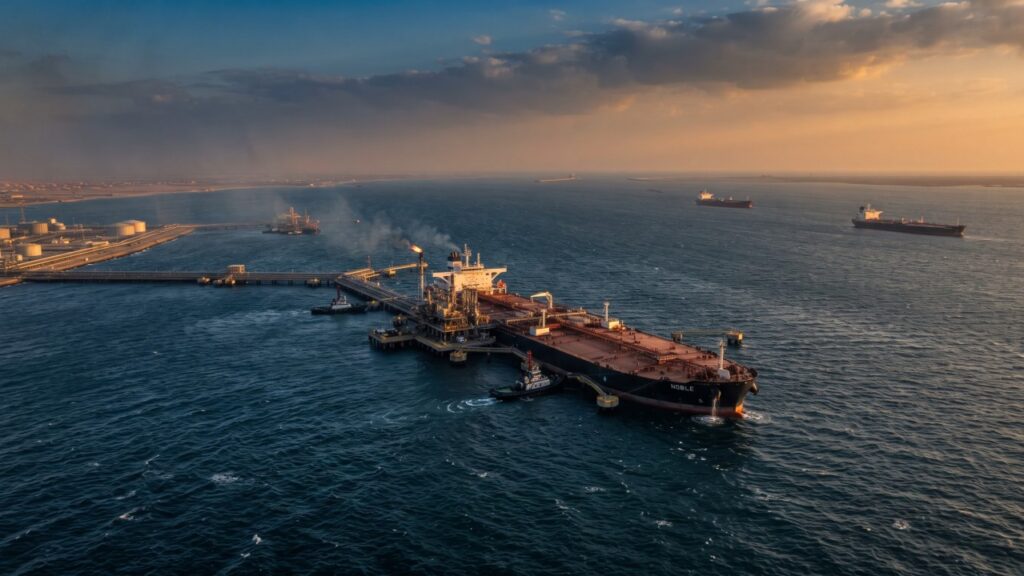
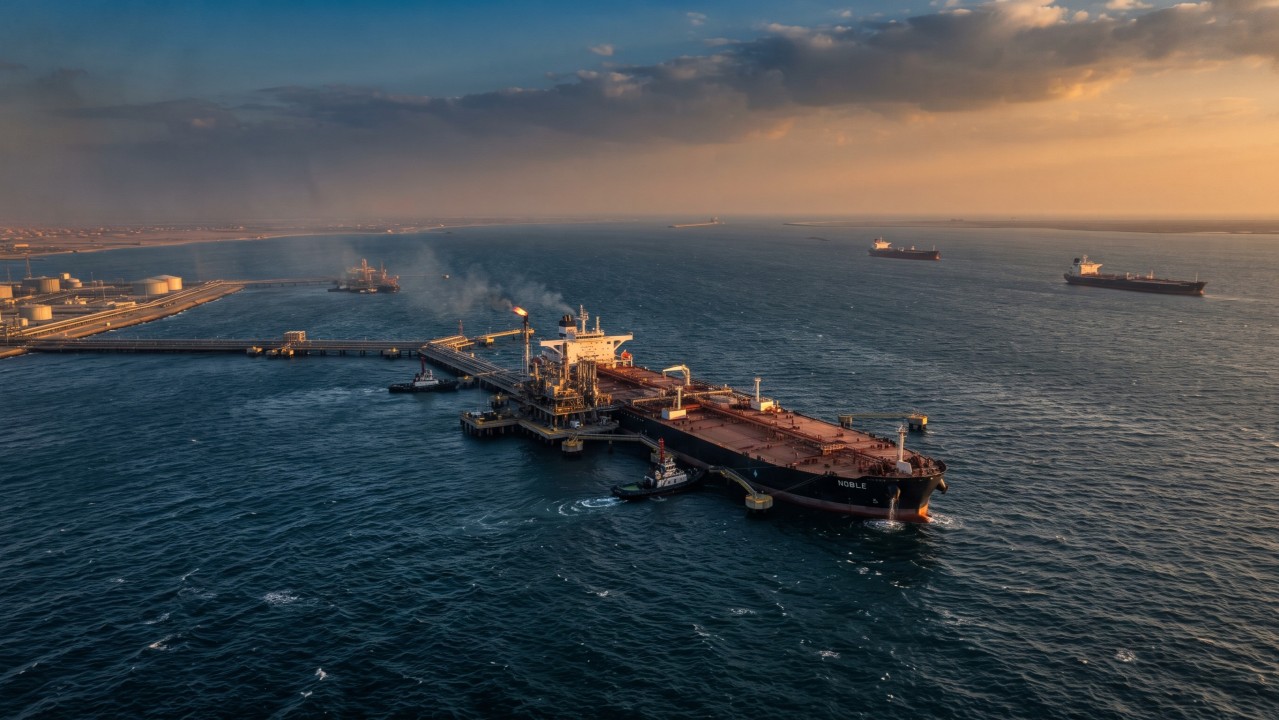
Since the strait closed on 28 February 2026, cargoes from the Gulf have stopped and agricultural sulfur for Morocco has changed route. Barlamane dates the last sulfur cargo received by OCP at Jorf Lasfar to 10 April 2026, aboard the vessel Kallone, and puts the fall in world sulfur exports at 45% compared with the end of February.
In April, Médias24 reported sulfur up 35% on its pre-war level and an OCP redirecting its production towards TSP, a fertilizer that needs no ammonia: TSP accounted for about 30% of volumes in 2025 and the group is aiming for more than 50% in 2026. We set out this chain of events in our article on the 2026 global sulfur crisis and on the role of sulfuric acid in phosphate fertilizers.
Moroccan pyrite, a possible source from 2027
Faced with this dependence, Morocco is looking to its own subsoil. Médias24 describes Managem’s strategy: 300,000 tonnes of sulfuric acid from pyrite at the Guemassa complex from 2027, then up to 1 million tonnes from the Tizert copper smelter between 2028 and 2030. Set against 7 million tonnes of sulfur a year, these volumes ease the constraint without removing it, and imported sulfur keeps the leading role.
Agricultural sulfur in Morocco: what is yellow sulfur used for in the fields?
For the farmer, agricultural sulfur in Morocco has two quite distinct functions. The first concerns pH. The journal Agriculture du Maghreb points out that Moroccan soils are predominantly alkaline, whereas the optimum range for nutrient uptake lies between pH 6 and 7. Elemental sulfur, oxidised by soil bacteria, releases sulfuric acid that lowers the pH. The same source gives the quantities needed to go from pH 7.5 to 6.5: 350 kg per hectare in sandy soil, 750 kg in sandy loam and 1,100 kg in clay soil.
These rates apply to a heavy correction; for citrus, Yara Morocco puts the desirable pH between 5.5 and 7.0 and reports reduced availability of phosphorus and trace elements above 7.5.
The second function is nutritional. Agriculture du Maghreb puts sulfur requirements at between 10 and 20 kg of S per hectare for cereals and sugar beet, 20 to 50 kg for legumes and 60 to 80 kg or more for brassicas and onions. On the irrigated perimeters of the Gharb or the Tadla, beet and onions therefore consume sulfur that arrives through fertilizer. This requirement is met with sulfur fertilizer or with elemental sulfur. We describe the forms available in our article on elemental sulfur in agriculture.
Sulfur fertilizer and agricultural sulfur in Morocco: which forms are available?
The Moroccan distributor can choose between ammonium sulfate, potassium sulfate (popular in market gardening), single superphosphate and elemental sulfur as granules or powder.
The TSP produced by OCP is first and foremost a phosphate fertilizer, and sulfur nutrition comes through the sulfate forms or through elemental sulfur. All these forms, down to the 25 kg bag sold at the souk, trace back to the solid sulfur landed in Morocco or to the sulfuric acid made from it. The price paid by the farmer therefore follows the sulfur quotation, with a time lag, as we explain in our article on fertilizer prices in Morocco in dirhams.
Sulfur Morocco: securing supply from outside the Gulf
The 2026 crisis has brought secondary routes back into play. Barlamane reports that Morocco received 27,700 tonnes of Kazakh sulfur via the Georgian port of Batumi between January and early June 2026, against 28,600 tonnes over the whole of 2025, through the Trans-Caspian corridor.
These volumes remain modest, but they show that Kazakh, Polish or Canadian sulfur becomes competitive again when the Gulf closes. The regularity of agricultural sulfur supply in Morocco during the season now depends on these secondary routes. For a mid-sized Moroccan importer, the availability of a certified batch, with a documented origin and an Incoterm that covers unloading, now weighs as much as the price.
What E-Station does
E-Station supplies solid sulfur, as granules, pastilles or crushed lump, to sulfuric acid producers, fertilizer manufacturers and agricultural distributors in Morocco. The origins lie outside the Gulf, each batch comes with a certificate of analysis, and sea logistics are organised through to unloading at Jorf Lasfar, Casablanca, Safi or Agadir, in bulk or in big bags, on FOB, CFR, CIF or DAP terms.
Our page on sulfur in Morocco details the grades of agricultural sulfur available for Morocco, and our page on sulfur prices in Morocco explains how the delivered price is built. The sulfur trading hub brings together the other destinations, from sulfur in Tunisia to sulfur in Senegal.
Frequently asked questions
How much sulfur does Morocco import each year?
Morocco imported 8.3 million tonnes of sulfur in 2024, a record, against a ceiling of 7.2 million tonnes in previous years. OCP’s annual demand is estimated at 7 million tonnes, bound for the burners at Jorf Lasfar and Safi that produce the sulfuric acid for phosphate fertilizers.
What is the price of sulfur in Morocco in 2026?
Sulfur was worth about 165 dollars a tonne in early 2025 and 520 dollars in December 2025 according to Médias24, before the closure of the Strait of Hormuz cut off cargoes from the Gulf. The price delivered to Morocco then depends on freight, origin and the Incoterm chosen.
Why use agricultural sulfur on Moroccan soils?
Moroccan soils are mostly alkaline, whereas nutrients are best taken up between pH 6 and 7. Agricultural sulfur in elemental form, oxidised in the soil, lowers the pH: it takes 350 kg per hectare in sandy soil and up to 1,100 kg in clay soil to go from 7.5 to 6.5, according to Agriculture du Maghreb.
Where does the yellow sulfur imported into Morocco come from?
In 2024, Kazakhstan supplied about half of the volumes, the United Arab Emirates 31% and Saudi Arabia 915,000 tonnes. Since the closure of Hormuz in February 2026, flows from the Gulf have stopped and alternative routes, such as the Trans-Caspian corridor via Batumi, have regained importance.
Which sulfur fertilizers are available in Morocco?
Ammonium sulfate, potassium sulfate, single superphosphate and elemental sulfur as granules or powder cover crop requirements, which range from 10 to 20 kg of sulfur per hectare for cereals to more than 60 kg for brassicas and onions. All agricultural sulfur in Morocco thus derives from imported solid sulfur or from the sulfuric acid made from it.
You import sulfur into Morocco to produce sulfuric acid, fertilizers or agricultural sulfur, and you are looking for an origin outside the Gulf, certified and delivered to the port of your choice. The agricultural sulfur you will then resell depends on the reliability of this first link. Request a quotation naming Jorf Lasfar, Safi or Casablanca as the port of discharge, to obtain a delivered price rather than an ex-works price.