
Since the end of February 2026, the closure of the Strait of Hormuz has deprived the world market of half its seaborne sulfur. Phosphate fertilizer manufacturers, smelters and mines are absorbing the shock one after another, and farmers are set to pay for it in the autumn.
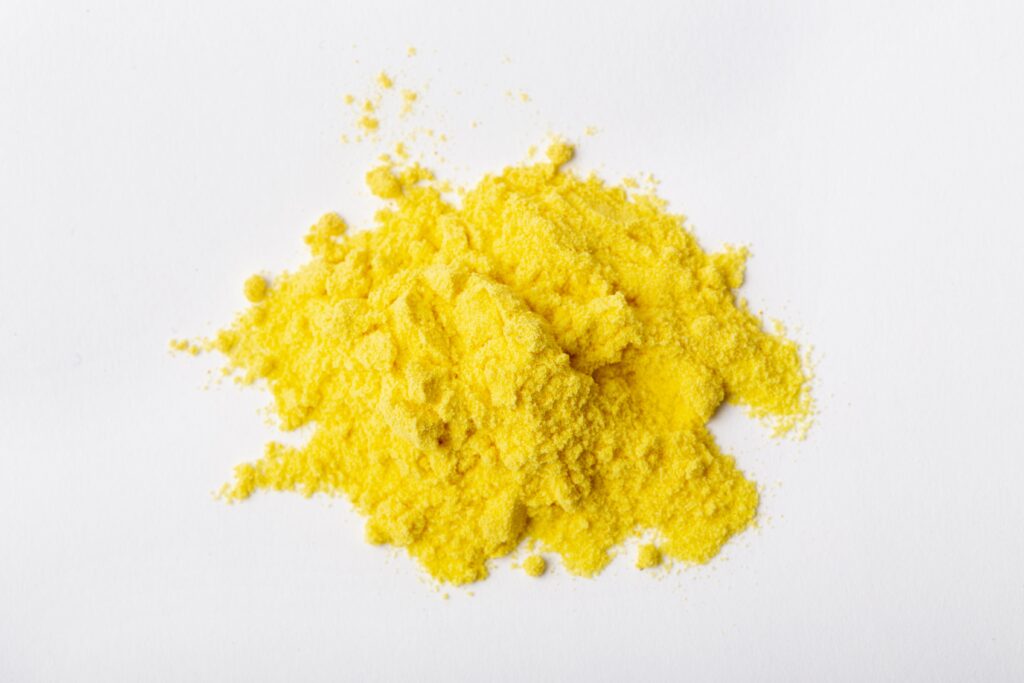
Nitrogen usually dominates conversations about fertilizer prices. This year, the subject is phosphate, and behind phosphate lies a raw material few farmers have ever seen: sulfur. It is burned to make sulfuric acid, which then attacks phosphate rock to produce phosphoric acid, and then the DAP and MAP spread in the fields. When sulfur runs short, the whole chain seizes up. Our page on sulfur trading describes this product and the forms in which it is bought.
Hormuz and the world sulfur trade
Sulfur is a by-product of oil refining and gas processing. The major Gulf producers, Saudi Arabia, the Emirates, Qatar and Kuwait, ship it from their ports, and these ships pass through the Strait of Hormuz. According to the Institute for Security Studies (ISS), about half of the sulfur used in phosphate fertilizers passes through this strait. Since the outbreak of the conflict in the Middle East at the end of February 2026, these cargoes have been delayed, diverted or blocked, to the point that Iraq is selling its crude at a discount to keep exporting.
The three causes of the rise
The blockade could have been absorbed by other origins if three major producers had not closed their borders at the same time. China, Russia and Turkey restricted their exports of sulfur and sulfuric acid in the first half of 2026 to protect their own fertilizer plants. China suspended its sulfuric acid sales in April, which immediately hit copper mines in the Democratic Republic of the Congo. Buyers then competed for the remaining cargoes, loaded in the Mediterranean, the Black Sea or Canada. The result is a rise in the sulfur price unmatched in recent memory and volatility that makes any quotation perishable within a few days.
The sulfuric acid shortage
Sulfuric acid is the most widely produced chemical in the world, and fertilizers take the largest share. Fortune Business Insights notes that phosphoric acid production, and therefore phosphate fertilizers, is its main outlet, ahead of chemicals, metal treatment and refining. When sulfur accounts for most of the production cost of this acid, a DAP manufacturer sees its margin disappear within weeks. Shutdowns or production cuts were reported in Brazil and Egypt during summer 2026, further reducing the fertilizer supply available for autumn sowing.
The consequences for the mining industry
Copper, nickel and cobalt are extracted by acid leaching. In the first quarter of 2026, the DRC saw its sulfuric acid imports collapse after Zambian and Chinese export restrictions, and its miners switched to buying sulfur to produce acid on site. Our page on buying sulfur in the DRC details this market and its logistics corridors from Dar es Salaam, Durban or Walvis Bay.
The most exposed African countries
The ISS lists Ethiopia, Côte d’Ivoire, Zambia, Kenya and the DRC among the most exposed net fertilizer importers, and points out that South Africa imports 80% of its agricultural inputs. The continent is also a producer: Morocco processes its phosphate at Jorf Lasfar and Safi, Tunisia at Gabès, Sfax and Skhira, and Senegal at Darou Khoudoss. These three industries burn imported sulfur, much of which came from the Gulf. They are now looking for fallback origins, as explained on our pages on sulfur in Morocco, the sulfur in Tunisia and sulfur in Senegal. In Côte d’Ivoire, the Abidjan blenders supplying cocoa and cotton growers also depend on these flows; see buying sulfur in Côte d’Ivoire.
Europe and Canada: opposite situations
France remains a net importer of sulfur despite the output of its refineries, and its sulfuric acid manufacturers, port fertilizer plants and winegrowers use it all year round. Through FranceAgriMer, the Ministry of Agriculture opened an aid scheme for purchases of mineral nitrogen fertilizers made between 1 June and 30 September 2026, with applications possible until 6 November 2026. Phosphates are not covered by this scheme. Details of ports and buyers are on our page on buying sulfur in France.
Canada is in the opposite situation: Alberta exports millions of tonnes of sulfur a year and is breaking records in 2026, but this sulfur goes to Asia via Vancouver, far from buyers in Quebec. Our page on sulfur in Canada describes this paradox.
What farmers can do
Sulfur is also a nutrient. Soybeans, for example, need more of it to synthesise their oil, and soil micro-organisms release it more slowly when the soil is cold, as Tessenderlo Kerley points out. A farmer who cuts phosphate applications this year should therefore also keep an eye on sulfur applications. Unlike nitrogen, phosphate is stored in the soil, which allows a year of restraint if recent analyses permit it. Agronomists recommend moving away from systematic spreading and planning field by field, on the basis of soil analysis, so as to apply only what the crop will actually remove.
What E-Station does
As an energy broker, E-Station supplies manufacturers with solid sulfur loaded away from exposed sea routes, with a certificate of analysis and a single contact through to unloading. The price is made up of the reference price, the origin, the product form and freight: our page on sulfur prices in Morocco explains how to read a quotation. Logistics, from bulk carrier to container of big bags, are described country by country, for example for sulfur delivery to Senegal or sulfur delivery in France. The same principles apply to our long-standing business of bitumen trading, and Incoterms and export documents are common to both products.
Frequently asked questions
Why does sulfur weigh so heavily on the price of phosphate fertilizers?
Because sulfuric acid is needed to turn phosphate rock into phosphoric acid, and then into DAP or MAP. Sulfur is the main raw material for this acid: when it runs short or becomes more expensive, the cost of fertilizer follows.
Which countries are hit hardest by the sulfur crisis?
Net fertilizer importers in sub-Saharan Africa, North African fertilizer producers that burned Gulf sulfur, and copper and cobalt mines in the DRC deprived of acid. Sulfur-exporting countries such as Canada benefit.
Can a farmer postpone phosphate applications?
Phosphate is stored in the soil, which allows a year of reduced application if a recent soil analysis confirms it. Postponing becomes risky if the crisis drags on and soil reserves are low.
Where does E-Station load its sulfur?
From refineries and gas processing units whose ports remain accessible whatever the situation in the Gulf, notably in the Mediterranean and the Black Sea. The sulfur trading page details the guaranteed specifications.
Sources: ISS Africa, "The Strait of Hormuz threatens Africa's food supply" ; Fortune Business Insights, sulfuric acid market ; Kpler, the 2026 sulfur and sulfuric acid crisis ; Sika Finance, acid shortage in the DRC ; Le Paysan Tarnais, aid for nitrogen fertilizer purchases ; Tessenderlo Kerley, sulfur and potassium for soybeans.
Need sulfur for your plant? E-Station issues a dated quotation, form by form, with a certificate of analysis and specified delivery conditions. Request a quotation.
No comments yet!