
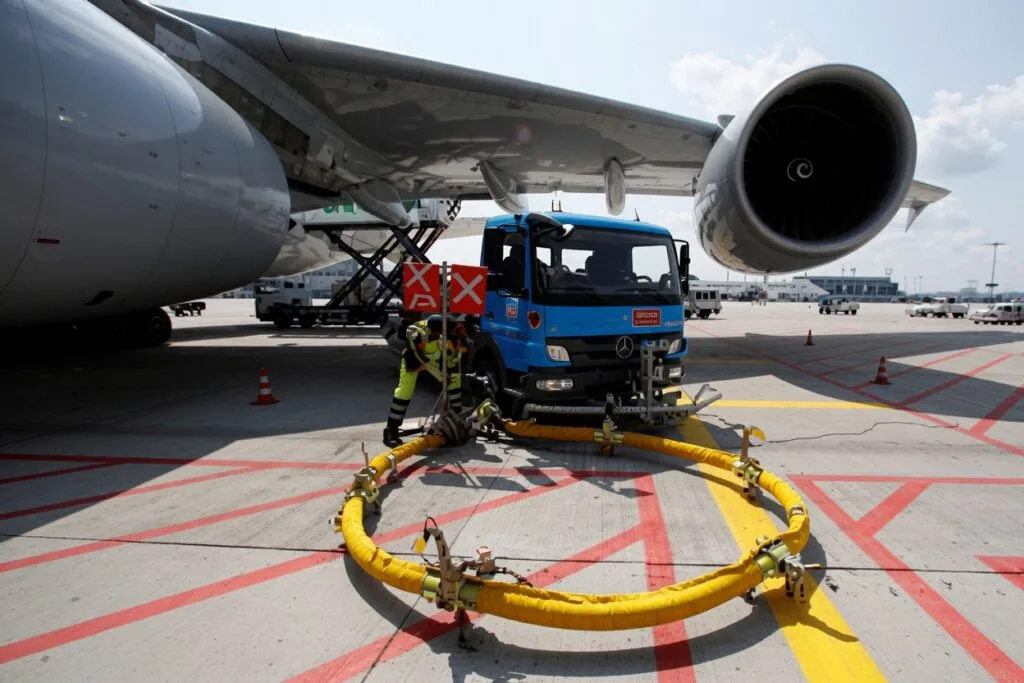
Occasional shortages, high prices, geopolitical tensions: the jet fuel market remains under pressure. What is at stake for aviation players and how can they secure their supply?
A kerosene market under pressure
Jet fuel (aviation kerosene) is a strategic energy product whose price reacts immediately to geopolitical tensions and supply-demand imbalances. The recent episodes of shortage and price increases, notably linked to disruptions in Russian supply, are a reminder of the fragility of this global logistics chain.
For airlines, airports and distributors, control over aviation fuel supply is a major competitiveness factor.
Why jet fuel prices remain high
- The strong correlation with crude oil prices.
- Strains on specialised refining capacity.
- The lasting recovery in global air traffic.
- Logistics costs and geopolitical risk premiums.
Even when wholesale prices fall back, experts expect airfares to remain firm, as fuel accounts for only part of operating costs.
Securing your aviation fuel supply
Rely on a trusted trader
Working with an intermediary that has a network of suppliers and proven airport logistics helps make volumes more reliable and optimise costs.
Anticipate the transition to SAF
Sustainable aviation fuels are ramping up. Factoring in this dimension today prepares players for tomorrow's regulatory requirements.
What supply strategies for 2026?
Faced with a tight market, the worst strategy remains buying on the spot market, fully exposed to price spikes. The strongest players combine several approaches: contracting firm volumes over time, diversifying supply sources to avoid depending on a single origin, and closely monitoring market indicators reported by the specialist energy press.
This discipline makes it possible to smooth the average fuel cost over the year rather than suffering day-to-day volatility. It does, however, require a good understanding of the fundamentals, from inventory levels to the evolution of refining margins. This is precisely the analysis and negotiation work we carry out on behalf of aviation players, in order to turn an unavoidable cost item into a managed variable.
Key takeaway: in a volatile market, securing your jet fuel volumes and anticipating the shift to SAF are two complementary levers for aviation players.
Secure your jet fuel supply
E-Station supports aviation players in the supply and trading of aviation fuel, in France and internationally.
Discover our jet fuel offerFrequently asked questions about the jet fuel market
Why do jet fuel prices remain high?
This is explained by the strong correlation with crude oil prices and by strains on the specialised refining capacity needed to produce kerosene.
What recently caused jet fuel shortages?
Disruptions to Russian supply notably highlighted the fragility of the global aviation kerosene logistics chain.
Who is directly affected by jet fuel market volatility?
Airlines, airports and distributors, for whom control over aviation fuel supply is a major competitiveness factor.
Does jet fuel react quickly to geopolitical tensions?
Yes, as a strategic energy product, its price reacts immediately to geopolitical tensions and supply-demand imbalances.
How can you secure your jet fuel supply in this tense context?
A specialized broker can diversify supply sources and anticipate market tensions to ensure the continuity of air operations.
Aucun commentaire pour l'instant!