
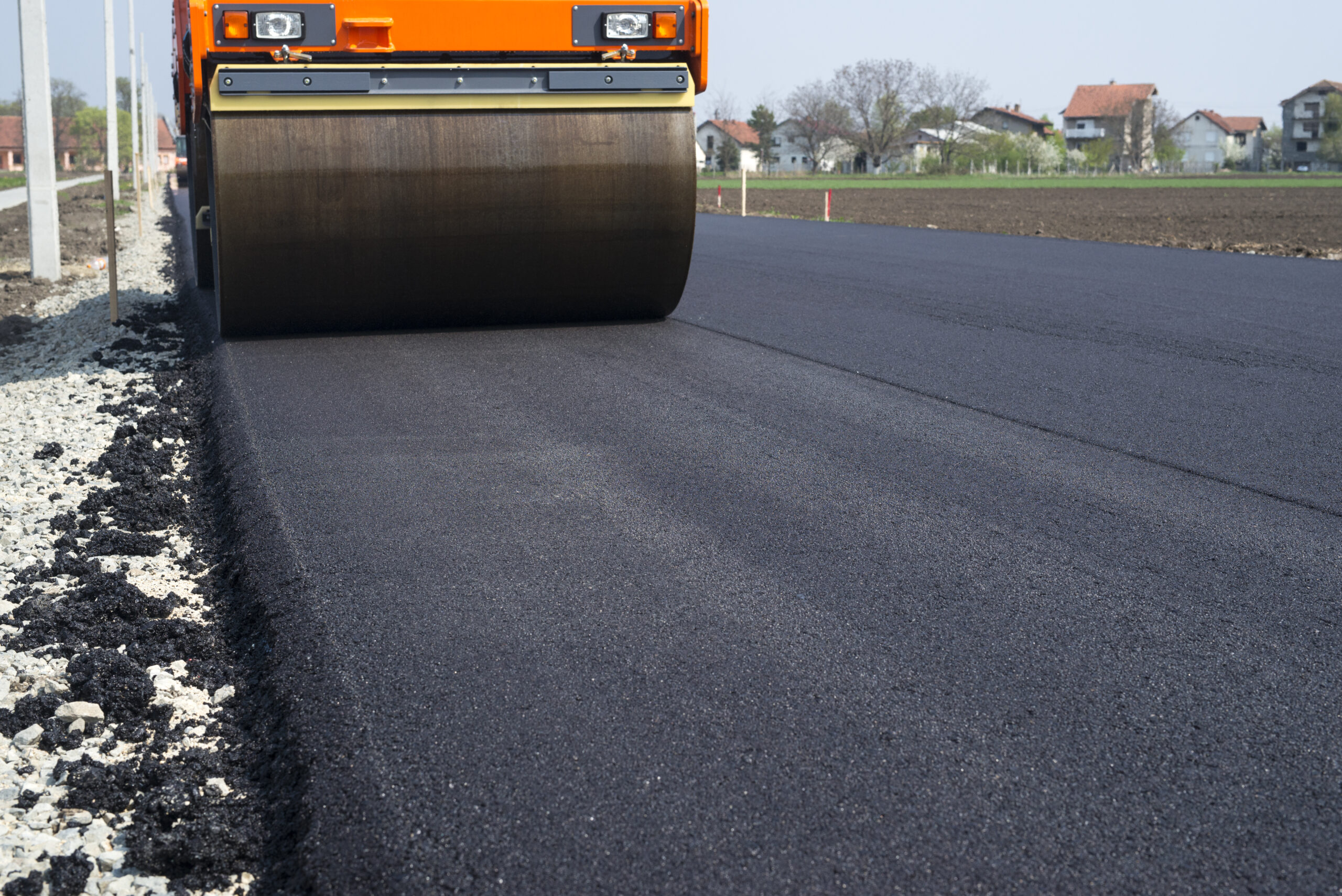
The term "bituminous binder" covers products with very different behaviours: pure road bitumens, oxidised bitumens for industry, emulsions for maintenance. Each meets a specific need, and using the wrong binder exposes you to costly failures—delamination of layers, defective waterproofing, premature resurfacing of a road.
E-Station supports this diversity as a trader, securing the supply of the binder matching the actual use. The approach extends the one applied to road-grade bitumen : proven compliance, a single point of contact, clear terms. On export markets, this rigour often makes the difference between a project delivered on time and one held up for want of a compliant binder or documents in order.
Telling the binder families apart
Choosing a binder means first identifying the intended function: building a road, ensuring waterproofing, or maintaining an existing surface.
Standardised-grade road bitumens
These are the binders of road construction, classified by penetration under the EN 12591 standard. The 50/70 for hot climates, the 35/50 for heavy traffic, the 80/100 for temperate climates. The grade is chosen according to climate and traffic, a logic detailed in the selection guide.
Oxidised bitumens for industry and waterproofing
The oxidised bitumen 85/25 meets waterproofing, roofing and industrial needs, far removed from road construction. Its hardness and high softening point make it suited to applications where stability in the heat is paramount.
Bituminous emulsions for maintenance
Emulsions—bitumen dispersed in water—are applied cold and are used for tack coats, surface dressings and maintenance repairs. They avoid heating the binder on site and simplify small projects.
Why entrust your binders to E-Station
On export volumes, the value of a trader lies in its ability to absorb complexity for the buyer. E-Station commits to this in a verifiable way.
- The right binder for the right use: guidance is based on the actual function (construction, waterproofing, maintenance), not on what is in stock.
- Documented compliance: each batch is delivered with its certificate of analysis, enforceable proof of the stated characteristics.
- Single point of contact: from the quotation to the handover of shipping documents, one contact follows the file.
- Integrated logistics: packaging, Incoterm and transport are settled at the offer stage, not in a separate quote that arrives too late.
Packaging and binder logistics
The mode of packaging affects transport cost and product preservation. E-Station adapts the format—bulk, drums or big bags—to the volume and destination. For African projects, delivery is organised as part of the delivery logistics in Africa, in line with the incoterms et la documentation d’export.
Quality control and traceability
Whatever the binder, each shipment relies on a documented quality control and, if the contract provides for it, third-party inspection before loading. The buyer thus has proof of compliance of the shipment through to receipt.
Price and payment terms
The price of binders changes with the barrel and logistics: a quotation remains valid for a specified period. Payment is made by bank transfer, with a 50% deposit on order and the balance on handover of the shipping documents. The letter of credit is reserved for reputable companies, after an initial deal of at least 500 M/T settled by bank transfer.
How to choose between the binder families
The first question is not "which grade?" but "which function?". To build a wearing course or a base course, the choice falls on a standardised road bitumen, whose grade then depends on the climate and traffic of the area. To waterproof a roof or a structure, oxidised bitumen is the answer, thanks to its resistance to heat. To maintain an existing road—reprofiling, dressing, tack coat—the cold-applied emulsion offers the simplest solution to implement.
Once the function is identified, sizing the binder becomes precise: penetration, softening point, behaviour at service temperature. E-Station starts from this actual use to propose the compliant binder, rather than imposing a generic product. This logic avoids both costly over-sizing and the underperformance that shortens the life of a structure.
Frequently asked questions
What is the difference between bitumen and emulsion?
Pure bitumen is applied hot; the emulsion, dispersed in water, is applied cold. The emulsion is used mainly for tack coats and maintenance, pure bitumen for road construction.
Is oxidised bitumen used for roads?
No: oxidised bitumen 85/25 is intended for waterproofing, roofing and industry. Road construction uses standardised-grade bitumens (50/70, 35/50, 80/100).
How are orders settled?
By bank transfer: 50% deposit on order, balance on handover of shipping documents. The letter of credit applies only to established companies, after an initial deal of at least 500 M/T.
Which binder for your project?
State the use, the grade and the volume: the quotation comes back quickly, with detailed terms.
Request a quotation →Further reading
- Bituminous binders: bitumen, emulsion, modified binder, fluxed
- Bitumen emulsion: principle, uses and application
- Polymer-modified binder (PmB): what it really brings
- Penetration and softening point: reading bitumen tests
- Binder-aggregate adhesion: avoiding stripping of asphalt mixes
- Ageing of bitumen: why a binder hardens and cracks
- Storing and heating bitumen: preserving binder quality
- Which bituminous binder for which application: the method