
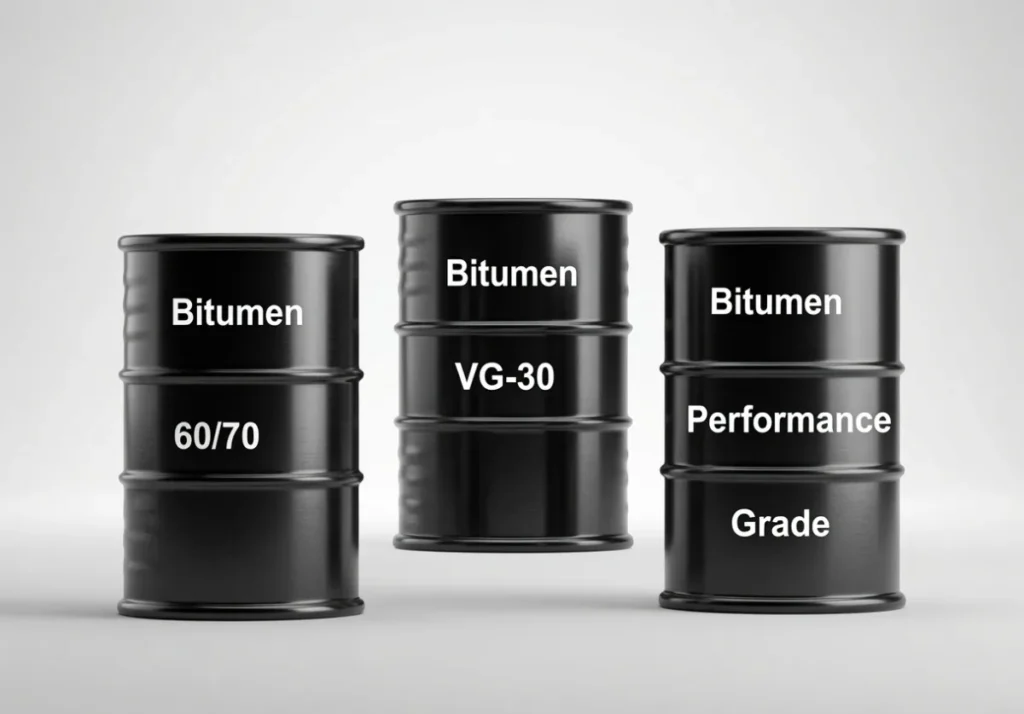
Le marché du bitume mondial aborde le second semestre 2026 dans un état de déséquilibre complexe. Pour les développeurs d’infrastructures, les responsables achats et les opérateurs logistiques, le paysage actuel défie la logique habituelle des matières premières : d’un côté, une vague de modernisation des flottes met à l’eau des navires plus grands et plus efficients ; de l’autre, les perturbations géopolitiques chroniques aux points de passage maritimes clés — au premier rang desquels le détroit d’Ormuz — continuent d’étrangler l’offre de brut lourd, maintenant la production des raffineries sur la réserve.
Selon l’analyse de mi-année publiée par BRS Shipbrokers, le marché se définit par un paradoxe net : les fondamentaux de l’offre s’améliorent techniquement, mais des problèmes structurels de charge d’alimentation empêchent la production de bondir comme elle l’aurait fait par le passé. Dans le même temps, la demande d’infrastructures reste très fragmentée à l’échelle mondiale. Pour les entreprises qui évoluent dans cet environnement, comprendre le marché du bitume et le point de rencontre entre la prudence des raffineries, les aléas météorologiques régionaux et l’expansion de la flotte de tankers est essentiel pour protéger leurs marges de projet. Un contexte qui pèse directement sur le price of bitumen.
La contrainte d’alimentation : pourquoi les raffineries restent prudentes
The root of the current supply tension does not lie in bitumen production units themselves, but much further upstream. The persistent disruptions to crude flows through the Strait of Hormuz have profoundly altered refiners’ behaviour in 2026.
La production de bitume repose largement sur les résidus de « fond de colonne sous vide » issus du raffinage des bruts lourds et soufrés. Comme ces grades spécifiques subissent des goulets d’étranglement périodiques et sévères à la sortie du Golfe, les raffineurs opèrent avec une extrême prudence. Plutôt que d’augmenter les cadences pour répondre à la demande saisonnière de construction, ils préfèrent maintenir des stocks tendus.
This upstream bottleneck explains why global bitumen production has not seen its usual summer peak. Supply disruptions sustained high price levels throughout the first half of 2026, creating an environment where fears of shortage are driven by geopolitical friction rather than any genuine lack of refining capacity. As long as maritime routes out of the Middle East carry a high risk premium, refiners will hardly increase product allocation to low-margin heavy residues like bitumen in the short term.
Une carte de la demande fragmentée : des moussons aux budgets d’entretien
While supply remains tightly constrained by geopolitical realities, global demand for bitumen in the second half of 2026 presents a deeply contrasted picture. The market’s traditional growth engine, the Asia-Pacific region, is experiencing a marked slowdown. The combination of severe monsoons, weather anomalies and bureaucratic delays in public infrastructure spending has heavily curbed road-paving works. South-East Asian governments have slowed project execution, leading to a temporary dip in direct import demand. While analysts expect a seasonal recovery in the fourth quarter as the weather improves, a lasting rebound will require a major injection of public capital and the swift unblocking of stalled road programmes.
À l’inverse, l’Europe et ses bassins commerciaux présentent une matrice très localisée :
- Europe du Nord : countries such as Sweden, Norway, Denmark and Finland stand out. Driven by expanded public budgets specifically dedicated to long-term road maintenance and climate-resilient rehabilitation, paving activity is showing solid signs of recovery.
- Le bassin d’ajustement méditerranéen : the production surplus of Southern European refiners is increasingly being absorbed by North African markets.
- Afrique du Nord : Algeria, Morocco and Libya are generating the strongest incremental demand in the western hemisphere. Driven by vast national infrastructure corridors and ambitious road programmes, these nations are acting as a vital outlet for Mediterranean barrels.
Cette dynamique confirme la montée en puissance de la région : retrouvez notre analyse dédiée à la bitumen delivery in Africa et à nos outlets in the Maghreb.
Le dilemme du transport : des flottes en expansion face à une demande atone
In the bitumen market, the most significant structural shift highlighted by BRS Shipbrokers is playing out on the water. The global fleet of specialized bitumen tankers is in the midst of a major, historic renewal cycle.
Aujourd’hui, la flotte mondiale compte 267 navires spécialisés, d’un âge moyen de 14,5 ans et d’une capacité moyenne avoisinant les 8 900 tonnes de port en lourd (tpl). Mais un programme de constructions neuves soutenu et agressif introduit rapidement une nouvelle génération de navires. La majorité de ces livraisons se concentre dans le segment 8 500 à 17 500 tpl, aux côtés de quelques unités exceptionnellement grandes.
Ce basculement marque une rupture nette avec les navires traditionnels de 3 000 à 10 000 tpl qui dominaient historiquement le cabotage en Méditerranée et en Europe du Nord-Ouest. La nouvelle génération offre d’importantes économies d’échelle, conçues pour réduire agressivement le coût de transport à la tonne du bitume liquide.
However, the timing of these deliveries has created a serious commercial mismatch. These highly efficient, high-capacity vessels are arriving on the market at the very moment when actual cargo volumes remain constrained by refinery caution and slowing public spending. Moreover, the scrapping of older, less efficient vessels has not been fast enough to offset this influx of new capacity.
Par conséquent, à moins d’une accélération marquée des dépenses publiques d’infrastructure dans les mois à venir, l’expansion de la capacité de flotte déclenchera une concurrence intense entre armateurs pour les cargaisons disponibles. Pour les équipes achats, cette surcapacité de transport offre une rare éclaircie : elle exerce une pression baissière persistante sur les taux de fret spot sur les routes de Méditerranée, d’Europe du Nord-Ouest et d’Afrique, compensant en partie la prime élevée de la matière première elle-même.
Strategic Implications for Infrastructure Procurement
The reality of the late-2026 market means that resilience can no longer rest on traditional purchasing models. When shipping capacity is high but feedstock availability remains volatile, operators must build absolute flexibility into their sourcing strategies.
Relying solely on specialised tankers to deliver liquid product to coastal terminals exposes projects to the direct fallout of refinery force majeures and chokepoint blockages. To mitigate this risk, the most forward-thinking infrastructure firms are increasingly turning to containerised, solid-state logistics. Using jumbo bags and specialised drums permet de découpler leurs chaînes d’approvisionnement du marché tendu des tankers spécialisés. En recourant à des porte-conteneurs standards ou à des réseaux terrestres multimodaux, les acheteurs peuvent sourcer du bitume depuis des bassins d’ajustement stables — comme les marchés turc ou grec — et l’acheminer directement vers des projets intérieurs sans risque de surestaries ni d’interruption de livraison.
Contractual structures must adapt too. Contracts drafted in the current climate need flexible origin clauses and robust freight-rate mechanisms, allowing buyers to capitalise on the downward pressure in the shipping market while hedging against sudden feedstock spikes. Our documentary logistics and Incoterms expertise secure each of these steps.
Bitumen market: navigating the second half of 2026
L’équilibre des risques pour le reste de l’année pointe vers une stabilisation progressive de l’offre, associée à un rebond modeste et très saisonnier de la demande au dernier trimestre. Une véritable reprise durable du marché reste toutefois entièrement suspendue à des basculements structurels : la stabilisation des corridors de brut au départ du Golfe et un engagement renouvelé des grands pays importateurs en faveur des dépenses d’infrastructure.
Until these macroeconomic factors align, the specialised bitumen sector will remain highly competitive and sensitive to local dynamics. Success in this environment belongs to those who look beyond the refinery gate, monitor the structural shifts of the global fleet and leverage diversified logistics channels to secure their margins. This is precisely the approach we bring to our bitumen trading and supply.
At E-Station, we bridge the gap between volatile refinery output and your project timelines. By closely analysing global maritime data and deploying flexible, multi-origin sourcing solutions, we ensure your infrastructure supply chain stays uninterrupted, whatever the shifts on the global map.
Let’s optimise your sourcing strategy for the season ahead, between volatile supply and freight under pressure.
Secure my supply chainFrequently asked questions about the bitumen market paradox
What is the paradox of the bitumen market in 2026?
Supply fundamentals are technically improving thanks to fleet modernization, but structural feedstock issues and tensions in the Strait of Hormuz continue to choke production, creating an unprecedented imbalance.
Why isn't fleet modernization enough to stabilize the market?
New, larger and more efficient vessels are being launched, but this additional capacity does not offset the chronic disruptions at key maritime chokepoints that limit heavy crude supply.
What role does the Strait of Hormuz play in this imbalance?
Geopolitical disruptions at this strategic chokepoint continue to slow heavy crude supply, keeping refinery production under strain despite sustained demand.
Who is most exposed to this bitumen market volatility?
Infrastructure developers, procurement managers, and logistics operators, whose project planning depends directly on supply stability.
How can buyers adapt to this volatile environment?
By relying on a broker who monitors these dynamics daily, it becomes possible to anticipate supply tensions and secure volumes before volatility affects prices.
Aucun commentaire pour l'instant!